
Start with the surfaces that seal. If two flat flange faces clamp a thin gasket between them, look for a matching flat exhaust gasket. If one side has a rounded or tapered seat for a ring, match that profile before ordering a donut exhaust gasket. Then check the condition of the flanges and hardware. A new seal may be all you need if the joint is sound. A cracked seat, warped flange, or failed fastener changes the repair.
Take a photo of both mating faces while the joint is apart. That photo can tell you more about the right part than the pipe size or bolt count alone.
What Is an Exhaust Flange Gasket?
An exhaust flange gasket seals a joint where two exhaust parts bolt together. You might find one at the manifold outlet, between a front pipe and the next section, or at another bolted connection farther back. The gasket works with the shape of the mating surfaces and the load from the fasteners. Those three pieces of information help you choose a replacement.
Start by naming the joint. An exhaust gasket at the cylinder head serves a different connection from the gasket at the manifold outlet. If an order just says “manifold gasket,” a supplier could reasonably think you mean the part between the head and the manifold. A photo showing the gasket location and the adjoining parts clears that up.
Check the seat before the bolt pattern. Both a flat joint and a spherical joint can have two fasteners. The sealing faces tell you which kind of gasket belongs there.
Flat Exhaust Gasket vs. Donut Exhaust Gasket
Look at a clean section of each mating face. In a flat joint, the contact surfaces face each other across the gasket. In a spherical or tapered joint, the ring seats against a shaped surface. A used donut can be crushed or worn enough to hide its original profile. Check the seat on the pipe as well as the part you removed.
| What you see | Likely gasket type | What to match |
|---|---|---|
| Two flat faces with a thin seal between them | Flat exhaust gasket | Opening shape, bolt holes or slots, thickness, and where the sealing area sits. |
| A rounded or tapered seat with a shaped ring | Donut or conical exhaust gasket | Inside and outside diameters, height, seat profile, and how the hardware loads it. |
| A recess, lip, or special sealing profile | Seal specified for that joint | Use the original part number or joint drawing to identify the profile and orientation. |

Spring bolts are another clue that you may be looking at a joint designed to allow some movement. They are part of the way that particular connection holds the seal in place. If the joint uses springs, retain the specified hardware arrangement when you replace the gasket. Check the application details if bolts, springs, or seats are missing.
Exhaust Gasket Materials: What Changes With the Application?
Two flat gaskets can look similar on the counter and call for different installation conditions. Match the construction specified for the joint after you’ve identified the shape. A drawing or application listing can tell you whether a gasket is designed to use a raised sealing bead, a facing material, or a formed ring.
Layered metal
Check the port and fastener layout and the sealing features called out for that connection. Where a gasket has an orientation mark or an asymmetric bead, use the fitting instructions for the part.
Metal composite
Match the specified thickness and coverage. A seal can have the right bolt holes and still leave part of the sealing surface exposed if the opening or outer shape differs.
Formed ring
Compare the cross section as well as the diameters. Two rings can fit over the same pipe and sit at different heights in the flange seat.
Temperature, vibration, and joint movement affect the choice, but those conditions are hard to infer from the old gasket’s color. If you’re buying by drawing rather than by vehicle application, specify the gasket construction and how the joint is clamped. For a replacement, start with the specified material and confirm any proposed substitution with the parts supplier.
How to Measure and Identify the Replacement Gasket
Let the exhaust cool before inspecting it. Take a straight-on photo of each face and a side view that shows any taper or rounded seat. Record the vehicle, engine, and joint location. For a modified exhaust, note which parts are original and which have been changed.
| Joint detail | Record for a flat joint | Record for a shaped seat |
|---|---|---|
| Opening | Diameter or outline of the opening and the area that needs sealing. | Pipe outside diameter and the ring’s inside and outside diameters. |
| Profile | Gasket thickness and any raised beads or directional features. | Ring height, cross-section shape, and direction of the taper or curve. |
| Fasteners | Hole count, center-to-center spacing, and hole or slot size. | Bolt spacing and the spring and fastener arrangement. |
| Reference | OE part number or flange drawing, with both mating faces shown. | OE part number or seat drawing, with the ring and both faces shown. |
Measure the joint alongside the old gasket. If the removed part has been flattened, record its thickness as a used measurement and use the application data or drawing to check the new part. When you have an OE number, compare it with the position on the vehicle and with the actual connection, especially on a car with a replacement front pipe.
Example. You measure a 2.25-inch outside diameter at a two-bolt exhaust joint. If both faces are flat, check the flat gasket’s opening, bolt spacing, and thickness. If you find a tapered seat, look for the matching ring profile. The 2.25-inch measurement describes the tube. The joint still determines the seal.
When requesting a quote, keep dimensions and units next to each photo. A note such as “57 mm pipe OD at the rear side of the joint” tells the supplier which surface you measured. A bare “57 mm” could refer to the pipe, the flange opening, or a dimension on the gasket.
Why a New Gasket May Still Leak
If a new exhaust gasket leaks soon after the repair, check where gas is escaping and how the joint sits. Look for a soot track from the joint, then check both mating surfaces and the hardware. A damaged seat, uneven clamping, or pipes that are pulled together under strain can leave a gap at the seal.
| What the shop finds | What to check next |
|---|---|
| One side of the gasket has a clear contact mark and the other side has little. | Check alignment, flange condition, gasket orientation, and whether the fasteners are applying load evenly. |
| There is a soot trail at a weld beside the flange. | Confirm whether the weld or adjacent pipe is the leak source before ordering another seal. |
| A donut ring rocks in the seat or sits at the wrong height. | Check the profile, height, and direction against the mating seat and part drawing. |
| The flanges only line up when the pipes are forced together. | Check routing and support. Correct the fit of the pipes before closing the joint. |
Use the installation and torque instructions for the vehicle or repair kit. Tightening a fastener harder can change the load without addressing the reason the joint opened. If a new gasket has already failed, ask the shop to show you the leak location and what will be corrected before it installs another one.
Choosing a Gasket or a Complete Flange Repair Kit
If both mating faces can be reused and the fasteners can still load the joint as specified, order the matched gasket and any required replacement hardware. If the flange or nearby pipe is damaged, identify how much of the joint needs replacement. The difference can be a pair of flange plates or an assembly that includes straight sections of pipe.
Repairing a flat two-bolt joint
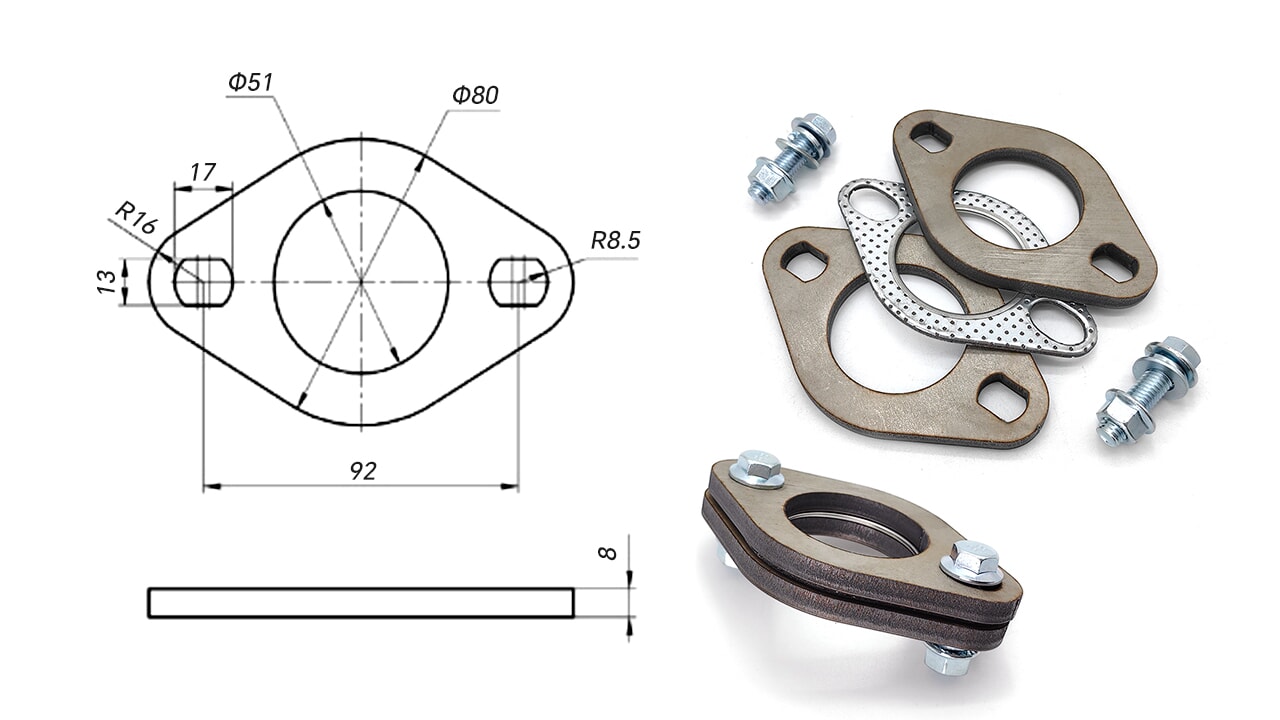
Yueding’s two-bolt flange repair kit has a configuration with two flat flange plates, a matching metal-composite gasket, and bolts and nuts. Another configuration adds straight pipe sections. If the adjacent tubing can be retained, compare the flange and hardware configuration. If the joint needs replacement tubing, check the length and diameter of the pipe sections as well.
Repairing a spherical joint
Yueding’s 2.25-inch spherical joint kit is a weld-in assembly for 2.25-inch tube OD, supplied with bolts and a conical gasket. Compare the tube diameter and the complete joint layout before selecting it. Confirm how the new assembly will connect to the existing exhaust.
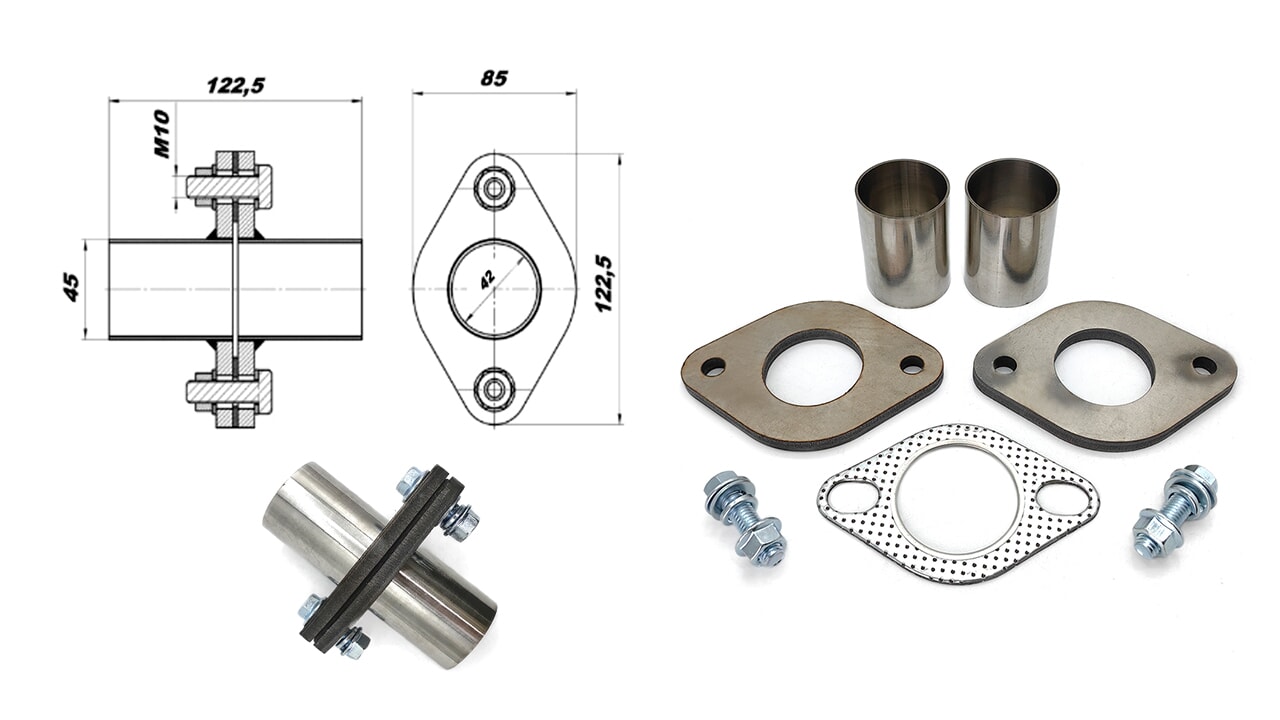
For a kit order, ask for the drawing and the parts list together. The drawing helps you check the opening, bolt spacing, and end connections. The parts list tells you which gasket, fasteners, or pipe sections arrive with the kit. This is especially helpful when a shop has to repair several joints with similar pipe sizes.
For a flat kit with slotted holes, compare the slot positions against the existing joint or the new flange pair. The slots help with fastener positioning within the design’s range. The gasket still needs enough contact area around the opening, and the two pipe ends need to meet in the correct position. Check those features together on the drawing before choosing the kit.
Put the joint on the order
Identify the two mating parts and show how the seal sits between them. If the joint is in good condition, match the replacement seal to those surfaces and the specified hardware. If the flange or adjoining pipe has failed, mark the section you want to replace and compare it with the kit drawing. When specifying a Yueding kit, send the sealing-face photos with the pipe measurements and joint location. That gives the manufacturer a way to check which configuration fits the repair before parts are cut or ordered.
Frequently Asked Questions
Can I choose an exhaust flange gasket from pipe diameter alone?
Use the diameter to narrow the options. Confirm the sealing-face shape, opening, thickness, and any bolt holes or seat dimensions before choosing the part.
Can a flat gasket replace a donut gasket?
A spherical or tapered joint needs a seal that contacts its shaped seat. Use the gasket specified for that connection, or change the complete joint to a compatible design as part of the repair.
Should I reuse the gasket when I open an exhaust joint?
Check the service instructions. If the repair calls for a new gasket, order it with the hardware. A compressed or damaged seal may no longer sit correctly after the joint is opened.
What if the pipe is sound but the flange is damaged?
Have the shop check the mating faces and the attachment to the pipe. A compatible flange repair kit may let you keep the adjacent tubing. Confirm the cutting or welding required for that configuration.


