
Quick-Release V-Band And T-Bolt Clamps: Types, Sizing, And Applications
Choosing the wrong clamp can cause leaks, poor fitment, and costly repairs. Exhaust systems and turbocharger piping need reliable connections. Quick release V-Band clamps secure mating flanges through a V-shaped profile. Quick-Release T-Bolt Clamps compress hoses around suitable fittings. Some V-Band designs also use T-bolt-style fasteners. However, these clamps are not interchangeable. Matching pipe diameters alone cannot guarantee proper fitment. Flange geometry, clamp dimensions, and release mechanisms also matter. This guide compares clamp types, sizing methods, and suitable applications. In this article, you'll learn how to avoid common purchasing and installation mistakes.

Quick-Release V-Band vs. T-Bolt Clamps: Which Connection Needs Which Design?
Both clamp families create secure, removable connections without permanent fastening. However, their contact surfaces and force distribution are different. Understanding these differences helps prevent incorrect substitutions.
V-Band Clamps for Flanged Pipe Connections
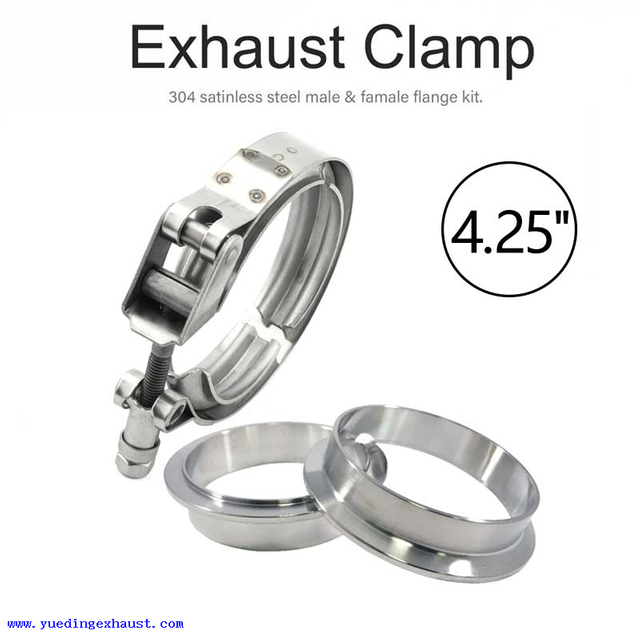
A V-Band clamp connects two pipes through compatible mating flanges. Its formed band contains an internal V-shaped contact profile. When tightened, this profile presses against both flange edges. The resulting force draws the flanges together along their shared axis.
This arrangement creates a compact connection without several separate flange bolts. It also allows easier removal when exhaust components need servicing.
V-Band connections commonly appear in turbocharger outlets, downpipes, and industrial exhaust assemblies. Their compact structure is especially useful where installation space is limited.
However, the flange geometry determines whether the connection works correctly. Different flange profiles may prevent proper contact despite matching nominal pipe sizes.
A V-Band clamp also cannot normally secure two plain pipe ends. The pipes require compatible flanges or a specially designed coupling assembly.
T-Bolt Clamps for Hose-to-Pipe Connections
T-bolt clamps use a metal band, fastening bolt, and nut assembly. Tightening the bolt reduces the band's diameter around the connection. This action creates radial compression against the hose surface. The hose then presses against its supporting fitting. Proper compression helps maintain sealing contact and resist hose movement.
These clamps commonly secure intercooler hoses, charge-air piping, and industrial hose assemblies. Quick-release versions simplify opening the band during maintenance or hose replacement. However, their performance depends on more than tightening force. Hose construction, fitting geometry, and band dimensions all affect connection reliability.
Unlike V-Band clamps, standard T-bolt hose clamps do not draw mating flanges together.
Selection Factor | Quick-Release V-Band | Quick-Release T-Bolt |
Connection type | Compatible flanged pipes | Flexible hose over a fitting |
Clamping action | Axial flange compression | Radial hose compression |
Critical dimensions | Flange diameter and V-profile | Installed hose diameter and clamping range |
Typical uses | Turbo exhaust and downpipes | Intercooler and industrial hoses |
Main fitment risk | Incorrect flange geometry | Incorrect hose compression |
Maintenance | Flanged joint disassembly | Hose inspection and replacement |
The connection structure should always determine the clamp type. Quick-release convenience becomes important only after confirming mechanical compatibility.
Common Quick-Release Clamp Types and Their Structural Differences
Not every quick-release clamp uses the same fastening arrangement. Bolt quantity, opening mechanisms, and band construction vary between designs. These differences influence installation access and maintenance procedures.
Single-Bolt and Double-Bolt V-Band Designs
Single-bolt V-Band clamps use one main tightening point. Their formed band wraps around a matched flange assembly. Tightening the bolt closes the band and loads the flange profiles.
Quick-release versions allow the clamp to open more conveniently during servicing. Some designs use removable pins or other release mechanisms.
Double-bolt V-Band clamps use two fastening points instead of one. Their construction can improve closing-force distribution on suitable larger assemblies. However, correct geometry remains essential for proper sealing.
The double-bolt arrangement does not automatically produce better results in every installation. Its suitability depends on flange dimensions, component stiffness, and operating conditions.
At Yueding, we supply quick-release V-Band clamps and matching flange assemblies for exhaust and turbocharger connections. Our range also includes double-bolt stainless steel designs and alternative fastening structures. We can review flange profiles, material requirements, and bolt configurations against project drawings.
Quick-Opening T-Bolt Clamps and Their Fastening Mechanisms
Quick-opening T-bolt clamps combine conventional band tightening with a release mechanism. The closure allows the band to open without fully removing the nut. This structure reduces repeated disassembly work during hose inspection. It also simplifies servicing when surrounding components restrict access.
However, quick-release does not always mean tool-free installation. Many designs still require controlled tightening after the connection is reassembled.
Band width and fastening construction also influence the clamp's performance. Wider bands distribute compression across a larger hose contact area. However, excessive compression can still damage certain hose materials.
Some applications instead require spring-loaded T-bolt clamps. Their springs can compensate for limited dimensional changes during thermal cycling. This differs from quick-release designs, which primarily improve maintenance access. The two features solve different problems and should not be treated as interchangeable.
How to Measure Quick-Release V-Band and T-Bolt Clamps Correctly
Incorrect sizing is a common cause of connection problems. A clamp may fit around a component without engaging it correctly. Accurate measurements must reflect the actual mating surfaces.
Measuring V-Band Flanges, Diameters, and Groove Profiles
Start by identifying the dimensions of the mating flange assembly. The pipe's nominal diameter provides only an initial reference. Measure the flange bore and its outside engagement diameter. Next, examine the V-shaped contact profile and flange thickness. These dimensions determine how the clamp contacts both flange edges.
The mating faces also require inspection. Some assemblies use male and female flange profiles for improved alignment. Others rely on different sealing arrangements or application-specific gaskets. For replacement orders, compare these dimensions against the original flange geometry. Do not assume identical pipe sizes indicate interchangeable V-Band components.
Consider two exhaust pipes labeled as three-inch connections. Their flange engagement diameters may still differ significantly. Their V-profiles may also require different clamp constructions.
Installation clearance is another important measurement. Confirm enough space exists for the fastening hardware and release movement. When flange information is incomplete, a matched clamp-and-flange assembly may reduce compatibility risks.
Measuring T-Bolt Clamp Diameter and Adjustment Range
T-bolt clamp sizing begins at the installed hose assembly. Measure the hose's outside diameter after fitting it over the connection. The actual diameter includes both the rigid fitting and hose wall. Therefore, measuring the bare pipe alone produces an incomplete specification.
Compare the measured value against the clamp's stated adjustment range. The selected clamp should provide adequate tightening travel. Avoid selecting a size that operates at its adjustment limits. Limited remaining travel may prevent suitable compression or secure fastening.
Band width also matters. The hose must provide enough straight contact area for proper placement. Thick-walled hoses may require different clamping arrangements than thinner hoses. Hose reinforcement and manufacturer requirements should guide the final selection.
Clamp Sizing Checklist
Before requesting a quotation, confirm these six details:
1. Connection type: Flanged assembly or flexible hose connection.
2. Actual diameter: Measured flange geometry or installed hose outside diameter.
3. Fitment requirements: V-profile dimensions or allowable clamping range.
4. Band dimensions: Required width and suitable contact area.
5. Fastening clearance: Space for tightening tools and release movement.
6. Operating conditions: Expected temperature, vibration, pressure, and environmental exposure.
Where Quick-Release V-Band and T-Bolt Clamps Are Best Used
Application requirements determine which clamping structure provides the most practical connection. Maintenance frequency matters, but sealing geometry and operating conditions remain essential.
Turbochargers, Downpipes, and Exhaust Assemblies
V-Band connections are widely used around turbochargers and detachable exhaust sections. They create compact joints while allowing components to be removed for servicing. Turbocharger outlets often operate under significant thermal and vibration exposure. Suitable V-Band assemblies can accommodate these conditions when correctly specified and installed. Downpipes also benefit from removable flange connections. Technicians can access nearby exhaust components without cutting welded pipe sections.
However, repeated heating and cooling can affect the connected assembly. Flange alignment, material selection, and fastening condition require attention. The clamp must engage both flanges evenly. A damaged sealing face can still leak despite adequate bolt tightening. Conventional T-bolt hose clamps should not replace V-Band assemblies on flanged exhaust joints. Their radial compression mechanism does not provide the required axial flange loading.
Intercooler Hoses, Charge-Air Piping, and Industrial Hose Systems
T-bolt clamps are useful where reinforced hoses connect rigid components. Common examples include intercooler outlets and turbocharged intake piping. These systems may experience pressure fluctuations, vibration, and repeated temperature changes. The clamp must maintain suitable compression without damaging the hose.
A properly designed fitting also contributes to connection retention. Beaded ends and compatible hose materials can help resist separation.
Industrial hose systems may also benefit from quick-opening clamp structures. Their maintenance advantages become noticeable during frequent inspections or scheduled replacement.
However, working pressure alone cannot determine clamp suitability. Hose reinforcement, temperature limits, fitting design, and clamp construction must be considered together. For rigid piping designed around mating flanges, V-Band connections may offer better serviceability. The final decision depends on the complete joint design.
How Materials and Clamp Construction Affect Durability
Clamp durability depends on material selection and component construction. Stainless steel offers corrosion resistance, but different grades perform differently. SS201 may suit applications where corrosion exposure remains relatively limited. SS304 generally offers stronger corrosion resistance across many common operating environments. SS316 provides additional resistance in certain chloride-containing environments.
However, stainless steel grade alone cannot establish maximum operating temperature. Clamp strength, fastening hardware, and thermal exposure also affect performance. The complete assembly deserves inspection. Some stainless steel clamps include bolts or nuts made from different materials. Their corrosion resistance may therefore differ from the band itself.
Band thickness influences stiffness and resistance to deformation. Bolt dimensions affect the fastening system's mechanical capability. Closure design influences how consistently the band engages during tightening.
For Quick-Release T-Bolt Clamps, we at Yueding offer several quick-opening structures and material configurations. Available options include SS201, SS304, and semi-stainless designs, depending on the model. We can review band width, clamping range, and fastening components against application requirements.
Buyers should specify materials for the complete assembly, not just its band. This prevents unexpected differences between the quoted product and operating needs. In demanding environments, testing should reflect real service conditions. Corrosion exposure, temperature cycling, and vibration may reveal weaknesses missed during visual inspection.
Installation Mistakes That Cause Leaks, Slippage, or Clamp Failure
Even correctly sized clamps can fail when installed improperly. Most problems involve incorrect positioning, uneven contact, or unsuitable tightening practices.
V-Band Installation Errors That Affect Flange Sealing
Poor flange alignment creates uneven contact across the mating surfaces. The clamp may tighten without applying balanced loading around the joint. Inspect both flanges before installation. Remove debris and check for visible damage or distortion. Welding distortion can also prevent proper flange engagement. This is especially important when fabricating custom exhaust connections.
Position the V-Band clamp evenly around both flange profiles. Check that its contact surfaces engage the intended areas. Use the manufacturer's recommended tightening procedure and torque specification. Excessive tightening cannot reliably correct damaged or mismatched flanges. After assembly, inspect the connection for leakage under suitable operating conditions. Repeat inspections may be necessary after thermal cycling.
T-Bolt Clamp Errors That Damage Hoses or Reduce Retention
Incorrect band placement can reduce hose sealing performance. A clamp positioned too close to the hose edge may provide insufficient retention. Install the band over the fitting's intended clamping area. Confirm that the entire band contacts a suitable hose surface. Undersized clamps may compress hoses excessively or exceed their fastening limits. Oversized clamps may lack sufficient adjustment for proper compression.
Overtightening creates additional risks. It can deform hose reinforcement or damage the underlying fitting. Follow the applicable tightening specification rather than relying on maximum available force. The correct torque depends on the complete clamp-and-hose assembly. Inspect the hose after installation and initial operation. Look for leakage, movement, visible distortion, or damaged fastening components.
Repeated reopening also requires inspection. Replace clamps showing permanent band deformation, damaged threads, or unreliable closure engagement. A reusable design should not be reused indefinitely without checking its condition.
Conclusion
Choosing the right clamp starts with understanding the connection type. V-Band clamps secure compatible flanges, while T-bolt clamps provide reliable compression for hose connections. Proper sizing requires more than matching nominal diameters. Buyers should check flange geometry, clamping range, band dimensions, materials, and operating conditions. Quick-release mechanisms should also suit maintenance needs and installation space. Zhejiang Yueding Corrugated Tube Co., Ltd. offers quick-release V-Band and T-bolt clamp solutions for various applications. Our product options support convenient maintenance, secure connections, and flexible installation requirements. Before bulk purchasing, verify critical dimensions using supplier drawings or physical samples. This helps ensure compatibility and reduces installation problems.
FAQ
Q: What Is the Difference Between Quick Release V-Band and T-Bolt Clamps?
A: Quick release V-Band clamps secure mating flanges through axial compression. Quick-Release T-Bolt Clamps apply radial pressure around hoses. Their different fastening actions make them suitable for different connections.
Q: How Do You Measure a Quick Release V-Band Clamp?
A: Measure the pipe diameter, flange engagement diameter, and V-shaped profile. A quick release V-Band clamp must match the flange geometry. Nominal pipe size alone cannot guarantee compatibility.
Q: Can Quick-Release T-Bolt Clamps Be Used on Intercooler Hoses?
A: Yes. Quick-Release T-Bolt Clamps are commonly used on reinforced intercooler hoses. Select the correct clamping range and band width. Proper installation helps prevent leaks and hose movement.
Q: Why Does a Quick Release V-Band Clamp Leak After Installation?
A: A quick release V-Band clamp may leak because of misaligned flanges, damaged sealing surfaces, or incorrect tightening. Inspect flange compatibility and clamp seating before making further adjustments.
Q: Are Quick-Release T-Bolt Clamps More Expensive Than Standard Hose Clamps?
A: Quick-Release T-Bolt Clamps may cost more due to their fastening mechanisms and construction. However, their convenient opening design can reduce maintenance time in applications requiring frequent hose removal.




About Yueding
YUEDING manufactures stainless steel exhaust flexible connectors, clamps, metal bellows, and selected automotive exhaust components under ISO and IATF quality systems. With in-house production, inspection, and packaging capabilities, we support bulk orders, standard-size inventory, and customized branding for global B2B customers.
Reliable Delivery
Stable production planning, standard-size inventory, and batch shipping support help make delivery more predictable.

Factory Direct
Production, inspection, and packaging are managed in-house, making communication, quality control, and customization more efficient.

Integrated Supply
We supply flex pipes, clamps, metal bellows, and selected exhaust components to support related purchasing needs from one manufacturer.

