
Exhaust Bellows Vs Flex Pipe: Key Differences, Uses & Selection Guide
Quick Answer
A flex pipe is mainly used to absorb vibration and small movement in automotive exhaust systems.An exhaust bellows is designed to compensate for thermal expansion, axial movement, and high-cycle working conditions.They may look similar, but they are not interchangeable.
Exhaust Bellows vs Flex Pipe
Exhaust bellows and flex pipes are often compared because both are flexible metal components used in exhaust systems. They may look similar, but they are not designed for the same job.A flex pipe mainly absorbs vibration and small movement in automotive exhaust systems. An exhaust bellows is used when the system needs to handle thermal expansion, axial movement, backpressure, or repeated working cycles. Choosing the wrong product may cause early fatigue, leakage, or poor installation performance.
You may think an exhaust bellows is just a flex pipe without the outer braid. In fact, the corrugation design, wall structure, forming process, and compensation capacity are different. A flex pipe is built for flexibility and vibration control, while a bellows is built for controlled movement and expansion compensation.This guide will help you compare their structure, function, application, durability, and supplier selection, so you can choose a more suitable exhaust flexible connector for your project.
What is an Exhaust Flex Pipe?
In an exhaust system, the core function of an exhaust flex pipe is straightforward: it provides a flexible section that absorbs vibration and buffers small movement. This helps prevent the exhaust line from being pulled or stressed by engine movement, road impact, or normal thermal expansion and contraction.
A typical exhaust flex pipe consists of a stainless steel corrugated tube, an outer braided layer, and connection ends. Depending on the design, it may include single braid, double braid, mesh braid, thin braid, an inner braid, an interlock liner, or extended end nipples. The corrugated tube provides flexible movement, while the braid helps limit mechanical stress and improve vibration resistance. An interlock liner or inner braid can provide inner wall support, reduce turbulence, and help improve flow stability.
 |  |
 |  |
Flex pipes are more suitable for standard exhaust systems, such as passenger vehicles, light commercial vehicles, and some modified vehicles. In these applications, displacement is limited, temperature and pressure changes are relatively controllable, and the vibration absorption provided by the flexible pipe is usually enough to protect key parts such as catalytic converters, turbo outlets, hangers, and welds.
Stainless steel exhaust flex pipes can also be customized in different lengths, diameters, braid structures, material grades, and connection types. This makes them suitable for many automotive exhaust repair, replacement, and custom exhaust projects.
In short, the main value of a flex pipe is vibration control. If your exhaust system mainly needs a cost-effective, flexible, and adaptable connection for vibration absorption and small movement, an exhaust flex pipe is usually a suitable choice.
What is an Exhaust Bellows?
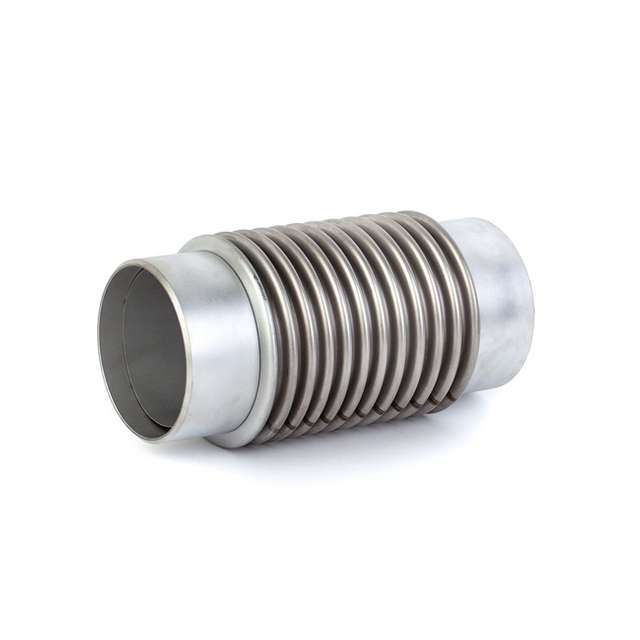
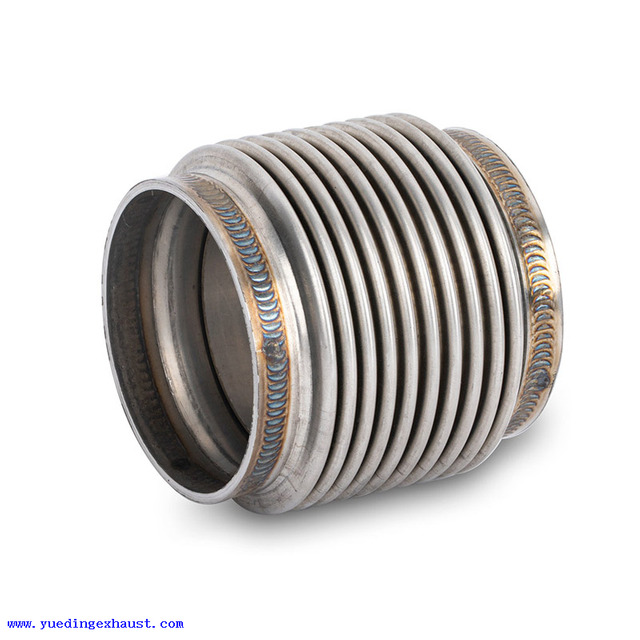
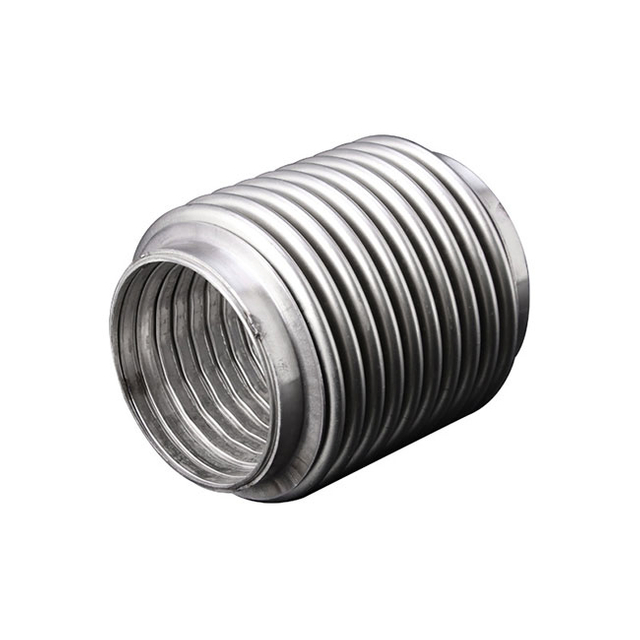
If a flex pipe is mainly a flexible connection for vibration absorption, an exhaust bellows is closer to a compensation component. A flex pipe relies on the corrugated tube and braid working together to control small movement, while bellows are designed to handle more controlled axial movement caused by thermal expansion, high temperature, and repeated working cycles.
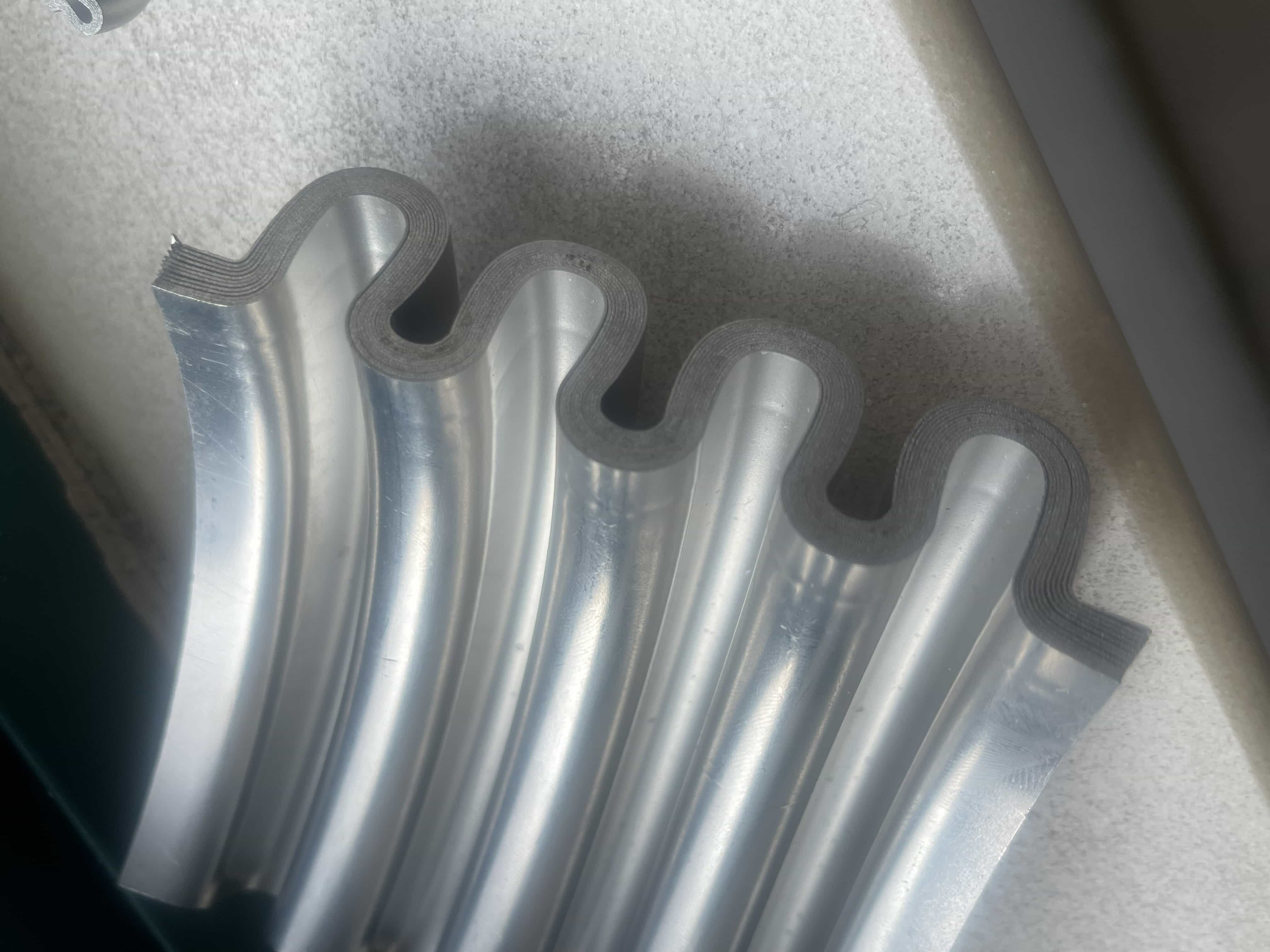
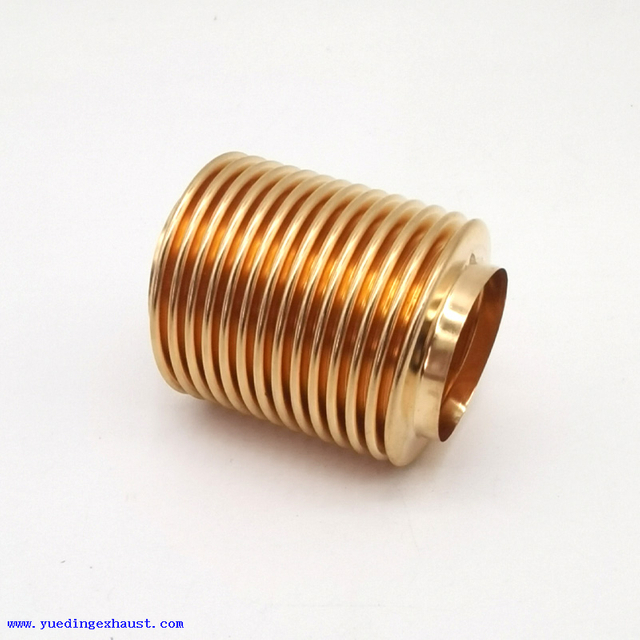
Exhaust bellows can be single-layer, double-layer, triple-layer, or multi-layer structures. In demanding applications, multi-layer bellows help distribute stress across different metal layers, reducing deformation in each layer and improving fatigue life under high-temperature conditions.
For bellows, the key engineering focus is not only flexibility, but also compensation capacity, fatigue life, cycling stability, and controlled movement. The corrugation geometry, including height, pitch, peaks, and valleys, directly affects stiffness, compensation ability, and service life.
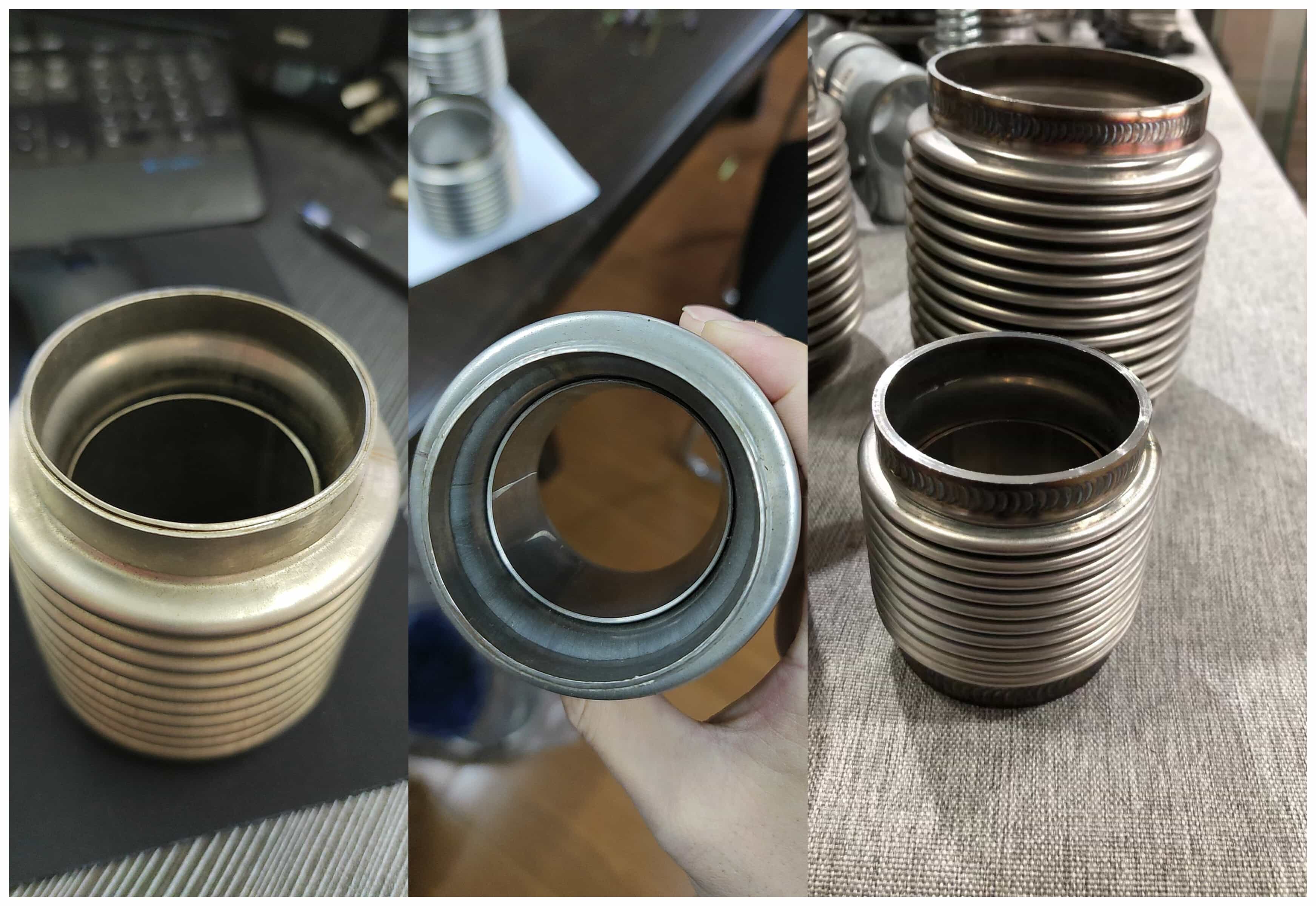
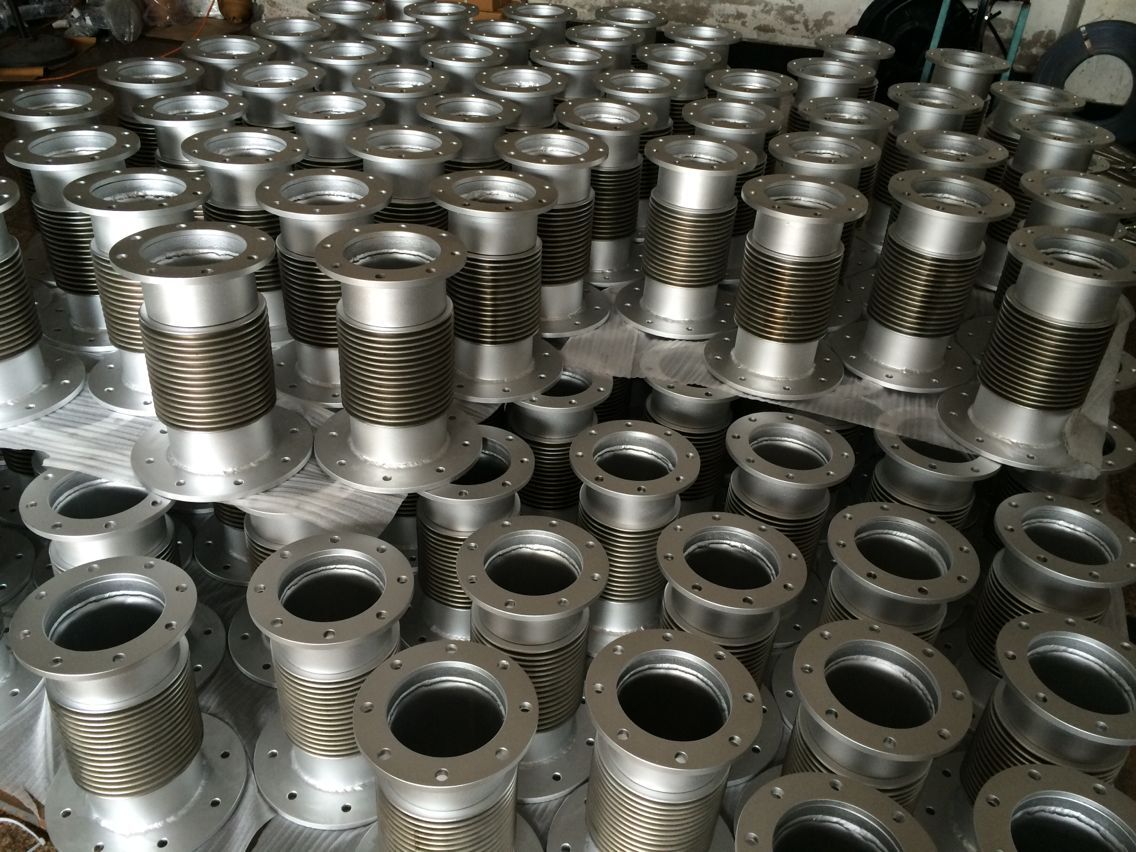
In many high-temperature exhaust systems, bellows are combined with flanges, limit rings, guide rings, inner sleeves, or outer protective covers to form complete compensation assemblies. They are commonly used in commercial vehicle exhaust pipelines, construction machinery, generator sets, boiler exhaust, high-temperature flue gas systems, and selected industrial exhaust applications where thermal expansion must be controlled.
How to Choose Between an Exhaust Bellows and a Flex Pipe
You do not need to repeatedly compare which one is “better.” The more important question is which one fits your working condition. Exhaust flex pipes and exhaust bellows serve different purposes, so they should not be selected as direct replacements without checking the actual application.
If your system mainly needs vibration absorption, small movement control, and installation tolerance, and the exhaust temperature is within the normal range of conventional automotive applications, an exhaust flex pipe is usually more suitable.
| Comparison | Exhaust Flex Pipe | Exhaust Bellows |
| Main Function | Absorbs vibration and small movement | Compensates thermal expansion and axial movement |
| Common Use | Automotive exhaust systems, replacement, modification | Heavy-duty, high-temperature, continuous-cycle systems |
| Structure | Corrugated tube with outer braid | Single-layer or multi-layer corrugated bellows |
| Installation Tolerance | More flexible | Requires better axial alignment |
| Cost Level | Lower | Higher |
| Best For | Vibration control | Expansion compensation |
When the system involves clear thermal expansion, axial movement, continuous high temperature, or repeated working cycles, an exhaust bellows or expansion joint is usually the safer option. It provides structural compensation, not just vibration reduction. In these conditions, the lack of proper compensation may shorten the service life of the exhaust system.
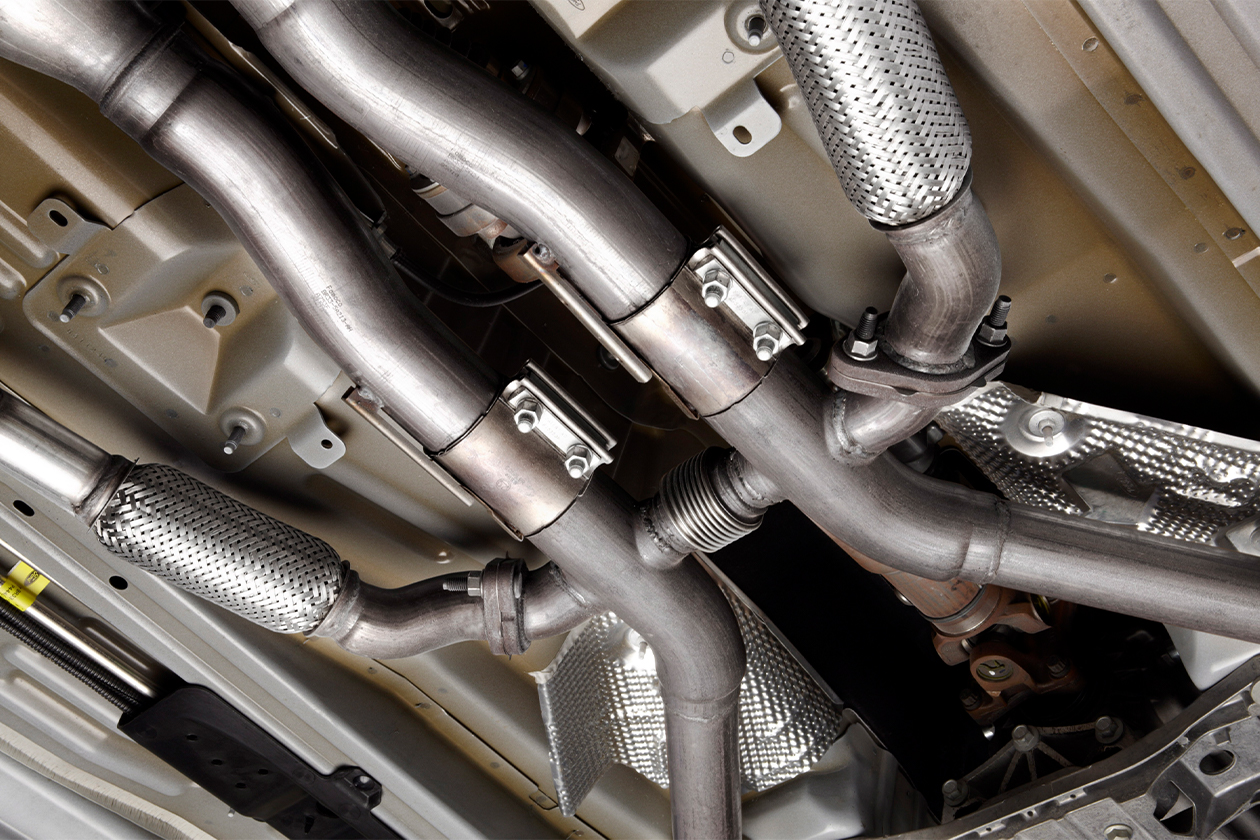
Can a Flex Pipe Replace an Exhaust Bellows?
In some simple vibration-control applications, a flex pipe may be suitable. For example, if the main problem is engine vibration, small movement, or minor installation tolerance in an automotive exhaust line, a standard exhaust flex pipe can often meet the requirement.
However, if the system requires thermal expansion compensation, axial movement control, continuous high-temperature operation, or long working cycles, a standard flex pipe should not be used as a direct replacement for an exhaust bellows. In this case, the flex pipe may fatigue early, leak, or fail because it is not designed to work as a high-temperature expansion compensator.
If you are not sure which product is suitable, the selection should be based on working temperature, pipe size, displacement direction, vibration level, backpressure, and installation method rather than appearance alone.
Why Are Many Bellows More Expensive Than Flex Pipe?
Bellows are usually more expensive than flex pipes because they are designed for more demanding working conditions. A bellows may use more metal layers, more precise corrugation forming, and more complex manufacturing processes. It also needs to maintain stable performance during repeated expansion and compression cycles.
A flex pipe has a relatively simple structure and is mainly used to absorb engine vibration and compensate for small displacement. It uses less material, is easier to manufacture, and is usually more cost-effective for standard automotive exhaust applications.
In high-temperature, long-running, or high-displacement systems, bellows are often more suitable because they are designed to handle thermal expansion and axial movement more reliably. This difference in structure, material use, manufacturing process, and testing requirements is the main reason for the price difference.
FAQ About Exhaust Bellows and Flex Pipes
Can flex pipe and bellows be used together?
Yes. In some complex exhaust systems, both flex pipe and bellows can be used. Flex pipe absorbs engine vibration and small displacement, while bellows absorb thermal expansion and large displacement. A proper combination makes the exhaust system both stable and durable.
What about material selection?
Flex pipes commonly use stainless steel 304, 321, 409, or other material options depending on the application and cost requirement. These materials are suitable for many ordinary automotive exhaust systems.Bellows materials need to remain stable under higher temperature, pressure, and corrosive gas conditions. For more demanding applications, 316L stainless steel, high-strength alloys, nickel-based alloys, or multi-layer composite structures may be used to improve service life.
Does flex pipe affect exhaust sound?
To some extent, yes. Because flex pipe can buffer vibration and minor resonance, it can reduce vibration transmission, which may slightly affect exhaust sound. Bellows focus more on displacement compensation and have little effect on sound.
What should be considered for logistics and packaging?
Flex pipe is usually protected with foam, paper tubes, or plastic bags, then packed in cartons or pallets. Bellows, due to multiple corrugation layers and precise structure, require stricter packaging, often with protective plates or filling materials on the corrugated section to prevent deformation during transport. Proper logistics packaging ensures the product reaches the customer in its original state.
Any installation differences?
Flex pipe has relatively loose installation precision and can tolerate slight bending or misalignment. Bellows require high axial alignment; misalignment may cause stress concentration, affecting compensation performance and life.
Which is more suitable for modification or lightweight systems?
For modified vehicles or lightweight exhaust systems, flex pipe is preferred due to its large flexibility, light weight, low cost, and ease of installation and customization. Bellows, although durable and fatigue-resistant, are heavier and more expensive, generally used in high-power or long-running systems.
Durability of Exhaust Bellows and Flexible Exhaust Pipes
Early flex pipe failure is often not caused by the pipe itself, but by incorrect installation or unsuitable working conditions. A standard exhaust flex pipe is mainly designed to absorb vibration and small movement in an exhaust system. If it is used to carry excessive exhaust weight, compensate for large axial movement, or work as a high-temperature expansion compensator, its service life may be shortened.
Common causes of flexible exhaust pipe failure include:
Improper support layout
Exhaust weight pressing directly on the flexible section
Continuous torsion
Installation misalignment
Water accumulation under the chassis
Outer braid corrosion
High backpressure or pulsating gas flow
Using a flex pipe where a bellows or expansion joint is required
In turbocharged systems or high-backpressure exhaust lines, pulsating gas flow can create repeated shock on the inner corrugated tube, causing faster fatigue over time. This is why the working condition must be checked before selecting a flexible exhaust pipe.
Exhaust bellows are different because they are designed to handle thermal expansion, axial movement, and repeated working cycles. The corrugation geometry, including height, pitch, peaks, and valleys, directly affects compensation capacity, stiffness, and fatigue life. In more demanding applications, multi-layer bellows can help distribute stress across different layers, reducing deformation in each layer and improving service life under high-temperature conditions.
For high-temperature or high-displacement systems, exhaust bellows may also include inner sleeves, guide rings, or reinforcement structures to reduce gas erosion, stabilize the corrugation, and prevent local buckling during compression. These structures are usually not found in standard flex pipes.
Therefore, when comparing exhaust bellows vs flex pipes, the key is not simply which product is more durable. The right choice depends on the working condition. If your application mainly requires vibration absorption, a flexible exhaust pipe may be suitable. If your system involves thermal expansion, large axial movement, or continuous high-temperature operation, an exhaust bellows or expansion joint is usually the safer option.
What Information Helps Us Recommend the Right Product?
To choose the right exhaust flexible connector, it is better to confirm the working condition before comparing price or appearance. The more complete your technical information is, the easier it is to recommend a suitable flex pipe, exhaust bellows, or customized flexible connector.
Before selection, you can provide the following information:
Pipe diameter and overall length
Working temperature
Axial or lateral movement
Vibration level
Backpressure
Installation method
Drawing or sample photo
Required material
Connection type
Order quantity
Packaging or labeling requirements
With this information, we can help you check whether your application is more suitable for an exhaust flex pipe, an exhaust bellows, or a customized flexible connector solution.
How to Check a Reliable Exhaust Flexible Connector Supplier
When sourcing exhaust flexible components, price should not be the only factor. A reliable factory should be able to control key processes such as raw material selection, welding quality, corrugation forming, dimensional tolerance, gas tightness inspection, and export packaging. These factors help you reduce installation risks and uncertainty in bulk purchasing.
Before confirming a supplier, you may want to check the following points:
Can the supplier confirm the stainless steel material grade?
Are the forming and welding processes stable?
Can samples be provided before bulk production?
Are dimensions and gas tightness inspected before shipment?
Can the factory support custom length, diameter, and connection types?
Is the packaging suitable for long-distance transportation and bulk delivery?
YDCT focuses on manufacturing stainless steel exhaust flex pipes, exhaust bellows, and related flexible connector components for automotive exhaust systems and selected industrial exhaust applications. According to your order requirements, we can support standard-size supply, custom dimensions, different material options, different corrugation structures, connection methods, laser marking, and packaging solutions.

If you are not sure whether an exhaust flex pipe or exhaust bellows is more suitable, you can send us your pipe diameter, length, working temperature, movement direction, connection method, drawing, or sample photo. We can help you review the actual application needs and recommend a more suitable exhaust flexible connector solution.
Need Product Selection Support?
Send us your drawing, sample photo, pipe size, working environment, and order quantity. We can help you check whether an exhaust flex pipe, exhaust bellows, or customized flexible connector is more suitable for your project.


About Yueding
YUEDING manufactures stainless steel exhaust flexible connectors, clamps, metal bellows, and selected automotive exhaust components under ISO and IATF quality systems. With in-house production, inspection, and packaging capabilities, we support bulk orders, standard-size inventory, and customized branding for global B2B customers.
Reliable Delivery
Stable production planning, standard-size inventory, and batch shipping support help make delivery more predictable.

Factory Direct
Production, inspection, and packaging are managed in-house, making communication, quality control, and customization more efficient.

Integrated Supply
We supply flex pipes, clamps, metal bellows, and selected exhaust components to support related purchasing needs from one manufacturer.

