
Two exhaust parts can bolt to the same cylinder head and still put the outlet in different places. That is where the exhaust manifold vs. headers comparison becomes practical. A replacement may need to meet the existing front pipe, while a tubular upgrade may change the route to the collector, the space around the steering, and the position of an oxygen sensor. The names can be confusing too. Some suppliers call a welded tubular assembly a manifold. Start with the shape of the part and the connections it needs, then decide whether that layout suits the vehicle.
Quick answer An exhaust manifold collects gases from the cylinders. A header is a tubular manifold that gives each cylinder its own primary runner before the flow merges. For replacement work, the outlet position and the parts it joins often decide which one fits.
Exhaust Manifold vs. Headers: A Side-by-Side Comparison
Follow the path from the cylinder head to the front pipe. A conventional compact manifold often brings the exhaust passages together close to the head. Exhaust headers route the gases through distinct tubes to a collector. How far those tubes travel determines where the next exhaust connection can sit.
| What to compare | Conventional compact manifold | Tubular exhaust header |
|---|---|---|
| Gas path | Passages typically merge close to the cylinder head. | Separate primary tubes run to a collector or staged merge. |
| Space and heat | Compact routing can make it easier to retain the original shielding and layout. | Runner bends and the collector can put hot surfaces closer to nearby components. |
| Outlet connection | A stock-style replacement is selected to meet the existing front pipe. | Outlet position, angle, or flange can change with the design. |
| Installation work | Check the original flange, shields, sensors, and fasteners. | Also check the path into the engine bay and whether the downpipe is part of the kit. |
| Common reason to choose | Restore an existing exhaust layout with fewer changes to surrounding parts. | Use a particular runner layout or fit a planned front exhaust assembly. |
Use the comparison to identify what will change on the vehicle. A compact header can retain the existing outlet position. A replacement sold as a manifold can still use welded tubes. A product photo or drawing should show both the cylinder-head flange and where the outlet lands.
What Is an Exhaust Manifold?
The exhaust manifold is the first collector in the exhaust system. Its head flange seals against the cylinder head, and its passages carry gas from the exhaust ports toward the outlet. Depending on the vehicle, that outlet can lead to a front pipe, a catalyst assembly, or a turbocharger. If the goal is a straightforward repair, identify which of those parts must stay in place before choosing a replacement.
Many compact factory manifolds are cast, with several passages formed inside a single body. A fabricated manifold joins tubes and flanges by welding. For either construction, compare the port shape, bolt pattern, sealing surface, and outlet. On a tubular part, also look at how the bends pass the components around the engine.
BMW E30 example
Yueding’s BMW E30 stainless manifold shows why the product name is only a starting point. It uses bent stainless steel tubes and welded flanges. For an E30 inline-six replacement, check the engine and existing front-pipe connection before using the chassis name to choose a part.
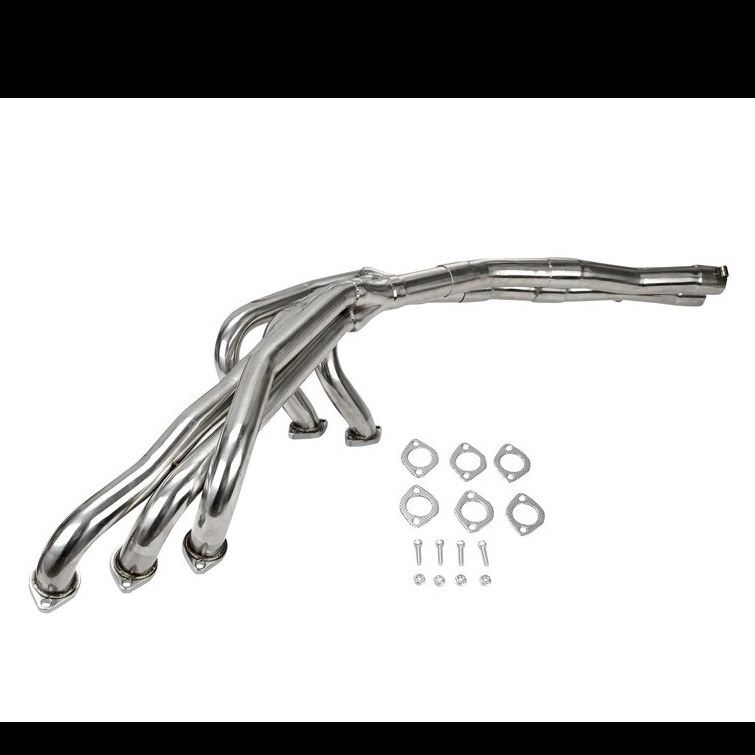
The useful question for a repair is whether the new assembly reaches the same joints in the same orientation. If a flange matches at the head but the outlet points away from the front pipe, the job now involves two parts. Compare the outlet angle and location before ordering, especially on a car with an engine swap or an exhaust that has already been modified.
What Are Exhaust Headers? Shorty vs. Long-Tube Designs
On a header, the tube leaving each exhaust port is called a primary runner. The runners lead to a collector, either directly or through intermediate merges. The position of that merge helps distinguish a compact shorty design from one that routes longer tubes farther from the head.
Shorty headers
Shorter primaries generally bring the collector closer to the head. That can be useful where space is limited or the replacement needs to meet a front pipe near the original outlet location. Check that location on the drawing because the word shorty does not define it.
Long-tube headers
Longer primaries need room to run before they merge. Compare where the collector ends up and what happens to the next section of pipe. The steering shaft, subframe, and available space underneath the vehicle can shape the routing decision.
Jeep Wrangler YJ example
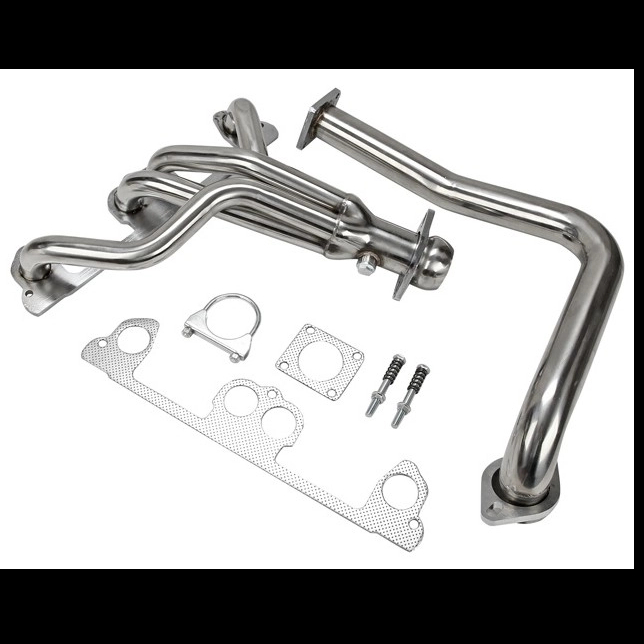
The Jeep YJ header kit is for the 1991–1995 Wrangler YJ with the 2.5L inline-four. It pairs a four-runner stainless steel header with a matching downpipe. Gaskets, a clamp, and spring-bolt hardware are included. For this kit, check the downpipe outlet against the next section of exhaust as well as the header against the head.
A matched kit answers one question up front. The header and its downpipe are designed to join one another. You still need to check where that downpipe meets the rest of the vehicle’s exhaust. If you are buying just the header, that same check starts at the collector instead.
Check service access as well as the space the part occupies once fitted. A runner can clear the steering shaft in the installed position yet leave too little room to get a tool onto a flange nut. Look at where the header will enter the engine bay, how the collector bolts can be reached, and whether the original heat shields still fit. These details matter when the car needs to be serviced again.
How Runner Layout Affects Exhaust Flow
Exhaust leaves each cylinder in pulses as its exhaust valve opens. Primary length and diameter help shape how those pulses travel to the merge, and the collector brings the individual flows together. Designers choose the runner and collector geometry for the engine’s firing order and the operating range they are targeting.
At some engine speeds, the pressure waves in a tuned layout can help draw exhaust out of a cylinder. This effect is called scavenging. Change the runner geometry, valve timing, or downstream exhaust and the result can change too. A longer tube, a larger collector, or a polished finish is a design detail. A power comparison needs a defined engine, test setup, and baseline.
Toyota GR86 example
The GR86 equal-length header uses equal-length primary tubes and 304 stainless steel. The intended fitment is the 2022–2024 Toyota GR86 with the FA24 2.4L flat-four. The header includes an oxygen sensor port. Check the existing sensor connection and downstream exhaust before treating engine-side fit as complete-system fit.
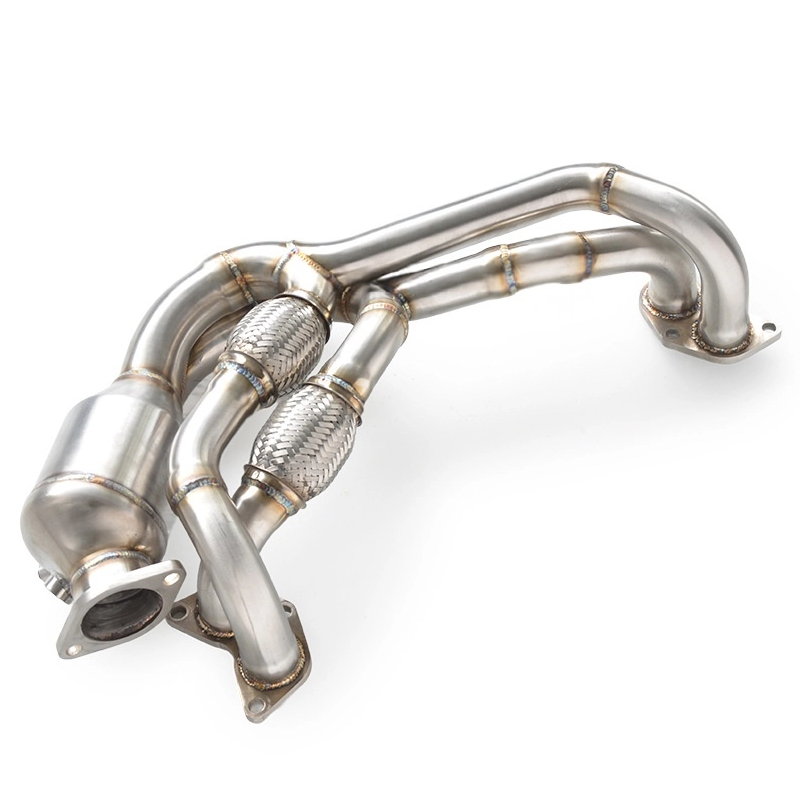
Equal length and long tube describe different things. Equal length compares one primary with the others. Shorty and long tube describe how far those primaries run before they merge. When comparing two headers for the same engine, look at the drawing for both features and trace the outlet back to the existing front pipe.
Which Should You Choose for Replacement or an Upgrade?
Decide which parts of the existing exhaust you want to keep. If the car needs to go back together with its current front pipe and shields, work from those fixed points. If you can change the front section, compare the header and downpipe as an assembly. This puts the purchase decision on the actual work required.
| Job | Where to start | Check before ordering |
|---|---|---|
| Replace in the original layout | Match the original head flange and outlet geometry. | Front-pipe joint, gasket, shields, and sensor provisions. |
| Fit into a tight engine bay | Compare the space occupied by the runners and collector. | Steering, subframe, engine mounts, heat-sensitive parts, and tool access. |
| Plan a custom front exhaust | Lay out the header, downpipe, and downstream joint together. | Collector position, sensor locations, catalyst configuration, and kit contents. |
What to send when confirming fitment
- Vehicle and engine. Model, model year, engine code, and whether the engine or exhaust has been changed.
- Two mating ends. A head-flange photo and a view of the existing outlet joint, with dimensions where available.
- Connections that must stay. Oxygen sensor position and wiring reach, catalyst layout, and the front pipe you intend to reuse.
- Space and parts. Nearby clearances and the list of gaskets, clamps, fasteners, and pipes needed for the job.
If you are comparing a header by itself with a kit, price the parts needed to reach the same finished connection. A separate downpipe, different gasket, or extra fabrication can change the scope of the job. For a road vehicle, confirm that the selected configuration retains the equipment required for the intended application.
For a drawing comparison, use the cylinder-head mounting face as the common reference. Ask for the position of the outlet center, the direction the flange faces, and the bolt pattern at that outlet. On a kit with a downpipe, request those details at the final outlet of the kit. That gives you a connection you can compare with the pipe on the vehicle, even when the two products follow very different routes.
Make the choice at the outlet
The exhaust manifold vs. headers decision is easier once you know which downstream joint has to stay. If that joint must remain in the same place, treat its position as part of the replacement specification. If you can move it, budget for the pipe and hardware that will meet the new outlet. When comparing a Yueding assembly with the part on the car, put both on the same drawing and check where the outlets land. That comparison helps you choose a part for the whole job and estimate the work involved before the vehicle comes apart.
Frequently Asked Questions
Can I reuse my old manifold gasket with a header?
Check the specified gasket for the new head flange and the condition of the sealing surfaces. Order a matching gasket if the kit does not include one. The outlet joint may require a different gasket from the head flange.
Will a header fit if the cylinder-head bolt pattern matches?
The bolt pattern is one part of the check. Compare the port shape and the route of the tubes, then check the collector’s position and angle against the next pipe.
What does a sensor port tell me about fitment?
It provides a mounting point for a sensor. Confirm the port’s position and thread, the wiring reach, and the layout of any other sensors in the exhaust system.
What if a listing uses both exhaust manifold and header?
Look for the construction and a drawing of the connections. A part with separate welded primary tubes can appear under either term. Use the vehicle, engine and outlet geometry to identify the assembly you need.


