
How To Choose An Exhaust Flex Pipe for Diesel Engines
Choosing a diesel exhaust flex pipe is not as simple as matching pipe size to engine displacement. Vibration, heat, engine movement, exhaust layout, and duty cycle can all affect the right choice. This guide explains how trucks, construction machinery, generators, and industrial diesel engines require different flex pipe specifications and installation strategies.

Choose a Diesel Exhaust Flex Pipe by Application First
Application should be the starting point for selection. Engine displacement provides useful background, but it does not describe vibration, mounting, movement, or exhaust layout. We need to understand how the equipment works before choosing the flex section.
Diesel Trucks: Consider Road Vibration and Engine Movement
A diesel truck experiences constant chassis movement during normal operation. Road impact, engine torque, and frame movement can all load the exhaust system. The flex pipe must absorb controlled movement without allowing the system to become unstable. For trucks operating under frequent road vibration or heavy loads, a heavy duty braided exhaust flex pipe can provide additional mechanical protection around the flexible section. A suitable flex section should isolate movement while keeping heavy exhaust parts independently supported.
Construction Machinery: Prepare for Shock and Severe Vibration
Excavators, loaders, bulldozers, and mining machines face harsher mechanical conditions. Their engines may operate while the machine travels across uneven ground. Dust, mud, vibration, and repeated shock can increase fatigue stress. A flex pipe for these machines usually needs strong mechanical protection. External braid or reinforced construction may help in exposed locations. Installation clearance also matters because engine compartments are often compact.
Diesel Generators: Focus on Vibration and Thermal Expansion
A generator does not face road vibration, but its exhaust system still moves. Engine vibration passes through the exhaust connection during operation. Long exhaust runs also expand as their temperature rises. Standby and continuous-duty generators may need different solutions. A continuously operated unit experiences long heat exposure. A standby set may experience more frequent heating and cooling cycles. The flex section should isolate the engine from rigid exhaust piping. It should not carry the weight of long downstream pipework.
Industrial Diesel Engines: Evaluate the Complete Installation
Industrial diesel engines can power pumps, compressors, process equipment, or stationary machines. Some sit on rigid bases, while others use vibration-isolating mounts. Their exhaust systems can therefore behave very differently. We should check mounting stiffness, operating hours, load variation, and exhaust routing. Space around the engine also affects the available flex length. These factors often matter more than engine displacement.
Mobile and Stationary Equipment Need Different Flexibility
Mobile equipment usually sees higher shock and changing movement directions. Stationary equipment may experience lower mechanical shock but greater thermal expansion. Neither application should be selected from engine size alone.
The main differences can be summarized below.
Application | Main Stress | Main Selection Priority | Key Installation Concern |
Diesel truck | Road vibration and engine movement | Fatigue resistance and flexibility | Chassis and exhaust movement |
Construction machinery | Shock and severe vibration | Reinforced construction | Harsh and compact environment |
Diesel generator | Vibration and thermal expansion | Isolation and heat resistance | Independent pipe support |
Industrial diesel engine | Duty-specific movement | System-specific selection | Alignment and mounting layout |
Use the Application to Build the First Specification
Before selecting a product, record how the equipment actually operates. Note whether it moves, stays stationary, or works under continuous load. Also identify where vibration enters the exhaust system. This first review prevents a common mistake. Buyers often choose a pipe from engine capacity alone. That approach can overlook the actual source of fatigue.
Determine the Correct Diameter and Length
Diameter and length directly affect exhaust flow and movement capability. They should match the existing system rather than a general engine-size chart.
Match the Diameter to the Exhaust System
Start with the engine manufacturer's exhaust outlet specification. Then check the turbocharger outlet, connecting pipe, and aftertreatment inlet. The flex pipe should maintain suitable internal flow area. An undersized section can create unwanted restriction. It may also increase gas velocity through the flexible assembly. Always verify allowable backpressure against the engine manufacturer's limits.
Choose Length Based on Required Movement
A shorter flex section is normally stiffer than a longer one of similar construction. However, adding unnecessary length is not always better. Excessive length may create sagging or uncontrolled movement. Estimate the required axial, lateral, and angular movement first. Then match that movement to the manufacturer's flex limits. The usable flexible section matters more than total product length.
Check End Connections and Installed Dimensions
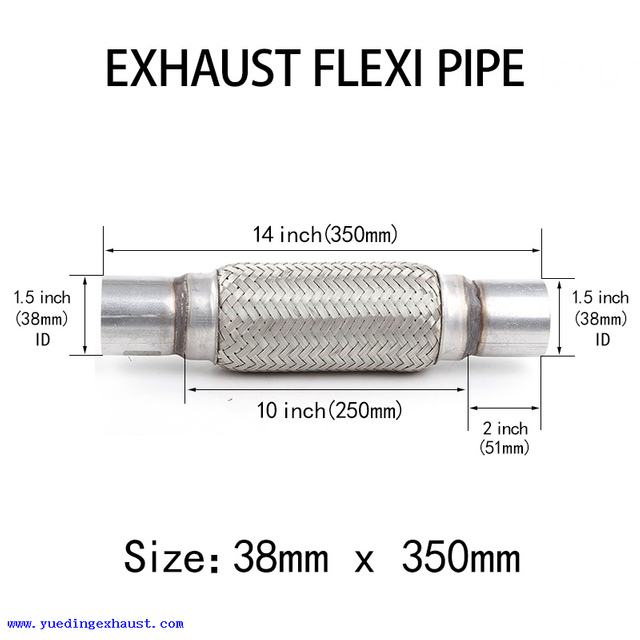
Exhaust flex pipes may use plain ends, welded collars, flanges, or clamp connections. The correct choice depends on the surrounding exhaust design. Connection dimensions must match the actual installation. Buyers should also confirm total length and flexible length. Collar length can reduce the active flex area. These measurements should appear clearly on the specification drawing.
Select the Right Flex Pipe Construction
Different internal structures handle movement differently. The best design depends on vibration, exhaust flow, installation conditions, and service expectations.
Compare Bellows, Interlock, Braid, and Multi-Layer Designs
Corrugated bellows provide controlled flexibility through formed convolutions. Interlock liners can protect the internal surface and guide exhaust flow. External braid can protect the bellows and control extension. Some assemblies combine several structures. These designs may suit demanding truck or industrial applications.
Construction | Main Benefit | Main Limitation | Typical Use |
Corrugated bellows | Absorbs controlled movement | Can fail under misuse | Vibration and thermal movement |
Interlock liner | Protects inner surface | May limit movement | High-flow exhaust systems |
Outer braid | Controls extension and protects bellows | Does not replace support | Mobile and industrial equipment |
Multi-layer assembly | Balances durability and flexibility | More complex design | Severe-duty applications |
Decide Whether an Inner Liner Is Needed
An inner liner can reduce direct gas impact on the bellows. It can also create a smoother internal flow path. This may help in high-flow diesel exhaust systems. However, liner design affects flexibility. Some liners also have a preferred exhaust flow direction. Always confirm this before installation.
Decide Whether External Braid Is Necessary
External braid can provide mechanical protection around the flexible section. It can also limit excessive extension under movement. This is useful in exposed or vibration-heavy installations. However, braid does not support downstream exhaust weight. Proper hangers and brackets are still required.
Match the Material to Temperature and Environment
Material selection affects oxidation resistance, corrosion resistance, and service life. The correct choice depends on both exhaust conditions and the surrounding environment.
Consider Normal and Peak Exhaust Temperature
Diesel exhaust temperature changes with load and operating mode. Turbocharged engines may experience high temperatures near the turbine outlet. Aftertreatment regeneration can create additional thermal exposure. Do not select material using normal temperature alone. Peak conditions should also be checked. Supplier temperature limits should match the complete duty cycle.
Choose Stainless Steel for the Actual Service Conditions
Stainless steel is commonly used because it handles heat and corrosion well. However, different stainless grades offer different performance levels. One grade should not be treated as suitable for every application. The selection should consider heat, vibration, corrosion, and expected service life. Weld quality and material thickness also matter. Ask the supplier to state the material used in each layer.
Account for Water, Salt, Dust, and Chemicals
Truck exhaust systems may face water and road salt. Construction machines may work around dust, mud, and abrasive debris. Generator sets may face humidity and outdoor condensation. Industrial equipment may operate near chemicals or corrosive gases. These conditions can affect external surfaces and welded areas. Environmental exposure should therefore be included in the material specification.
Calculate the Movement the Flex Pipe Must Absorb
A flex pipe should handle known movement rather than undefined "vibration." We should separate different movement directions during selection.
Separate Axial, Lateral, and Angular Movement
Axial movement acts along the pipe centerline. Lateral movement shifts one end sideways. Angular movement changes the angle between both ends. Different designs handle these movements differently. A product suitable for axial compression may allow less lateral displacement. Supplier movement limits should always be checked.
Consider Engine Movement and Thermal Expansion Together
Engine mounts allow small movement during operation. Exhaust pipes also expand when heated. These effects may act at the same time. A flex pipe must accommodate the combined movement safely. Long downstream pipes may create greater thermal displacement. The support layout therefore affects flex pipe requirements.
Do Not Use the Flex Pipe to Correct Misalignment
A flexible exhaust section is not a substitute for poor installation. Forcing it between misaligned pipes creates permanent stress. That preload can reduce fatigue life. Align rigid exhaust components before final tightening. The flex section should sit near its intended neutral position. It should not remain stretched or compressed during rest.
Check Exhaust Flow, Backpressure, and Aftertreatment
The flex section forms part of the complete exhaust path. Its internal geometry can influence flow resistance. This is especially important on turbocharged engines.
Avoid Creating an Exhaust Restriction
The internal diameter should not create an unintended bottleneck. Internal liners should also maintain sufficient flow area. Restricted exhaust flow may increase system backpressure. The engine manufacturer normally defines allowable exhaust restriction. We should use that requirement during selection. Engine displacement alone cannot provide the answer.
Protect the Turbocharger From Exhaust Weight
Turbocharger housings should not support heavy downstream exhaust systems. Excessive pipe weight can place mechanical stress on the connection. Vibration can increase that stress over time. Use suitable supports downstream of the engine. Position the flex section according to the real piping layout. Avoid relying on a universal distance from the turbocharger.
Consider DPF, DOC, and SCR Components
Modern diesel systems often contain heavy aftertreatment assemblies. These components also experience high temperatures during operation. Their mounting points must control their weight independently. A diesel exhaust flex pipe can isolate movement between system sections. It should not allow heavy modules to hang freely. Regeneration conditions should also be included in temperature checks.
Check Installation Conditions Before Final Selection
Correct installation is as important as correct product choice. Even a suitable flex pipe can fail early when installed under constant stress.
Support the Exhaust System Independently
The flex pipe should absorb movement. It should not act as a structural hanger. Long pipes, silencers, and aftertreatment units need proper supports. Check the support positions before installation. Poor support can cause sagging and excessive bending. It can also transfer extra load into the flex section.
Avoid Twist, Tension, and Compression
Twisting can damage the flexible structure during installation. Permanent stretching also reduces available movement. Excessive compression can create similar problems. Fit the pipe close to its designed installation length. Do not rotate one flange against the other to force alignment. Correct the rigid pipework instead.
Protect the Flexible Section From Damage
Check clearance around brackets, frames, body panels, and moving parts. Remember that the engine may move during operation. Static clearance may not represent running clearance. Exposed mobile equipment may need guards or additional protection. The guard should not prevent normal flex movement.
Confirm Flow Direction and Service Access
Some lined exhaust flex assemblies are directional. Their internal liner must face the correct exhaust flow. Check markings or supplier instructions before installation. Also leave room for inspection and replacement. A flex section hidden behind fixed equipment can increase future maintenance time.
Use a Final Specification Checklist Before Ordering
A complete specification helps reduce incorrect orders and unnecessary replacements. It also gives the supplier enough information to evaluate the application and recommend a suitable flex pipe construction.
Collect the Required Engine and System Information
Before requesting a quotation, start with the equipment type and operating application. Provide the engine model, exhaust outlet size, and existing pipe diameter. The supplier should also know whether the engine is turbocharged and whether the system includes DPF, DOC, or SCR components. Operating conditions are equally important. Confirm normal and peak exhaust temperatures, expected operating hours, and duty cycle. If possible, estimate the axial, lateral, and angular movement that the flex section must absorb.
Installation details should also be included. Record the available installation length, required end connection, surrounding environment, and existing exhaust support layout.
Information to Confirm | Why It Matters |
|---|---|
Exhaust diameter and outlet size | Helps maintain correct fit and flow area |
Temperature and duty cycle | Guides material and construction selection |
Expected movement and vibration | Determines required flexibility |
Aftertreatment configuration | Affects temperature, weight, and layout |
Connection and installation space | Determines dimensions and end design |
Environmental exposure | Helps select suitable materials and protection |
Ask the Supplier the Right Technical Questions
Ask the supplier how much movement the assembly can safely accommodate and whether those limits apply to axial, lateral, or angular movement. The recommended installed length should also be confirmed. Material and construction details matter as well. Ask about stainless steel grade, inner liner design, external braid, and temperature limits. If the pipe uses an internal liner, confirm whether exhaust flow direction affects installation. For custom assemblies, request a dimensional drawing before ordering. It should clearly identify flexible length, overall length, end connections, and other critical dimensions.
Avoid Common Diesel Exhaust Flex Pipe Selection Mistakes
Many selection problems come from treating the flex pipe as a simple replacement part. Choosing only by engine displacement or copying a pipe from another machine can overlook major differences in vibration, temperature, and exhaust layout. Another common mistake is checking diameter while ignoring movement. Peak temperature, DPF regeneration, liner direction, and exhaust support also need attention. A flex section should never carry heavy downstream piping or remain under permanent tension. Price should therefore be considered after the technical requirements are clear. A correctly specified diesel exhaust flex pipe can provide more reliable service and reduce repeated exhaust repairs.
Conclusion
Choosing a diesel exhaust flex pipe should begin with real operating conditions, not engine displacement alone. Check exhaust diameter, movement, temperature, duty cycle, aftertreatment, environment, and connection requirements before ordering. Zhejiang Yueding Corrugated Tube Co., Ltd. provides flexible exhaust solutions designed for demanding diesel applications, helping buyers improve fit, durability, and installation reliability.
FAQ
Q: How do I choose a diesel exhaust flex pipe?
A: Choose a diesel exhaust flex pipe based on pipe diameter, movement range, exhaust temperature, duty cycle, and installation space. Equipment type and exhaust layout should also be checked before ordering.
Q: Why is a diesel exhaust flex pipe important?
A: A diesel exhaust flex pipe helps isolate vibration and movement inside the exhaust system. This can reduce stress on rigid pipes, turbo connections, and other exhaust components.
Q: Does engine size determine flex pipe size?
A: No. Engine displacement alone is not enough. Exhaust outlet diameter, vibration, movement, backpressure limits, temperature, and installation layout are more important for correct selection.
Q: What affects diesel exhaust flex pipe cost?
A: A diesel exhaust flex pipe may cost more when it uses higher-grade stainless steel, reinforced braid, inner liners, custom end connections, or special dimensions for demanding applications.
Q: Why does an exhaust flex pipe fail early?
A: Common causes include poor alignment, excessive vibration, overheating, twisting, unsupported exhaust weight, or incorrect installation. Checking movement and support points can help prevent early failure.




About Yueding
YUEDING manufactures stainless steel exhaust flexible connectors, clamps, metal bellows, and selected automotive exhaust components under ISO and IATF quality systems. With in-house production, inspection, and packaging capabilities, we support bulk orders, standard-size inventory, and customized branding for global B2B customers.
Reliable Delivery
Stable production planning, standard-size inventory, and batch shipping support help make delivery more predictable.

Factory Direct
Production, inspection, and packaging are managed in-house, making communication, quality control, and customization more efficient.

Integrated Supply
We supply flex pipes, clamps, metal bellows, and selected exhaust components to support related purchasing needs from one manufacturer.

