
Stainless Steel Flex Exhaust Pipe Benefits & Buying Guide
What if one of the smallest parts in your exhaust system is also one of the most important? A poor flex pipe can turn a solid exhaust setup into a noisy, leaking, vibration-prone headache much faster than most buyers expect.
That is why more buyers are paying attention to the details instead of ordering the cheapest option they can find. In a market where durability, fitment, and repeat quality matter more than ever, the right Stainless Steel Flex Exhaust Pipe is no longer just a replacement part. It is a smarter buying decision. The broader aftermarket is still growing, and stricter emissions and durability expectations in commercial vehicles are pushing more attention toward long-life exhaust components and better heat management.
A lot of people still choose an exhaust flex pipe the wrong way. They compare price first, size second, and everything else last. That usually leads to the wrong material, the wrong internal structure, or a part that fits on paper but does not perform well once it is exposed to vibration, heat, road salt, and daily movement.
In this post, you will learn what a Stainless Steel Flex Exhaust Pipe really does, which flex exhaust pipe benefits matter most in real-world use, how inner braid flex pipe and interlock liner flex pipe designs compare, what buyers should know about exhaust flex pipe material grades, and exactly how to choose an exhaust flex pipe for aftermarket, wholesale, fleet, or OEM sourcing.
What Is a Stainless Steel Flex Exhaust Pipe?
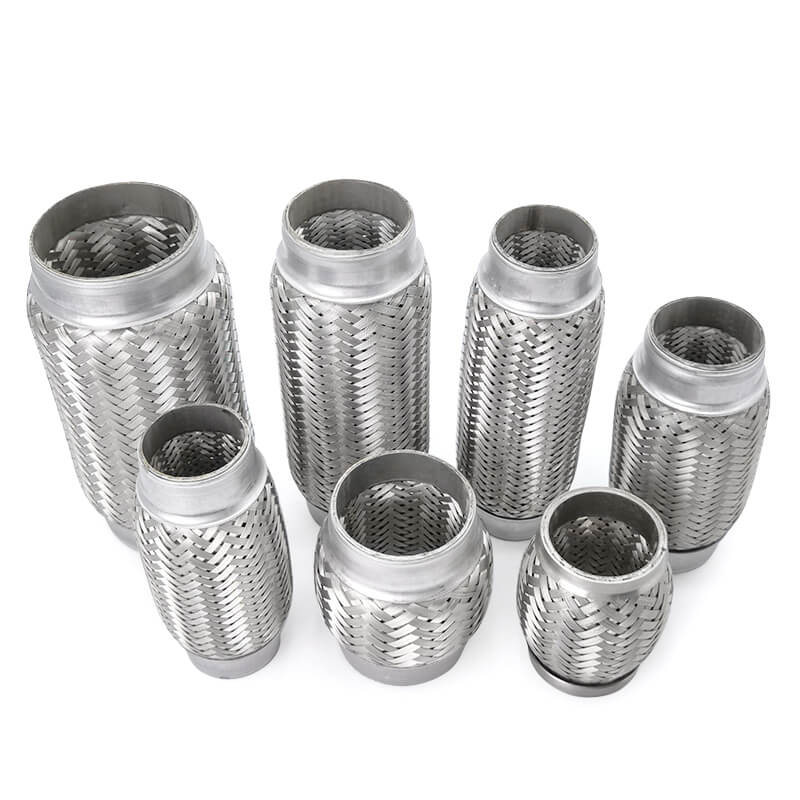
A Stainless Steel Flex Exhaust Pipe is the flexible section of an exhaust system that helps absorb vibration and movement between engine and exhaust components. It gives the system a little room to move instead of forcing that stress into rigid pipe sections, welded joints, or nearby components. When a flex section is chosen well, it helps reduce the risk of cracks, leakage, and premature fatigue. Product guidance and technical installation resources consistently describe the flex section as a vibration-absorbing connector that protects the exhaust system from movement and stress.
That may sound simple, but the part itself is not as basic as it looks. A modern Stainless Steel Flex Exhaust Pipe can be built with a corrugated bellows core, an outer braid, an inner braid, an interlock liner, or pre-welded end connections such as nipples and flanges. Each of those structural choices changes how the part handles exhaust flow, internal turbulence, tensile load, temperature, installation, and service life. At Yueding, we offer standard braid flex pipes, inner braid flex pipe designs, interlock liner flex pipe designs, and installation-friendly flex pipes, meeting different buyers’ performance needs.
In other words, an exhaust flex pipe is not just there to fill a gap. It is there to keep the entire exhaust system working more smoothly under real driving conditions.
Why This Part Matters More Than Ever
The buying logic around exhaust components has changed. Buyers are no longer looking only for something that fits. They want something that lasts, installs cleanly, and reduces the chance of returns, warranty complaints, or repeat labor.
That shift makes sense. Enthusiasts and vehicle owners are still spending heavily in the aftermarket, while truck and commercial applications are moving into an era of tighter emissions expectations and tougher thermal management demands. When exhaust systems have to work harder and last longer, weak flex sections become a bigger problem.
For workshops, distributors, and private-label brands, that creates a clear priority: choose a Stainless Steel Flex Exhaust Pipe that is designed for the actual job, not just one that looks acceptable in a photo.
The Main Flex Exhaust Pipe Benefits Buyers Actually Care About
When people search for flex exhaust pipe benefits, they usually are not looking for theory. They want to know whether spending more on the right part will save them trouble later. In most cases, the answer is yes.
Here are the most important flex exhaust pipe benefits in practical terms:
1. It helps absorb vibration before vibration damages the system
Engine movement, rough roads, and daily use all create stress inside the exhaust line. A flex section works like a buffer. Instead of forcing every movement into rigid tubing and welded joints, it allows controlled movement where the system needs it most. This is one of the main reasons flex pipe is used in both passenger and heavy-duty exhaust systems.
2. It relieves thermal expansion stress
Exhaust systems expand when hot and contract when cool. That repeated cycle creates fatigue over time. A properly designed Stainless Steel Flex Exhaust Pipe helps accommodate that motion so the rest of the exhaust assembly is under less strain.
3. It can improve service life in harsh environments
Not every vehicle lives an easy life. Some run in coastal air. Some deal with winter road salt. Some operate under high humidity, acidic exhaust conditions, or very high temperatures. Stainless steel matters because corrosion resistance and temperature capability directly affect lifespan. At Yueding, we offer customized stainless steel options in 304, 316, 321, and 409.
4. It can support quieter, smoother exhaust performance
This is where structure matters. An inner braid flex pipe is designed to smooth gas flow and reduce turbulence, which can support better noise behavior in standard vehicle applications. If noise reduction and a more refined feel matter, this structure is often more attractive than a basic configuration.
5. It can handle tougher applications when built with the right liner
If the system runs hotter, vibrates more, or sees more load, a stronger internal design matters. That is where an interlock liner flex pipe becomes attractive. It is built to improve tensile strength and heat resistance, making it a better fit for turbocharged engines, commercial trucks, and other demanding applications.
6. It can reduce total maintenance cost
The cheapest part is not always the cheapest solution. If a low-grade exhaust flex pipe fails early, the buyer pays again in labor, downtime, replacement cost, and customer frustration. A better Stainless Steel Flex Exhaust Pipe often costs more up front but makes more sense over the full service life of the vehicle.
That is really the heart of the flex exhaust pipe benefits conversation. The value is not just in the part itself. The value is in fewer headaches after installation.
Common Types of Exhaust Flex Pipe
Not all flex pipes are built the same, and buyers often make better decisions once they stop thinking in terms of “one standard product.” Structure changes performance.
Below is a simple comparison that works well for featured snippets and quick buyer evaluation:
| Type | Best Use | Main Advantage | Typical Buyer Focus |
|---|---|---|---|
| Standard braid flex pipe | Basic replacement applications | Reliable vibration absorption at a lower cost | Price-sensitive aftermarket needs |
| Inner braid flex pipe | Passenger vehicles, smoother operation | Better noise control and reduced turbulence | Comfort, flow stability, bellows protection |
| Interlock liner flex pipe | Turbocharged, high-heat, heavy-duty systems | Better heat resistance and higher tensile strength | Durability, performance, longer lifespan |
| Flex pipe with nipples | Workshops and assembly lines | Easier welding and faster installation | Fitment efficiency and labor savings |
Standard braid for basic vibration damping, inner braid flex pipe for quieter operation and smoother flow, interlock liner flex pipe for high-temperature and high-load use, and nipple versions for easier installation.
A standard flex section may be enough for a routine repair. But if the customer wants a quieter ride, an inner braid flex pipe makes more sense. If the vehicle is dealing with turbo heat, commercial duty, or more severe vibration, an interlock liner flex pipe is often the better long-term choice.
This is why experienced buyers do not ask only for diameter and length. They ask how the flex section is built.
Exhaust Flex Pipe Material Grades Explained
One of the most useful buying topics is exhaust flex pipe material grades. Material choice has a direct effect on corrosion resistance, temperature handling, strength, service life, and cost.
Here is a practical comparison of the most common exhaust flex pipe material grades:
| Material Grade | Where It Fits Best | Why Buyers Choose It |
|---|---|---|
| 304 stainless steel | Most standard automotive applications | Strong balance of corrosion resistance, durability, and cost |
| 316 stainless steel | High salt spray, humid, coastal, or corrosive environments | Better corrosion resistance in harsher conditions |
| 321 stainless steel | Higher-temperature applications | Better suitability for hotter exhaust zones |
| 409 stainless steel | Budget-focused projects | Lower cost option for applications that do not require the highest corrosion resistance |
For most buyers, 304 is the default choice because it covers a broad range of common use cases well. But “default” does not mean “best for everything.”
If the vehicle runs in snowy regions where roads are heavily salted, or in wet coastal areas, 316 can be a smarter choice. If the flex section sits closer to a hotter part of the system, 321 may be more appropriate. If the project is highly cost-sensitive and the environment is less severe, 409 may be enough.
That is the real point of comparing exhaust flex pipe material grades: it helps you avoid paying for the wrong thing, whether that means overbuying or underbuying.
Inner Braid Flex Pipe vs Interlock Liner Flex Pipe
This is one of the most useful product comparisons for buyers, because these two options often get confused.
A inner braid flex pipe is usually chosen for smoother flow behavior, reduced turbulence, and better noise characteristics. It also helps protect the bellows against exhaust pulses. That makes it especially suitable for passenger vehicles and standard aftermarket applications where comfort and balanced performance matter.
A interlock liner flex pipe, on the other hand, is built for tougher work. The interlock structure is more robust under high heat and vibration, and it improves the pipe’s overall tensile strength. That is why it is often preferred for turbocharged systems, performance builds, and commercial truck use.
Here is the easiest way to think about it:
Choose an inner braid flex pipe when refinement, flow smoothness, and standard daily-use durability are the priority.
Choose an interlock liner flex pipe when heat, vibration, and long-term toughness are the bigger concern.
Neither is automatically better in every situation. The right answer depends on the application.
How to Choose an Exhaust Flex Pipe the Smart Way
If your biggest question is how to choose an exhaust flex pipe, use this checklist. It is simple, practical, and much closer to how real buyers make decisions.
Check the application first
Start with where the part will be used.
Is it for a passenger car, a heavy-duty truck, a turbocharged setup, or an industrial exhaust system? A flex section that works well in a standard road vehicle may not be strong enough for high heat or constant vibration.
Match the material to the environment
This is where exhaust flex pipe material grades matter.
If corrosion resistance is a bigger concern, higher-grade stainless options deserve more attention. If the system runs hotter, heat capability matters more. If the project is very budget-focused, cost-effective grades may still work, but only if the operating conditions are reasonable.
Choose the right internal structure
This step is where many buyers get it wrong.
A basic replacement part is not the same as an inner braid flex pipe. And an inner braid flex pipe is not the same as an interlock liner flex pipe. If the customer expects a quieter result, smoother gas flow, or more bellows protection, that should affect the choice. If the application is more severe, the stronger interlock design usually makes more sense.
Confirm the dimensions carefully
A great part still becomes a problem if the size is off. Measure inlet diameter, body length, overall length, and connection allowance carefully. Technical installation guidance for commercial flex pipe also emphasizes overlap allowance, inspection of mounts and hangers, and correct installation position for the longest service life.
Think about installation, not just product spec
For workshops and assembly teams, installation time matters. A version with pre-welded nipples or the right end connection can save labor and improve repeat fitment.
Review quality control before buying in bulk
If you are sourcing more than a few pieces, process quality matters as much as product design. Yueding strictly follows IATF 16949 standards and performs 100% air tightness testing, corrosion testing, and fatigue lifecycle analysis, while also re-checking incoming material chemistry. Those are the kinds of details serious B2B buyers should always verify.
That is the practical answer to how to choose an exhaust flex pipe: choose by use condition, structure, material, fitment, and supplier consistency, not by price tag alone.
A Quick Buying Checklist for Distributors, Workshops, and Brands
If you need a faster decision tool, this list works well:
Vehicle type: passenger, heavy-duty, performance, industrial
Operating temperature: standard or high heat
Corrosion exposure: normal, humid, coastal, salt-heavy
Preferred structure: standard, inner braid flex pipe, or interlock liner flex pipe
Material grade: 304, 316, 321, or 409
End connection: bare ends, nipples, or flanges
Size details: diameter, body length, overall length, overlap needs
Testing: leak testing, fatigue testing, corrosion resistance checks
Supply factors: MOQ, lead time, customization, packaging, branding
This kind of checklist is also why keyword intent matters. Someone searching how to choose an exhaust flex pipe is usually very close to a purchase decision. Someone searching OEM stainless steel flex exhaust pipe is often already thinking about supplier capability, consistency, private labeling, and batch quality.
Mistakes Buyers Should Avoid
A good buying guide should also point out what not to do.
Mistake 1: Buying only on unit price
This is the most common mistake. A cheap exhaust flex pipe may save a small amount on the invoice but cost much more later in returns, labor, downtime, or lost trust.
Mistake 2: Ignoring structure differences
Many buyers still treat all flex pipes as interchangeable. They are not. An inner braid flex pipe and an interlock liner flex pipe are designed for different priorities. Choosing the wrong one often leads to avoidable problems.
Mistake 3: Choosing the wrong stainless grade
This is why exhaust flex pipe material grades should never be treated as a minor spec. Material selection changes how the product handles corrosion, temperature, and lifespan.
Mistake 4: Measuring only the visible gap
Correct installation requires more than just looking at the open space between pipes. Overlap allowance, movement range, and system alignment all matter.
Mistake 5: Overlooking the supplier
Even a good design can become a bad purchase if the supplier cannot keep wall thickness, braid tension, welding quality, and dimensional consistency under control.
Why More Buyers Are Looking for OEM Stainless Steel Flex Exhaust Pipe Solutions
As the market becomes more competitive, more buyers want more than just a standard catalog item. They want a supply partner that can support branding, repeat quality, stable lead times, and custom structure options. That is why OEM stainless steel flex exhaust pipe has become such an important search term.
For private-label brands, distributors, and larger aftermarket sellers, an OEM stainless steel flex exhaust pipe solution offers several advantages:
Better control over sizing and fitment strategy
Custom packaging and branding options
More consistent batch quality
Lower return risk
Easier SKU planning for different markets
Better support for premium product lines
Yueding has 30 years of manufacturing experience, a 20,000-square-meter factory, full in-house production capabilities, OEM/ODM service capabilities, flexible MOQ policies for standard specifications, as well as services such as custom packaging, laser marking, and custom mold development. It currently serves customers in more than 100 countries and regions worldwide.
That matters because the best OEM stainless steel flex exhaust pipe supplier is not just selling parts. They are helping buyers reduce risk.
Why a Professional Manufacturer Makes a Real Difference
If you are buying in bulk, the supplier question matters almost as much as the product question.
A professional manufacturer should be able to offer:
Stable material sourcing
Forming, braiding, and welding consistency
Standard and custom dimensions
Clear testing procedures
Reliable lead times
Packaging and branding support
Technical communication during development
Long-term supply stability
For a workshop, that can mean fewer rework headaches. For a distributor, it can mean lower complaint rates. For a brand owner, it can mean a more reliable product line.
Conclusion
A Stainless Steel Flex Exhaust Pipe may look like a small component, but it plays a very big role in exhaust system reliability. The right part helps absorb vibration, handle thermal movement, resist corrosion, support quieter performance, and reduce the risk of cracks or leaks.
If you are comparing options, focus on the things that actually matter: structure, material, fitment, installation method, testing, and supplier reliability. That is how you get the real flex exhaust pipe benefits instead of just buying another part that may need to be replaced too soon.
And if you are still deciding how to choose an exhaust flex pipe, keep it simple: match the product to the application. Choose the right exhaust flex pipe material grades. Decide whether you need a standard design, an inner braid flex pipe, or an interlock liner flex pipe. Then work with a supplier that can deliver the same quality again and again.
For buyers looking for bulk supply, custom sizing, and long-term OEM support, an OEM stainless steel flex exhaust pipe program can be the smartest next step.
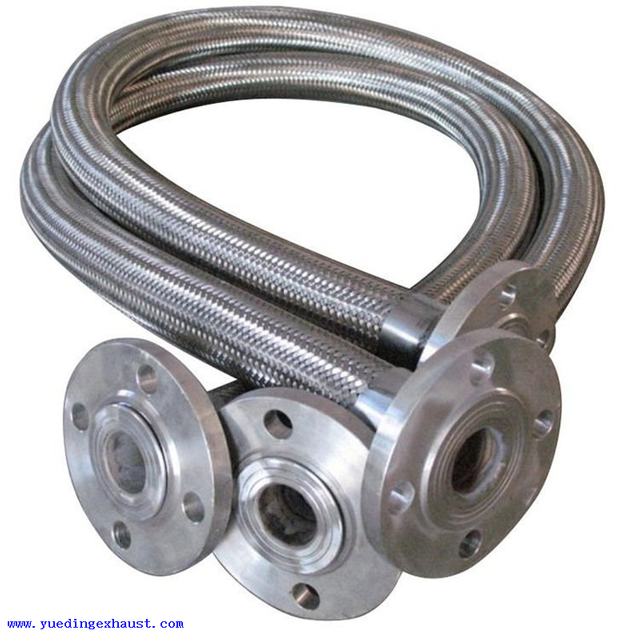
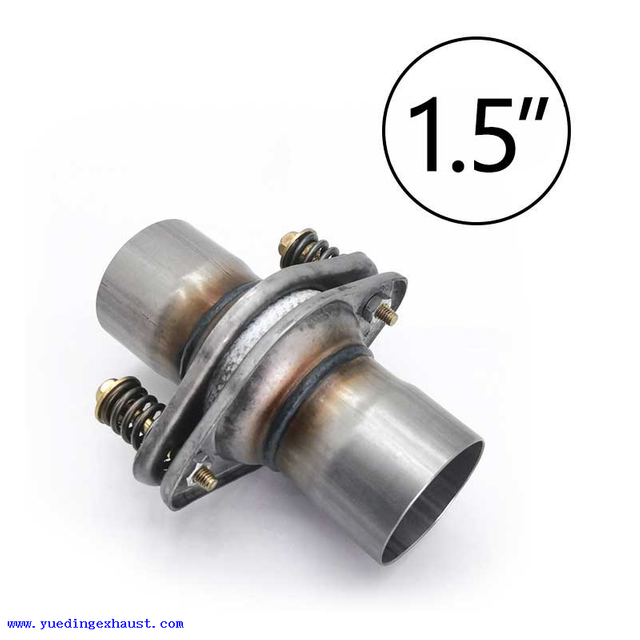


About Yueding
YUEDING manufactures stainless steel exhaust flexible connectors, clamps, metal bellows, and selected automotive exhaust components under ISO and IATF quality systems. With in-house production, inspection, and packaging capabilities, we support bulk orders, standard-size inventory, and customized branding for global B2B customers.
Reliable Delivery
Stable production planning, standard-size inventory, and batch shipping support help make delivery more predictable.

Factory Direct
Production, inspection, and packaging are managed in-house, making communication, quality control, and customization more efficient.

Integrated Supply
We supply flex pipes, clamps, metal bellows, and selected exhaust components to support related purchasing needs from one manufacturer.

