
V-Band Clamp Temperature Ratings And Material Limits
How hot can a V-band clamp safely operate? The answer is not one fixed number. There is no universal v band clamp temperature rating for every clamp design. Band, bolt, latch, retainer, and flange materials can have different heat limits. Continuous heat, short temperature peaks, corrosion, and thermal cycling also affect performance. In this article, we explain how these factors work together. You will also learn how to identify the weakest temperature-limited part in the complete V-band joint.

What Actually Determines a V-Band Clamp Temperature Rating?
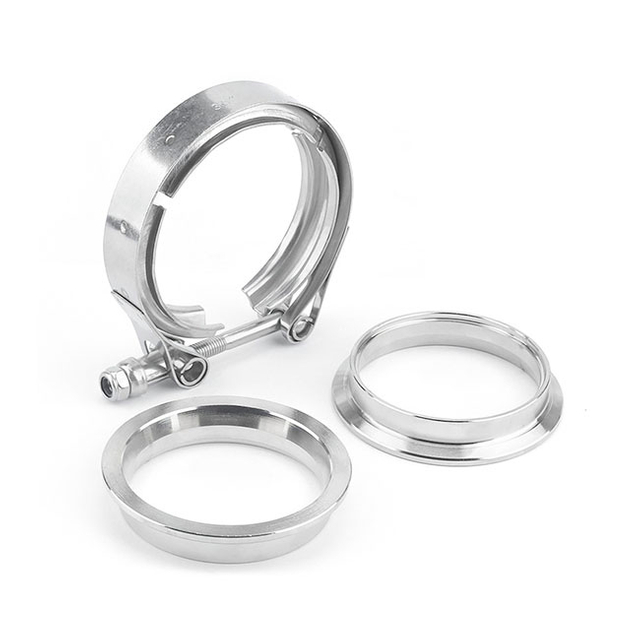
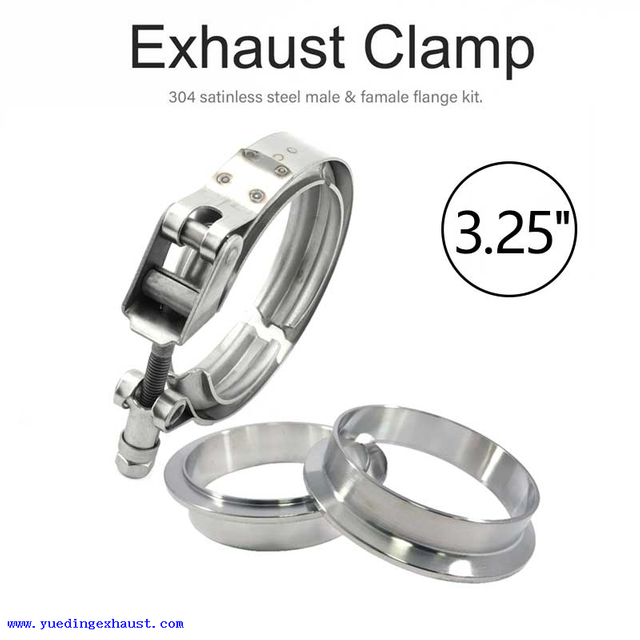
A V-band clamp does more than hold two pipes together. It converts bolt tension into force around the flange. That force must stay high enough during normal operation. For high-temperature service, we need to ask a better question. Which part reaches its practical material limit first?
Band and V-Retainer Material
The outer band carries tension around the joint. The V-shaped retainers transfer this force toward the mating flanges. Both parts need enough strength at operating temperature. A stainless band may remain visually undamaged at high heat. However, its mechanical strength can still fall. It may stretch more easily or lose some ability to maintain joint force. Retainer geometry also matters. Thin sections react differently from thicker sections. Forming condition and alloy grade can affect high-temperature behavior too. This is why material name alone is not enough. We should review the alloy, thickness, design, and expected clamp load together.
T-Bolt and Fastener Material
The T-bolt creates the preload needed for sealing. If its preload falls, the entire joint may become less stable. This can happen even when the band remains serviceable. Higher temperatures can reduce fastener strength. Long exposure may also encourage stress relaxation. Severe service can introduce creep or thread damage. For this reason, the bolt may become the limiting component. A stronger band cannot compensate for a weak fastener. Both need suitable high-temperature performance.
Latch, Trunnion, Nut, and Hardware Materials
A V-band assembly may contain several smaller load-bearing parts. These include trunnions, nuts, pins, washers, and latch components. Quick-release designs may include even more hardware. These parts often receive less attention during selection. However, they remain part of the mechanical load path. If one loses strength, the clamp may lose preload. Different materials can also expand at different rates. This changes force distribution during heating. It may affect bolt tension or latch alignment. Therefore, the material specification should cover all critical hardware. Buyers should not focus only on the visible band.
V-Band Flange Material
The clamp cannot work correctly without stable flanges. Flange material affects expansion, stiffness, sealing alignment, and resistance to distortion. Two flange materials may expand differently during heating. This can change how the clamp loads the joint. Large temperature swings make this effect more important. Thin flanges may also deform more easily. Once the flange profile changes, the clamp may not seat correctly. Leakage may occur even when the clamp itself remains intact.
Continuous Temperature vs Peak Temperature
Continuous operating temperature describes long-term heat exposure. Peak temperature describes a shorter event. These two conditions should not be treated equally. A short exhaust temperature spike may not define the real clamp limit. The assembly may survive it without meaningful damage. However, long exposure can reduce strength or preload. When reviewing a v band clamp temperature rating, ask what the number means. Is it continuous, intermittent, or only a short-duration maximum? That distinction can change material selection.
Clamp Temperature vs Gas Temperature
Exhaust gas temperature is not always the clamp temperature. The actual metal temperature may be lower. It depends on the installation. Distance from the manifold can reduce heat exposure. Airflow can cool the joint. Insulation can raise local metal temperature instead. Flange mass also changes heat transfer. Heavy flanges may warm more slowly. Thin flanges may respond faster to exhaust conditions. For better selection, use expected clamp metal temperature when possible. Measured data is even better for critical systems.
How Band Material Affects V-Band Clamp Temperature Limits
The band and retainer usually receive the most attention. Their material needs enough strength and oxidation resistance. It must also maintain useful mechanical properties during service. Different stainless grades can perform very differently. High-temperature alloys can extend the usable range. However, the rest of the clamp must match them.
300-Series Stainless Steel Bands
300-series stainless steels are common in exhaust hardware. They offer useful corrosion resistance and good formability. They also support many standard fabrication methods. Grades such as 301 or 304 may suit many moderate-temperature applications. However, their strength changes as temperature increases. The available clamp load may therefore need adjustment. This is a key point for buyers. A material can remain oxidation-resistant yet lose mechanical capacity. Temperature resistance should not mean only “the metal will not melt.” The clamp design also affects performance. Band thickness, retainer profile, and preload requirement must be considered.
321 and Other Stabilized Stainless Steels
Stabilized stainless grades may be considered for hotter exhaust systems. They are often selected where repeated thermal exposure is expected. They can offer advantages over common general-purpose grades. 321 stainless steel is frequently associated with heated exhaust components. It may suit applications involving repeated temperature cycling. However, it does not create a universal clamp temperature rating. The bolt may still use another grade. The latch may also use a different alloy. We must confirm the complete material combination.
Nickel-Based and High-Temperature Alloy Bands
Very demanding systems may require higher-temperature alloys. Nickel-based materials can offer better strength retention at elevated temperatures. They may also handle severe oxidation conditions more effectively. Possible applications include turbine systems, aerospace exhausts, or extreme industrial equipment. Some clamp designs may also use A286 or related heat-resistant fastener alloys. These materials usually increase cost. They should be selected for a clear engineering reason. A premium alloy is not automatically necessary for every hot exhaust joint. The final choice should match real metal temperature. It should also match required load and thermal cycling.
How Bolt and Latch Materials Can Limit Temperature
A clamp band cannot work alone. The bolt creates the force that makes the V-profile function. The latch transfers and controls that force. This makes hardware selection critical. In some assemblies, the hardware reaches its useful limit before the band.
Why Bolt Preload Matters at High Temperature
Bolt preload keeps the joint compressed. It helps the retainer stay seated against both flanges. If preload drops too far, movement can begin. Heat can change bolt length and strength. It can also change the dimensions of surrounding parts. These changes alter the original installation tension. Repeated cycles may make the effect worse. The connection can slowly lose stability. Leakage may then appear after many operating cycles. This is why hot-service fasteners need careful review. Room-temperature strength alone is not enough.
Matching Bolt Material to the Band
The bolt should support the same service environment as the band. This does not mean both must always use the same alloy. It means both need compatible performance. For example, a high-temperature band may use a stronger fastener alloy. The goal is to maintain useful preload. We should avoid creating one weak point. Material expansion also matters. Large differences can change joint loading during heating. A balanced material combination is usually easier to manage.
Quick-Release Latches and High-Temperature Service
Quick-release clamps add convenience during maintenance. However, they also add more mechanical parts. Each part needs suitable temperature capability. Pins can expand. Springs can lose force. Locking mechanisms can also distort after severe heat exposure. For hot exhaust service, ask whether the latch is qualified too. Do not assume its rating matches the band automatically.
How V-Band Flange Materials Affect the Usable Temperature Range
The flange is part of the connection system. A good clamp cannot correct a badly distorted flange. It also cannot prevent every problem from material mismatch. We should therefore review flange material during clamp selection. This becomes more important as temperature rises.
Thermal Expansion Between Clamp and Flange
Metals expand when heated. Different alloys expand at different rates. This can change the mechanical relationship between the clamp and flange. Small differences may cause few problems. Large temperature changes can magnify them. The result may be higher or lower clamp load. A mixed-material joint deserves extra attention. We should consider its full heating and cooling cycle.
Flange Distortion and Groove Geometry
V-band connections rely on accurate geometry. The flange angle guides the retainer into position. Poor geometry changes how force enters the joint. High heat can distort thin flanges. Welding can add more distortion before service even begins. Weak flange support can make the problem worse. Once the sealing faces move, leakage risk increases. Tightening the clamp harder is not always the answer. Excess torque can damage the clamp instead.
Oxidation and Corrosion at Elevated Temperature
High-temperature materials must resist more than strength loss. They may also face oxidation, moisture, chemicals, or road salt. Industrial exhaust gases can introduce additional concerns. A material may perform well mechanically but corrode quickly. Another may resist corrosion but lose strength too early. This is why application environment matters. Buyers should consider temperature and chemical exposure together.
Why Thermal Cycling Can Matter More Than Maximum Temperature
Many exhaust systems do not stay hot all day. They heat during operation and cool after shutdown. This creates repeated dimensional changes. A clamp may survive one hot event easily. Thousands of cycles create a different challenge.
Heating and Cooling Change Clamp Preload
The band, bolt, and flange all expand during heating. They may not expand by the same amount. This changes the original installation load. When the system cools, they contract again. Repeated cycles can slowly alter joint conditions. The effect is especially important near engines or turbochargers. These areas can see rapid thermal changes. They often need stronger attention to material compatibility.
Thermal Fatigue in the Band and Retainer
Repeated expansion can create localized stress. Formed retainer sections can be sensitive areas. Welds and band transitions may also carry concentrated loads. Small movement may not cause immediate failure. Over time, fatigue damage can develop. Cracks may then appear near highly stressed areas. A good material choice reduces risk. Good geometry and correct installation remain important too.
Inspection After Severe Thermal Service
High-temperature joints should be inspected during maintenance. Visual checks can reveal early signs of trouble. They also help confirm whether the material choice is working. Look for:
Cracks around retainer sections.
Band stretching or visible distortion.
Damaged welds or spot-weld areas.
Burned or damaged bolt threads.
Loose nuts or reduced clamp tension.
Warped or discolored flange surfaces.
Evidence of exhaust leakage.
One symptom does not always prove clamp failure. It does show the joint needs closer review.
How to Select a V-Band Clamp for High-Temperature Applications
A practical selection process begins with operating conditions. We should then review every load-bearing part. This approach is safer than starting from a catalog temperature number. The table below summarizes the main checks.
Component | What to Verify |
Band | Alloy, thickness, strength retention, oxidation resistance |
V-Retainer | Material, profile, segment design, thermal stability |
T-Bolt | Alloy, high-temperature strength, preload retention |
Nut and Trunnion | Material compatibility, thread condition, thermal expansion |
Latch | Pins, springs, locking parts, rated service conditions |
Flange | Alloy, thickness, geometry, expansion, distortion resistance |
Define the Real Temperature Conditions
First, identify the real temperature range. Avoid using only the highest exhaust gas value. That value may not represent clamp metal temperature. Confirm the main operating conditions:
Temperature range: Check normal operating temperature, maximum sustained metal temperature, and short-duration peaks.
Thermal environment: Review heating and cooling frequency, ambient airflow, nearby insulation, and heat shielding.
Exposure conditions: Consider chemical contact, corrosive gases, moisture, or other environmental factors.
For critical systems, direct temperature measurement is valuable. It reduces unnecessary assumptions during material selection.
Check Every Load-Bearing Material
Next, review the complete bill of materials. The weakest component can define the practical limit. This principle applies even when one part uses a premium alloy. For example, a nickel-alloy band may tolerate severe heat. However, a standard fastener may lose useful preload sooner. The higher band capability then adds little value. Ask for material grades instead of broad descriptions. “Stainless steel” is often too general. Buyers need the actual grades for important components.
Compare Temperature Rating With Required Clamp Load
Temperature capability should be linked to mechanical load. The clamp still needs enough force to hold the joint. Surviving heat alone is not enough. Material strength normally falls as temperature rises. The usable clamp load may therefore change. Manufacturers may provide derating data for certain designs. This is more useful than one maximum temperature value. It shows whether the clamp can still carry the required load.
Confirm the Complete Assembly With the Supplier
Before approving a hot-service clamp, confirm how the complete assembly performs at the expected temperature. Do not rely only on the band material or a single published temperature value. Ask the supplier to clarify three areas:
Material configuration: Confirm the alloys used for the band, retainer, T-bolt, latch, and other load-bearing hardware.
Temperature conditions: Check whether the stated limit applies to continuous or intermittent service. Also confirm whether it refers to gas temperature or actual metal temperature.
Load and testing: Ask whether allowable clamp load decreases as temperature rises. Confirm whether the complete joint has been evaluated under thermal cycling.
For demanding applications, documented temperature and load data are more useful than a general material claim. Experience from similar exhaust systems can also support final selection.
Common Mistakes When Interpreting V-Band Clamp Temperature Ratings
Temperature claims can look simple on product sheets. Real applications are less simple. Several common assumptions can lead to poor selection. Avoiding these mistakes makes specification work much easier.
Assuming All Stainless Clamps Have the Same Rating
“Stainless steel” covers many alloys. Their mechanical properties are not identical. Their high-temperature behavior also differs. Two clamps can look nearly the same. One may use a different band grade or bolt alloy. Their practical service limits may therefore be very different.
Using Melting Point as the Temperature Limit
Melting point is not a practical clamp rating. A clamp can become unreliable far below melting temperature. Strength may decline first. Preload can relax. Oxidation or fatigue may also become important. For this reason, melting temperature offers little selection value. We need usable mechanical performance instead.
Looking Only at the Band Material
The band is only one part. The bolt, latch, trunnion, and flange also carry load. Each one can limit performance. Consider a clamp using a high-temperature band. If its bolt loses preload earlier, the assembly still becomes unreliable. The better band cannot prevent this problem. The same logic applies to flanges. A distorted flange can defeat an otherwise suitable clamp.
Treating One Published Temperature as Universal
A published temperature usually applies to a specific design. It may depend on material, load, and test conditions. It should not be copied to every V-band clamp. Ask how the value was established. Check whether it represents continuous service or a temporary peak. If this information is missing, request clarification. It is better than designing around an uncertain number.
Conclusion
There is no universal v band clamp temperature rating. The practical limit depends on the band, bolt, latch, flange, preload, actual component temperature, and thermal cycling. Buyers should verify material grades and temperature-load data for every critical part. The lowest proven limit should guide the final joint rating. Zhejiang Yueding Corrugated Tube Co., Ltd. provides V-band clamp solutions designed for reliable exhaust connections and application-specific material requirements.
FAQ
Q: What determines a v band clamp temperature rating?
A: A v band clamp temperature rating depends on the band, retainer, bolt, latch, and flange materials. Continuous heat, peak temperature, and required preload also affect the practical limit.
Q: Is one v band clamp temperature rating suitable for all clamps?
A: No. Each v band clamp temperature rating depends on its material combination and design. The lowest-rated critical component can limit the complete joint.
Q: Why can a v band clamp temperature rating decrease at high heat?
A: A v band clamp temperature rating can become lower when materials lose strength. Fasteners may also relax, reducing preload and joint stability.
Q: Which material is better for a high temperature V-band clamp?
A: Stabilized stainless or nickel-based alloys may suit higher temperatures. Selection should still consider bolt, latch, flange, and actual operating conditions.
Q: Do high temperature V-band clamp materials cost more?
A: Usually. Premium stainless, nickel alloys, and upgraded fasteners cost more, but they may provide better strength retention and longer service life.
Q: Why does a V-band clamp become loose after heating?
A: Thermal expansion, repeated heat cycles, or fastener relaxation can reduce preload. Check the bolt, latch, flange alignment, and signs of distortion.






About Yueding
YUEDING manufactures stainless steel exhaust flexible connectors, clamps, metal bellows, and selected automotive exhaust components under ISO and IATF quality systems. With in-house production, inspection, and packaging capabilities, we support bulk orders, standard-size inventory, and customized branding for global B2B customers.
Reliable Delivery
Stable production planning, standard-size inventory, and batch shipping support help make delivery more predictable.

Factory Direct
Production, inspection, and packaging are managed in-house, making communication, quality control, and customization more efficient.

Integrated Supply
We supply flex pipes, clamps, metal bellows, and selected exhaust components to support related purchasing needs from one manufacturer.

