
Inner Braid vs Interlock Exhaust Flex Pipe: What’s the Difference?
You may ask what makes an inner braid exhaust flex pipe different from an interlock design. The biggest difference is how each one deals with stress, heat, and shaking in your car’s exhaust system. Inner braid designs let air move more smoothly and help make things quieter. Interlock styles are stronger and give more support, especially when it gets very hot. Studies show that interlock pipes last longer and can handle heavy weight better. Inner braid pipes cost less and work well in most regular systems. Picking the right exhaust flex pipe can help your car work better and make your parts last longer.
Key Takeaways
Inner braid exhaust flex pipes help air move smoothly. They also make less noise. This makes them good for everyday driving.
Interlock exhaust flex pipes are very strong. They can handle high heat and heavy weight. These are best for trucks and hard jobs.
Think about how and where you drive before picking a flex pipe. Use inner braid if you want comfort. Pick interlock if you need something tough.
Check your flex pipe every six months. Change it every 50,000 to 80,000 miles. This helps your car work its best.
Pick strong materials like stainless steel. This helps your flex pipe last longer and work better in tough places.
Comparison Overview
Key Features Side-by-Side
You want to know how inner braid and interlock exhaust flex pipes compare. The table below shows the main differences. This will help you see which type fits your needs best.
Feature | Inner Braid Exhaust Flex Pipe | Interlock Exhaust Flex Pipe |
|---|---|---|
Durability | Strong under heavy loads and heat | |
Airflow | Smooth airflow, less friction | Good airflow, more flexible |
Noise Reduction | Quieter operation, less vibration | Slightly louder, more vibration |
Cost | Usually costs more | More budget-friendly |
Maintenance | Needs regular checks for braid wear | Less frequent checks needed |
Lifespan | Good for most vehicles | Longer in tough conditions |
Tip: If you drive in harsh weather or use your car for heavy-duty work, you may want to choose an interlock exhaust flex pipe. For daily driving and quieter rides, inner braid works well.
Pros and Cons Summary
You should look at the strengths and weaknesses of each exhaust flex pipe before you decide.
Inner Braid Exhaust Flex Pipe
Pros:
Gives you smoother airflow.
Reduces noise and vibration.
Protects the bellows inside.
Cons:
Costs more than interlock types.
The braid can wear out over time, so you need to check it often.
Interlock Exhaust Flex Pipe
Pros:
Handles high heat and heavy loads.
Lasts longer in tough driving conditions.
Costs less, which helps your budget.
Cons:
Can be a bit noisier.
Airflow is not as smooth as inner braid.
You can make your choice based on your driving style, budget, and how much noise you want to hear from your exhaust flex pipe.
Inner Braid Exhaust Flex Pipe
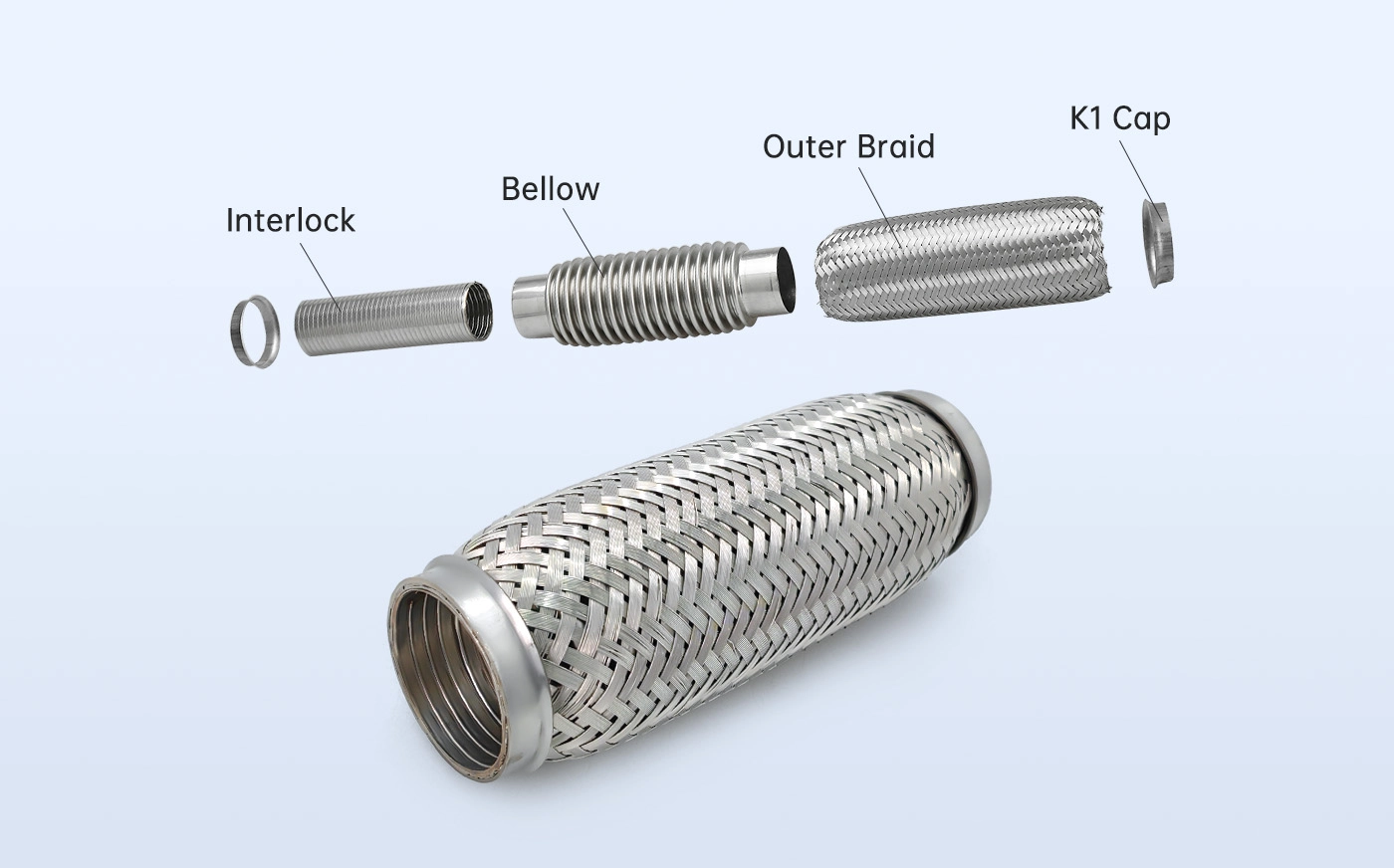
Construction and Design
An inner braid exhaust flex pipe has a metal braid inside. The braid sits between the liner and the shell. Its main job is to absorb movement and vibration. Most pipes use stainless steel because it is strong and does not rust easily. You can see how different materials work in the table below:
Material Type | Properties | Performance Impact |
|---|---|---|
304 Stainless Steel | High corrosion resistance, heat tolerance | Ideal for harsh environments and high temperatures |
201 Stainless Steel | Moderate corrosion resistance, cost-effective | Suitable for standard applications |
T409 Stainless Steel | Good flexibility, cost-efficient | Common in OEM applications |
T316 Stainless Steel | Marine-grade, excellent corrosion resistance | Best for marine environments and high-performance vehicles |
The braid makes the pipe stronger and more flexible. It helps the pipe last longer by lowering stress on the bellows.
Main Benefits
Choosing an inner braid exhaust flex pipe gives you many good things:
Air moves smoothly through the pipe, so your engine works better.
There is less noise and vibration, so your ride is quieter.
The braid spreads out energy and protects the pipe from cracks.
The pipe lasts longer because it handles engine movement well.
The inner braid also lowers vibrations, which keeps other parts safe.
Tip: If you want a quiet car and smooth exhaust flow, inner braid is a smart pick.
Drawbacks
There are some downsides to this pipe you should know:
The braid can wear out in very hot or high-pressure places.
You need to check the pipe often for damage or wear.
The price is usually higher than other types.
The pipe lasts a long time for most cars, but not if you push it too hard.
Inner braid exhaust flex pipes give you steady performance for normal driving. If you want less noise and more protection, this design is a good choice.
Interlock Exhaust Flex Pipe
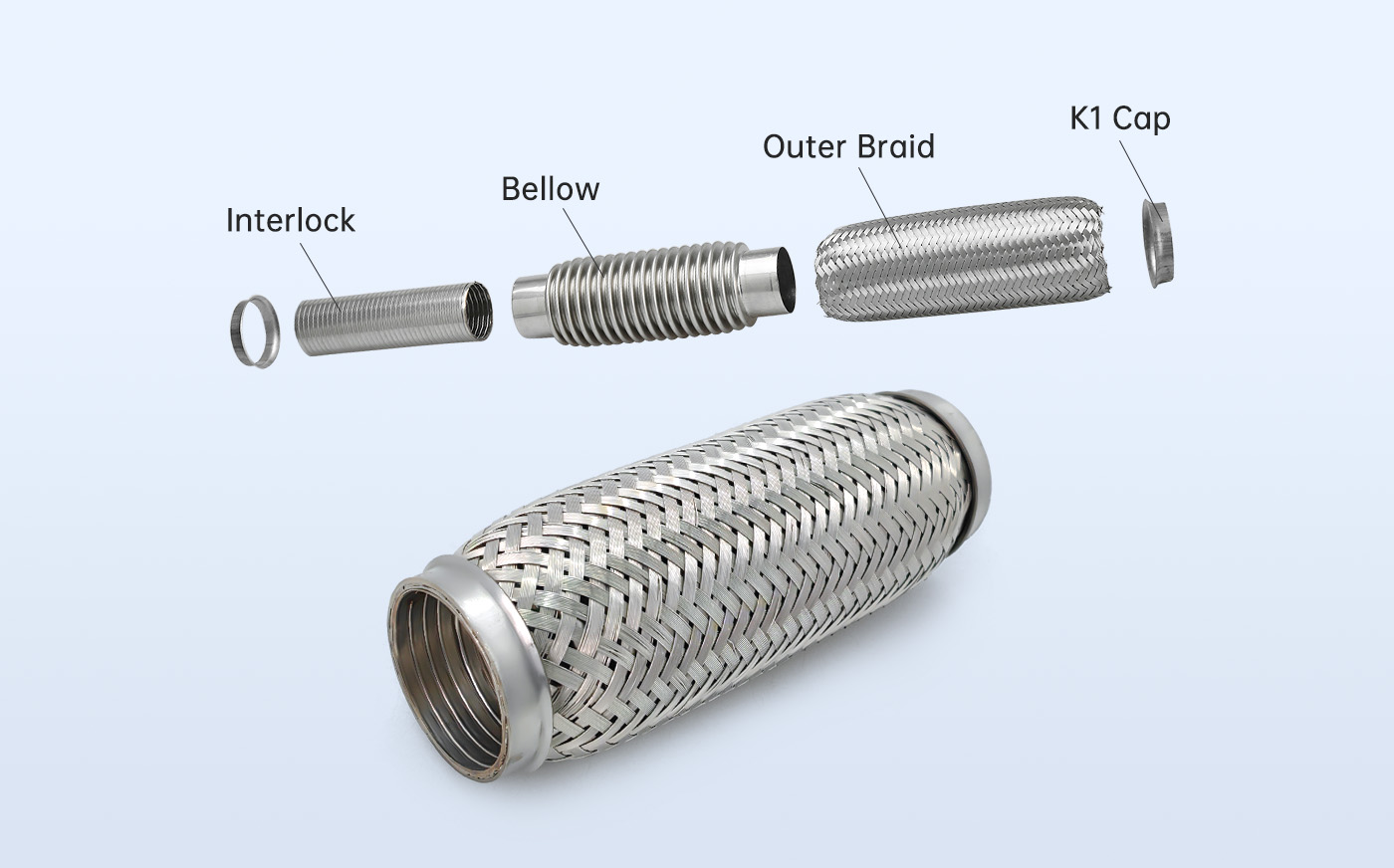
Construction and Design
An interlock exhaust flex pipe has a special build. It uses a flat metal strip inside instead of a braided liner. This strip locks together and forms a smooth tube. Exhaust gases move through the tube easily. There is no mesh on the outside, so the pipe looks neat and simple. The table below shows how the inside of an interlock liner is different from an inner braid:
Type | Internal Structure Description | Impact on Exhaust Flow |
|---|---|---|
Interlock Liner | Flat strip stays out of the way, giving straight flow | Helps hot exhaust gases move smoothly |
Inner Braid | Braid can stick into the pipe in bigger sizes, which might slow flow | Keeps the exhaust bellow safe, but may slow flow in big pipes |
This design lets the pipe handle lots of heat and heavy weight. You get a strong pipe that works well for tough jobs.
Main Benefits
There are many good things about picking an interlock exhaust flex pipe:
The pipe is lighter and simple to put in because it has no mesh.
It costs less to make, so you pay less when you buy it.
The interlock build makes the pipe stronger, so it lasts longer in hard conditions.
The flat liner keeps exhaust moving well, even when the engine is very hot.
Note: If you drive a truck for work or tow heavy stuff, an interlock exhaust flex pipe can take the extra stress.
Drawbacks
There are some things you should think about:
Without a braided lining, the pipe may wear out faster than other types.
You might hear more noise and feel more shaking because the pipe does not block sound much.
Air moves smoothly, but it is not as quiet as an inner braid pipe.
If you want a pipe that costs less and can handle heat and heavy use, this is a good pick. Just remember, you might hear more noise from your exhaust.
Key Differences Explained
Durability
You want your exhaust to last a long time. Inner braid pipes are strong for daily driving. The braided liner helps stop shaking and small movements. This keeps the pipe from cracking or leaking. Interlock pipes are good for heavy loads and high heat. The flat metal strip inside locks together and makes a tough tube. Interlock pipes work well in harsh places. Trucks and turbo engines use interlock pipes because they handle more stress. If you drive a regular car, inner braid pipes are good for normal use.
Flexibility and Airflow
Your engine needs smooth airflow to work well. Inner braid pipes let air move with less friction. The braided liner keeps the flow steady and stops turbulence. This helps your engine breathe and run better. Interlock pipes also give good airflow, but the flat strip inside can make more resistance. You might notice this in bigger pipes. Inner braid pipes bend easily and absorb movement. Interlock pipes stay strong but do not flex as much. Pick the pipe that fits how you drive.
Noise and Vibration
You want your car to be quiet. Inner braid pipes lower noise and vibration. The braid absorbs sound and keeps your car peaceful. You hear less rumbling from the exhaust. Interlock pipes do not block sound as well. You may hear more noise and feel more shaking. This matters if you drive far or want comfort. Trucks and buses use interlock pipes because they need strength, not quietness. Passenger cars use inner braid pipes to keep the cabin calm.
Typical Applications
You need the right pipe for your vehicle. Manufacturers say inner braid pipes are best for passenger cars. These pipes cut noise and vibration. You get a smoother ride. Interlock pipes fit trucks, buses, and turbo engines. These vehicles need pipes that handle heat and heavy loads. You see interlock pipes in work vehicles and high-performance engines.
Type of Flex Pipe | Common Applications | Characteristics |
|---|---|---|
Inner Braid | Passenger Cars | Reduces turbulence and noise, ideal for vibration reduction |
Interlock | Trucks, Buses, Turbocharged Engines | Handles higher heat and pressure, suitable for heavy-duty applications |
Inner braid pipes are best for cars where comfort matters.
Interlock pipes are good for trucks and engines that need extra strength.
If you want a quiet and smooth ride, pick an inner braid pipe. If you need durability for tough jobs, choose an interlock pipe. Match the exhaust flex pipe to your vehicle and how you drive.
Choosing the Right Flex Pipe
Vehicle and Performance Needs
You need to pick a flex pipe that fits your car. Think about how you drive and where you drive. High-performance cars need pipes that handle more heat and shaking. Stainless steel is good because it does not rust and can take high temperatures. Make sure the pipe size and how it connects match your car. Check the table to see what you should look for before buying:
Factor | What to Look For |
|---|---|
Application environment | Temperature, pressure, and vibration levels |
Material selection | Stainless steel or aluminum alloy for strength and corrosion resistance |
Structural type and design | Single or double-layer for flexibility and durability |
Size and connection | Correct fit for safe installation (flange, welding, clamp) |
Manufacturer reputation | Trusted brands for quality and reliability |
Tip: Pick a flex pipe that fits your car and how you drive. This helps your car work its best.
Budget Considerations
You want a flex pipe that gives you good value. Aluminized steel costs less and lasts about 5–8 years in most cars. If you drive a work truck or need more strength, you may need to pay more for a stronger pipe. The table below shows how different materials compare:
Material Type | Cost-Effectiveness | Durability | Best Use |
|---|---|---|---|
Aluminized Steel | High | 5–8 years | Light-duty, daily driving |
Stainless Steel | Moderate-High | 8+ years | High-performance, harsh use |
If you want to save money, pick a pipe that balances price and how long it lasts.
Replacement Tips
You can help your flex pipe last longer with good care. Check your pipe two times each year. Replace it every 50,000–80,000 miles or if you hear strange sounds. Here are some tips to help you avoid mistakes:
Tighten the new pipe with clamps or bolts so it does not leak.
Start your car and listen for weird noises after you put in the pipe.
If you are not sure or do not have the right tools, ask a mechanic for help.
Maintenance Task | Recommended Interval |
|---|---|
Replace flex pipes | Every 50,000–80,000 miles |
Regular inspection | At least twice a year |
Check for symptoms (e.g., noise) | As needed |
Checking your Exhaust Flex Pipe often and installing it right helps it last longer. Your car will run better and smoother.
You should pick a flex pipe that fits your car and how you drive. Inner braid pipes are good for cars and make rides quieter. Interlock pipes are better for trucks and strong engines. Look at the table below for a quick guide:
Type | Best For | Features |
|---|---|---|
Inner Braid | Passenger vehicles | Noise reduction, protects against pulses |
Interlock | Trucks, turbo engines | Handles heat, strong under heavy loads |
Experts say you need to think about how tough the pipe is, how loud it is, and where you use it. Pick strong materials like stainless steel. Make sure you clamp and hold the pipe tight. Kipflex and Kinrom both give a 1-year warranty for their pipes.
FAQ
What is the main purpose of an exhaust flex pipe?
You use an exhaust flex pipe to absorb movement and vibration. This helps protect your exhaust system from cracks and leaks. It also keeps your ride smoother.
How often should you check or replace your exhaust flex pipe?
You should inspect your flex pipe twice a year. Replace it every 50,000–80,000 miles or if you notice noise, leaks, or visible damage.
Can you install an exhaust flex pipe yourself?
You can install a flex pipe if you have basic tools and follow instructions. If you feel unsure, ask a mechanic for help. Safety matters.
Which flex pipe is quieter for daily driving?
Inner braid flex pipes reduce noise and vibration.
Interlock flex pipes may sound louder.
Choose inner braid for a quieter ride.
What material lasts longest in harsh conditions?
Material | Durability |
|---|---|
Stainless Steel | Highest |
Aluminized Steel | Moderate |
Stainless steel gives you the best protection against heat and rust.

About Yueding
YUEDING manufactures stainless steel exhaust flexible connectors, clamps, metal bellows, and selected automotive exhaust components under ISO and IATF quality systems. With in-house production, inspection, and packaging capabilities, we support bulk orders, standard-size inventory, and customized branding for global B2B customers.
Reliable Delivery
Stable production planning, standard-size inventory, and batch shipping support help make delivery more predictable.

Factory Direct
Production, inspection, and packaging are managed in-house, making communication, quality control, and customization more efficient.

Integrated Supply
We supply flex pipes, clamps, metal bellows, and selected exhaust components to support related purchasing needs from one manufacturer.

