
Exhaust Pipe Size Chart: Common Diameters
Choosing the correct exhaust pipe size requires more than selecting a diameter number from a chart. During purchasing and installation, many buyers need to confirm whether a measurement refers to the outside diameter (OD) or inside diameter (ID), whether two pipes can be connected properly, and whether additional components such as sleeves, reducers, or flexible sections are required.
An exhaust pipe size chart provides a useful reference for comparing common diameters, but accurate measurement and proper connection matching are equally important. This guide explains common exhaust pipe sizes, OD vs ID differences, measurement methods, and the key specifications to check before selecting exhaust pipe components.
Common Exhaust Pipe Diameters at a Glance

Most exhaust pipes are identified by diameter measurements in inches, while millimeter measurements are often used for international sourcing and component matching. Common exhaust pipe diameters include 1.5 inch, 1.75 inch, 2 inch, 2.25 inch, 2.5 inch, and 3 inch sizes.
Common Exhaust Pipe Size | Approximate Metric Size | Main Consideration |
|---|---|---|
1.5 inch | 38 mm | Smaller diameter option where installation space is limited |
1.75 inch | 45 mm | Common intermediate size for compact exhaust systems |
2 inch | 50.8 mm | Widely available with many matching components |
2.25 inch | 57 mm | Provides additional internal area compared with smaller sizes |
2.5 inch | 63.5 mm | Requires accurate connection measurement |
3 inch | 76.2 mm | Needs sufficient installation clearance |
These sizes are common references, but the correct selection depends on the actual pipe dimensions, installation space, and connection requirements. Buyers should confirm measurements before ordering replacement pipes or exhaust accessories.
Understanding Exhaust Pipe Size Measurements: OD vs ID
What Does Exhaust Pipe Diameter Mean?
Exhaust pipe diameter describes the size of the tubing used in an exhaust system. However, the term "diameter" may refer to different measurements depending on the application.
In exhaust component purchasing, the listed size usually refers to the outside diameter (OD). This is because most connecting components, including sleeves, clamps, and reducers, are designed around the outer measurement of the pipe.
For example, two pipes may both be described as a 2-inch exhaust pipe, but different wall thicknesses can result in different inside diameters. This difference affects both connection compatibility and available internal passage space.
Outside Diameter (OD) vs Inside Diameter (ID)
Measurement | Definition | Application Importance |
|---|---|---|
Outside Diameter (OD) | The measurement across the external edge of the pipe | Used for selecting connectors, sleeves, clamps, and reducers |
Inside Diameter (ID) | The internal opening after considering tube wall thickness | Related to internal clearance and flow area |
For connection matching, OD is usually the first measurement to confirm. For evaluating internal space, ID provides more useful information because it represents the actual opening available inside the pipe.
Wall thickness should also be considered. Two exhaust pipes with the same OD may have different IDs because the tube walls are manufactured with different thicknesses.
Exhaust Pipe Size Chart: Common Diameters and Dimensions
Common Exhaust Pipe Sizes in Inches and Millimeters
Exhaust pipe sizes are commonly expressed in inches, especially in markets where exhaust components follow traditional inch-based sizing. Metric measurements are often used when checking replacement parts or confirming compatibility between different components.
Exhaust Pipe Diameter | Approximate Metric Conversion |
|---|---|
1.5" | 38 mm |
1.75" | 45 mm |
2" | 50.8 mm |
2.25" | 57 mm |
2.5" | 63.5 mm |
3" | 76.2 mm |
When using an exhaust pipe size chart, remember that the listed diameter is only the starting point. Before purchasing components, confirm the actual OD, connection method, material requirements, and available installation space.
How to Measure Exhaust Pipe Diameter Correctly
Accurate measurement is one of the most important steps when selecting exhaust pipes and related components. Even a small difference in diameter can affect whether a connector fits correctly or whether an additional reducer is required.
Measuring an Existing Exhaust Pipe
The most reliable method is to measure the existing pipe directly. Before purchasing replacement parts or connection accessories, follow these steps:
Clean the outside surface of the pipe to remove dirt, rust, or deposits.
Measure across the outer edge of the tube to confirm the outside diameter (OD).
Use a caliper whenever possible for improved accuracy.
Check that the measured section is not damaged, flattened, or heavily corroded.
A straight section of pipe is usually the best measuring point. Measurements taken near bends, welded joints, or damaged areas may not represent the actual pipe diameter.
If an exhaust system contains multiple connection points, measure each section separately. Different sections may use different diameters, especially when reducers or transition components are installed.
Measuring Exhaust Pipe Without Removing It
In many repair, maintenance, and replacement situations, the exhaust pipe cannot be removed before measurement. Access limitations, welded sections, or complex routing may make direct measurement with calipers difficult. In these cases, the pipe diameter can be estimated by measuring the outside circumference.
Wrap a flexible measuring tape around the outside of the exhaust pipe and record the circumference. This measurement can then be converted into an approximate diameter value. A flexible tape is useful because it can follow the curved surface of the pipe more easily than a rigid measuring tool.
When using this method, the measurement should be taken on a straight and accessible section of the pipe whenever possible. Avoid measuring near bends, clamps, welded joints, or damaged areas because these locations may not represent the actual tube diameter.
Measurement Location | Recommendation |
|---|---|
Straight pipe section | Preferred location for a more accurate diameter estimate |
Bent pipe section | Avoid if possible because the shape may affect measurement accuracy |
Welded joint area | Avoid because the outer profile may not match the tube size |
Rusty or damaged section | Clean or select another area before measuring |
This method is useful for identifying the approximate exhaust pipe size, especially when selecting replacement components for an existing system. However, circumference-based measurement may not provide the same accuracy as measuring the outside diameter directly with a caliper.
For applications requiring precise connection matching, such as selecting exhaust sleeves, reducers, or clamps, it is recommended to confirm the actual outside diameter (OD) whenever possible. Accurate OD measurement helps prevent problems such as loose connections, incorrect fittings, or additional adjustments during installation.
Matching Exhaust Pipes with Connectors, Sleeves, and Reducers
Choosing the correct exhaust pipe diameter is only one part of creating a proper connection. The joining components must also match the actual dimensions of the pipes being connected.
Using Flexible Exhaust Pipe Sections
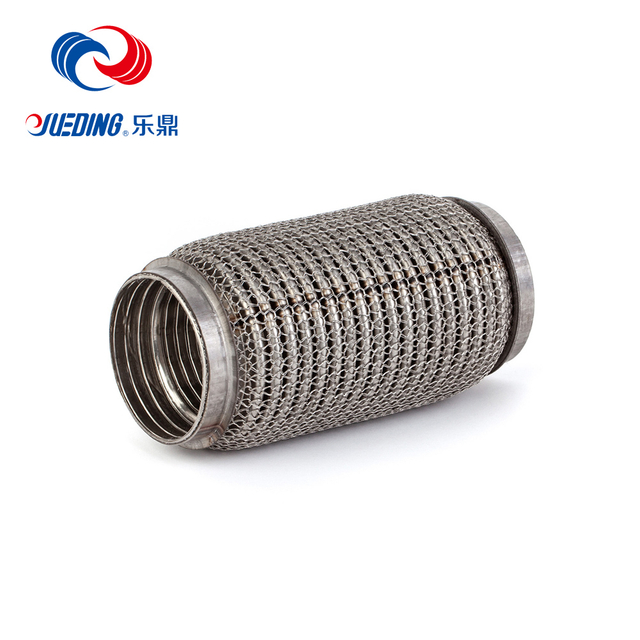
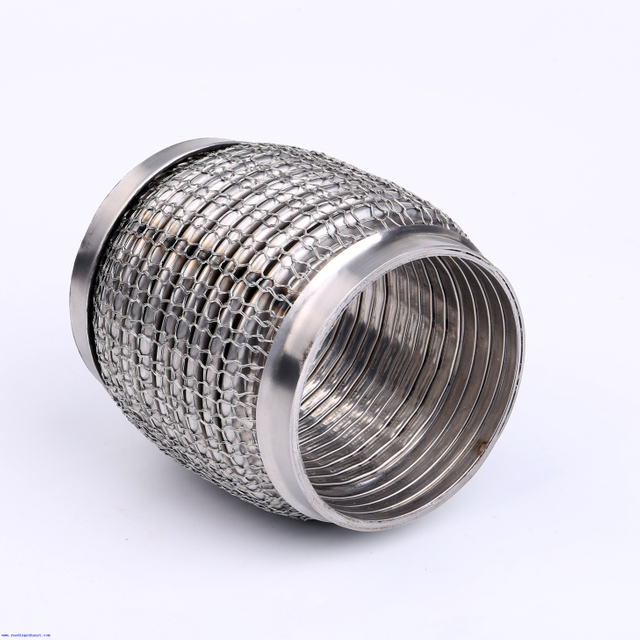
Flexible exhaust sections are designed for situations where additional movement tolerance is needed. They can help accommodate vibration, alignment differences, and installation conditions where rigid tubing alone may not provide enough flexibility.
The selected flexible pipe should still match the surrounding exhaust system dimensions. Before installation, confirm the pipe diameter, length, and connection requirements.
For applications requiring flexible exhaust connections, a universal exhaust flexible pipe can provide a practical connection option for different installation conditions.
Choosing Connectors for Same-Size Pipes
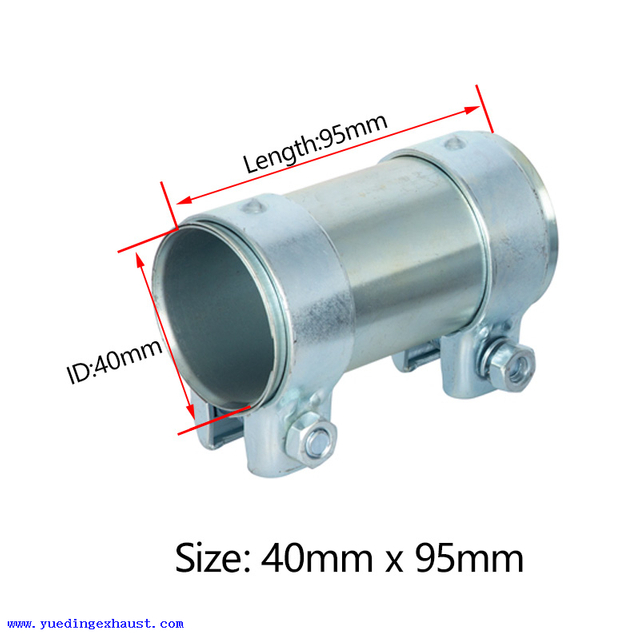
When two exhaust pipes have matching diameters, a connector sleeve is commonly used to join the pipe sections. The key factor is confirming the actual outside diameter of both pipes before selecting the connector.
A similar nominal size does not always guarantee a direct fit. Differences in wall thickness, manufacturing tolerance, or pipe specifications can affect compatibility.
For connecting exhaust tubes with matching dimensions, an exhaust pipe connector sleeve should be selected according to the measured pipe size.
Using Reducers for Different Pipe Diameters
When two exhaust pipes have different diameters, a reducer fitting is usually required to create a transition between the two sections.
Reducers help connect larger and smaller diameter pipes while maintaining a structured connection. Before selecting a reducer, confirm both the larger and smaller connection dimensions.
A properly matched stainless steel exhaust reducer fitting can help create a suitable transition between exhaust pipe sections with different diameters.
Connection Situation | Suitable Component |
|---|---|
Joining two exhaust pipes with the same diameter | Exhaust pipe connector sleeve |
Connecting exhaust pipes with different diameters | Exhaust reducer fitting |
Allowing movement and reducing vibration stress | Flexible exhaust pipe section |
Conclusion
An exhaust pipe size chart is a useful reference for comparing common exhaust pipe diameters, but choosing the correct component requires more than selecting a size from a table. Accurate measurement, understanding OD and ID differences, and matching connection components are all important steps for a proper installation.
Before purchasing exhaust pipe products, buyers should confirm the actual pipe dimensions, connection requirements, and installation conditions. Zhejiang Yueding Corrugated Tube Co., Ltd. provides exhaust related components designed for different connection and installation requirements, helping customers select suitable products based on their application needs.
FAQ
What is the most common exhaust pipe size?
Common exhaust pipe diameters include 1.5 inch, 1.75 inch, 2 inch, 2.25 inch, 2.5 inch, and 3 inch sizes. The suitable diameter depends on the exhaust system design, available installation space, and connection requirements rather than one universal standard.
How do I use an exhaust pipe size chart correctly?
An exhaust pipe size chart should be used as a reference for comparing common diameters. After finding a suitable size range, confirm the actual outside diameter, inside diameter requirements, wall thickness, and connection method before selecting a pipe or accessory.
Should exhaust pipe size be measured by OD or ID?
For selecting connectors, sleeves, clamps, and reducers, outside diameter (OD) is usually the most important measurement because these components fit around the outside of the pipe. Inside diameter (ID) is useful when considering internal clearance and flow area.
Can two exhaust pipes with the same diameter be connected directly?
Not always. Two exhaust pipes with the same listed size may have differences in actual outside diameter, wall thickness, or manufacturing tolerance. Measuring the pipe ends and selecting a compatible connector helps ensure proper fitting.
What mistakes should be avoided when choosing an exhaust pipe size?
Common mistakes include confusing OD with ID, selecting parts only according to nominal size, ignoring wall thickness, and failing to check connection compatibility. Accurate measurement before purchasing can help prevent installation problems.
Do I need a reducer when connecting different exhaust pipe diameters?
Yes, when two exhaust pipes have different diameters, a reducer fitting is generally needed to create a transition between the two sections. The reducer should match both connection sizes to ensure proper installation.






About Yueding
YUEDING manufactures stainless steel exhaust flexible connectors, clamps, metal bellows, and selected automotive exhaust components under ISO and IATF quality systems. With in-house production, inspection, and packaging capabilities, we support bulk orders, standard-size inventory, and customized branding for global B2B customers.
Reliable Delivery
Stable production planning, standard-size inventory, and batch shipping support help make delivery more predictable.

Factory Direct
Production, inspection, and packaging are managed in-house, making communication, quality control, and customization more efficient.

Integrated Supply
We supply flex pipes, clamps, metal bellows, and selected exhaust components to support related purchasing needs from one manufacturer.

