
Automotive Exhaust System Parts and Functions: How They Work Together
Automotive exhaust systems do more than route exhaust gas through a series of pipes beneath the vehicle. Hot exhaust gas leaving the engine passes through the front exhaust section, flexible connections, emission-control components and downstream piping before reaching the tailpipe. Engine movement, temperature changes, vehicle vibration and mounting-related loads also act on the system throughout operation.
Knowing the names of individual components is only the starting point. Replacement matching, connection checks and purchasing decisions also depend on understanding where each component sits in the system, what function it performs, and how it connects and works with the parts around it.
Automotive Exhaust System Diagram
Typical automotive exhaust layouts can be understood by following the direction of exhaust flow:
Engine / Exhaust Manifold → Front Pipe / Flexible Connection → Emission-Control Components → Mid and Rear Exhaust Pipes → Muffler / Resonator → Tailpipe
Vehicle layout determines how these sections are actually arranged. Some systems position the catalytic converter close to the engine, while others use multiple mufflers, flexible sections or sensors. Commercial vehicles and heavy-duty applications may also use different pipe diameters, routing, mounting points and connection structures because of changes in chassis space and installation requirements.
Several supporting components work alongside the main exhaust path:
Flex pipes or metal bellows accommodate a certain amount of vibration and relative movement.
Clamps, flanges and gaskets connect, secure and seal adjoining componnts.
Hangers and mounting brackets support the pipework and maintain its installed position.
Sensor mounting ports provide connection points for oxygen sensors and other related sensors.
Automotive exhaust systems are therefore better understood as an integrated combination of rigid pipework, flexible connections, joining and sealing structures, and mounting components, rather than simply a collection of exhaust pipes.

Main Exhaust System Parts and Their Functions
Exhaust Manifold
Exhaust manifolds sit at the engine outlet, collecting exhaust gas from the cylinders and directing it into the downstream exhaust path.
Manifold, header and front-pipe arrangements vary between vehicles. Replacement matching therefore involves more than identifying the engine or vehicle model. Outlet position, pipe diameter, flange or connection structure, and the interface with the downstream pipework also need to correspond with the original installation.
Emission-Control Components
Catalytic converters and other emission-control components sit along the exhaust path and form part of the vehicle's emissions-control system.
Layout, overall length and connection geometry can vary between applications. Pipe diameter alone is therefore rarely enough to confirm a replacement. Upstream and downstream interfaces, sensor positions and available installation space also need to match.

Exhaust Flex Pipes and Metal Bellows
Engine movement creates a degree of relative motion between the powertrain and the exhaust pipework mounted beneath the vehicle. Vibration, dynamic loads during driving, and repeated heating and cooling can all place additional displacement and stress on rigid pipes and their connection points.
Flex pipes or metal bellows are therefore used in sections where controlled movement needs to be accommodated. Their flexible construction can allow a certain amount of axial, lateral or angular movement, helping reduce the displacement transferred directly to rigid pipework, welded areas and flange connections.
Replacement or selection normally requires several dimensions and structural details to be checked together:
pipe diameter;
flexible section length;
overall length;
internal construction;
end connection style;
available installation space and expected movement.
Appearance or nominal diameter alone is usually not enough to determine whether two flexible components are interchangeable. Size, flexible-section construction, internal structure and material should be considered together when selecting an exhaust flex pipe.

Exhaust Pipes
Exhaust pipes connect the functional sections of the system and route exhaust gas around the available chassis space.
Nominal sizes such as 2 inch, 2.5 inch or 3 inch are only the starting point when matching a pipe. Installation can also depend on:
outside and inside diameter;
wall thickness;
bend angle and routing;
expanded, reduced or stepped ends;
connection style at each end;
flange and bracket positions;
overall length.
Replacement pipes with similar diameters may still be incompatible when the end geometry, connection direction or mounting position differs.
Mufflers and Resonators
Mufflers and resonators control sound within the exhaust system. Different designs use different internal passages, chamber structures and inlet or outlet arrangements.
Replacement matching involves more than inlet and outlet diameter. Important details can include:
inlet and outlet position;
inlet and outlet orientation;
body dimensions;
overall length;
installation direction;
bracket position.
These dimensions and layout details determine whether the component can align correctly with the surrounding pipework and original mounting points.
Tailpipe
Tailpipes form the final section of the exhaust system, directing gas away from the vehicle after it has passed through the upstream exhaust and sound-control components.
Rear pipe routing, chassis clearance and outlet position influence the final shape of this section, so replacement matching still requires the connection size, bend direction and overall length to be checked.
Exhaust tips may also be fitted at the outlet on some vehicles, but these additions do not change the basic working relationship between the main upstream components.
How Exhaust System Components Work Together
Each exhaust component performs a specific function, but stable system operation also depends on how those components interact with one another.
Four relationships are especially important in the overall layout: exhaust flow, movement compensation, connection and sealing, and support and positioning.
Exhaust Flow
Exhaust gas leaving the engine travels through a continuous path that includes the front pipework, emission-control components, mid and rear pipes, sound-control components and finally the tailpipe.
Correct dimensions alone do not guarantee that adjoining parts will fit. Connection position, pipe routing, diameter and bend direction also need to correspond with the surrounding system. Significant differences in any of these areas can affect downstream alignment and installation.
Movement Compensation
Engine operation, vehicle vibration and repeated heating and cooling create relative movement between different sections of the exhaust system.
Flex pipes or metal bellows can accommodate a certain amount of this movement when positioned in the appropriate part of the pipework, helping reduce displacement transferred directly to rigid pipes, welded areas and flange connections.
Actual movement compensation also depends on flexible-section length, connection style, mounting position and direction of movement. Flexible construction cannot replace correct pipe routing and support.
Connection and Sealing
Exhaust pipes, flexible sections, mufflers and other components need suitable interfaces to form a continuous exhaust path.
Slip joints, butt joints, flange connections, V-band joints and other structures may be used at different positions. Clamps, flanges and gaskets provide securing, joining or sealing functions, while the correct combination depends on the joint geometry itself.
Connection matching should therefore begin with how the two adjoining components fit together, followed by the hardware required for that interface.
Support and Positioning
Exhaust systems carry their own weight while also being exposed to vibration and movement during vehicle operation.
Hangers, brackets and mounting points support the pipework, maintain its installed position and preserve the required clearance around nearby chassis components.
Misaligned mounting points can place additional tension, compression or angular load on flexible sections, welded areas or flange connections even when pipe diameter and interface dimensions are otherwise correct.
Pipework, flexible sections, connection points and mounting structures should therefore be evaluated as one working system, rather than as individually matched parts.
How Exhaust Components Are Connected
Exhaust systems use several connection methods rather than one universal joint. Pipe diameter, interface geometry, serviceability, sealing requirements and available installation space all influence how adjoining components are connected.
Connection matching starts by identifying how the two adjoining parts fit together, then confirming the clamp, flange, gasket or other hardware required for that interface.
Flexible Connections
Flex pipes or metal bellows are commonly positioned between relatively rigid sections of exhaust pipework to accommodate a certain amount of movement.
Matching this type of connection usually requires several details to be checked together:
pipe diameter at both ends;
total installation length;
effective flexible-section length;
welded, slip-fit or flanged end connections;
available installation space;
expected direction of movement.
Flexible sections can absorb a degree of movement, but they cannot replace correct pipe support and mounting position. Continuous stretching, compression or angular loading can also increase stress on the flexible section and the surrounding connections.
Slip, Butt and Reducer Connections
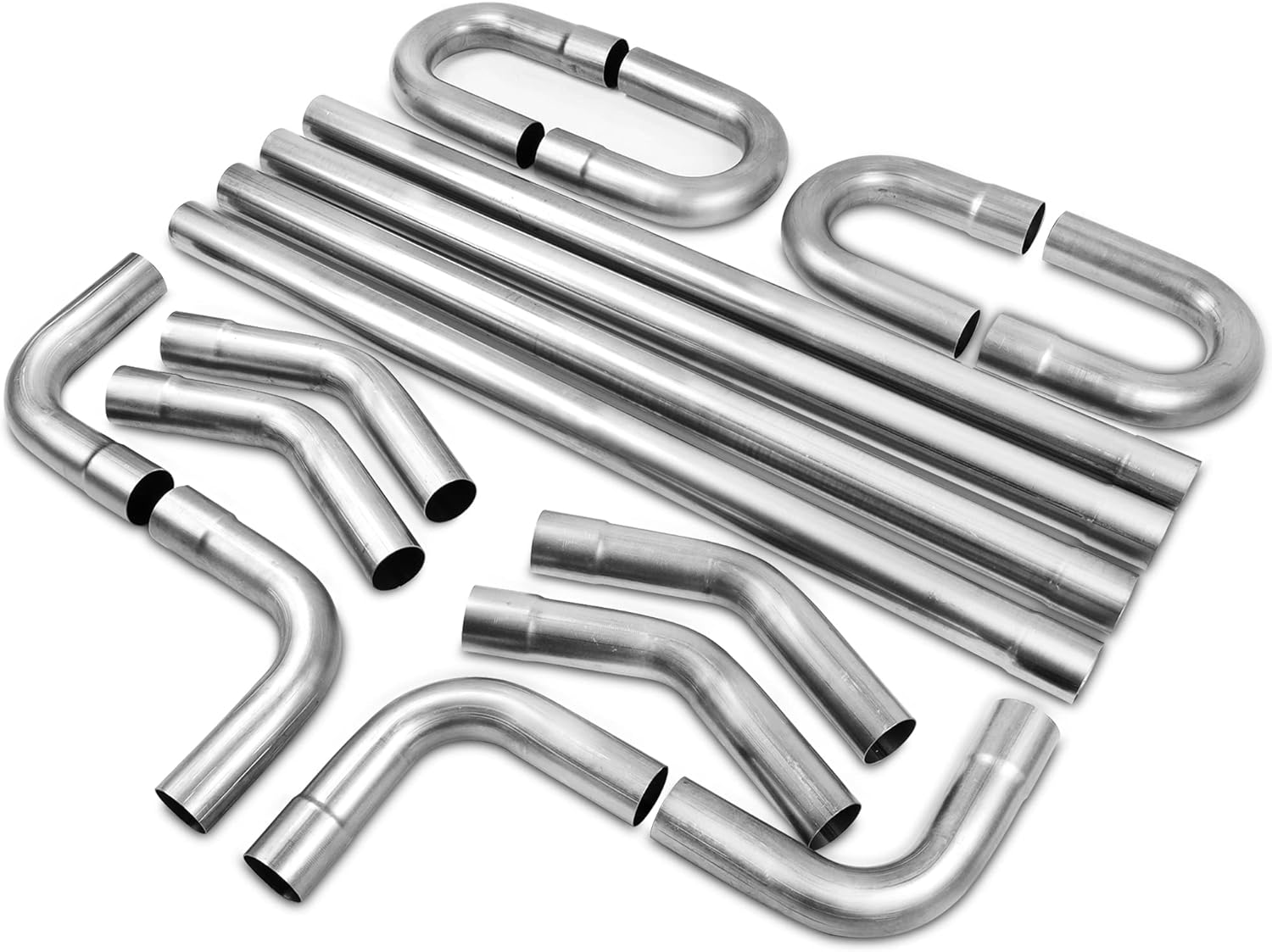
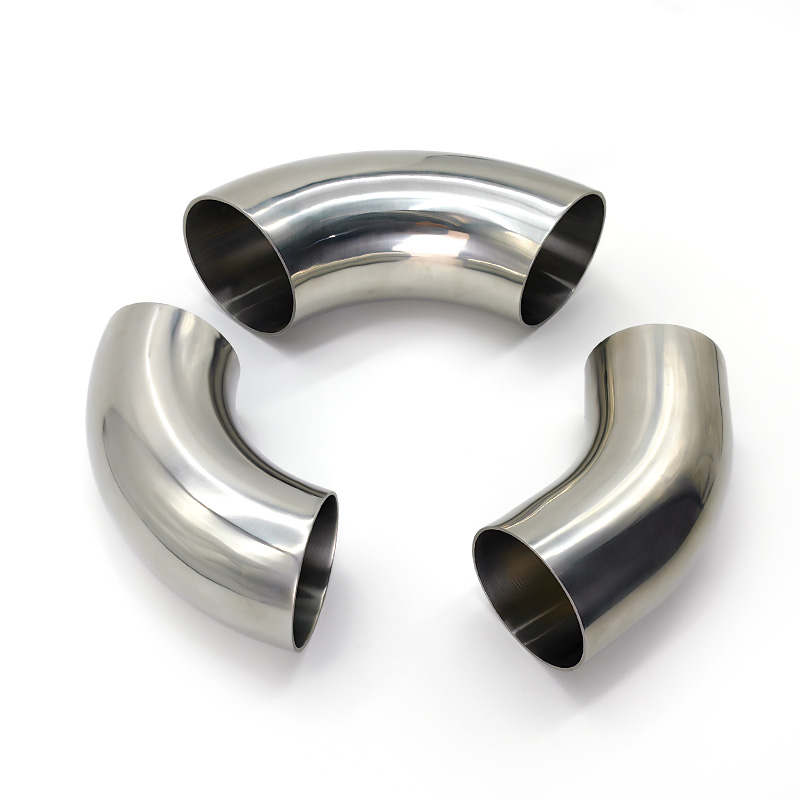
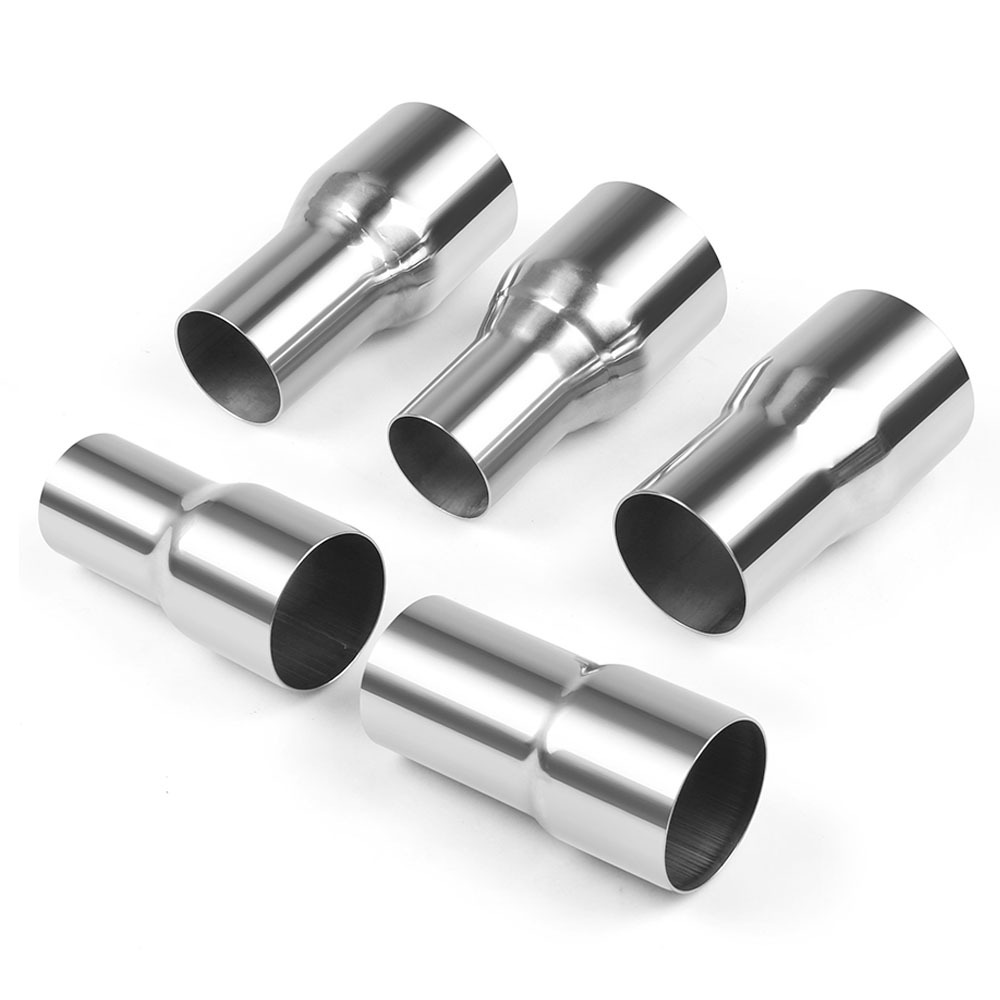
Exhaust pipes commonly meet through slip joints, butt joints or reducer connections.
Slip joints use one pipe end that fits inside an expanded or larger mating section.
Butt joints bring two pipe ends with similar outside diameters together at the connection point.
Reducer connections join sections with different pipe diameters.
Correct identification normally requires checking:
actual outside and inside diameters;
which pipe fits inside the other;
whether either end is expanded or reduced;
whether both sides use the same diameter;
whether a separate reducer is required.
These conditions directly affect the clamp or connector used at the joint. Different exhaust pipe connection types require different dimensions and interface details to be confirmed rather than relying on nominal pipe size alone.
 |  |  |
Flange Connections
Flanges create defined, removable interfaces and can be used around front pipes, emission-control components, mufflers and other exhaust sections.
Similar appearance does not guarantee interchangeability. Replacement matching commonly requires confirmation of:
pipe connection diameter;
flange shape;
flange thickness;
number of bolt holes;
bolt-hole diameter;
bolt spacing or center distance;
sealing-face geometry;
gasket requirements.
Changes in hole position, flange dimensions or sealing geometry can prevent two otherwise similar parts from mating correctly.
Clamp Connections
Exhaust clamps secure different types of joints, but clamp choice should not be based on clamping force alone.
U-bolt clamps, band clamps, V-band clamps and other designs correspond to different interface structures. Selection starts by identifying whether the actual connection is:
a slip joint;
a butt joint;
a flange connection;
a V-band joint;
or another dedicated interface.
Pipe diameter, overlap condition and mating geometry can then be checked against the required clamp structure. Slip joints, butt joints and V-band connections do not use the same clamping method, so exhaust clamp selection should be based on the actual joint rather than nominal diameter or clamping force alone.
Hangers and Mounting Points
Hangers and brackets do not create the sealed exhaust joint itself, but they influence pipe position and the load carried by surrounding connections.
Correct mounting points help:
support system weight;
maintain clearance around the chassis;
control pipe position;
allow a degree of managed vibration and movement.
Bracket position therefore needs to be checked when replacing longer pipes or assembled exhaust sections.
Significant mounting misalignment can force the pipework into tension or angular displacement, transferring additional load to flexible sections, flanges, welded areas and other connection points.
What to Check When Matching Exhaust Components
Similar appearance does not necessarily mean two exhaust components are interchangeable.
Reliable replacement matching usually requires dimensions, connection geometry and mounting details to be checked together. Different components require different priorities, but the following information is commonly important:
| Item to Check | Why It Matters |
| Pipe OD / ID | Helps identify slip-fit, butt-joint or reducer requirements |
| Joint Type | Determines whether the connection uses a clamp, flange, V-band or another interface |
| Overall Length | Confirms whether the part fits the available installation space |
| End Connection | Shows how each end mates with the adjoining pipework |
| Flange Dimensions | Confirms flange shape, hole pattern, thickness and sealing interface |
| Flex Section | Defines flexible length, construction and available installation space |
| Material | Helps match the original specification, operating environment and purchasing requirement |
| Sensor Port | Confirms sensor location, orientation and thread specification |
| Bracket Position | Checks whether mounting points correspond with the original vehicle or equipment layout |
Understanding an exhaust system is not about memorizing as many component names as possible. Component position, connection geometry and the dimensions that actually affect fitment provide a more useful basis for replacement and sourcing decisions.
Once these relationships are clear, selecting the required flex pipe, exhaust pipe, clamp, flange or other component becomes more straightforward. Specific product options, matching requirements and supply information are available under automotive exhaust components.


About Yueding
YUEDING manufactures stainless steel exhaust flexible connectors, clamps, metal bellows, and selected automotive exhaust components under ISO and IATF quality systems. With in-house production, inspection, and packaging capabilities, we support bulk orders, standard-size inventory, and customized branding for global B2B customers.
Reliable Delivery
Stable production planning, standard-size inventory, and batch shipping support help make delivery more predictable.

Factory Direct
Production, inspection, and packaging are managed in-house, making communication, quality control, and customization more efficient.

Integrated Supply
We supply flex pipes, clamps, metal bellows, and selected exhaust components to support related purchasing needs from one manufacturer.

