
What Are Exhaust Pipes Made Of? 304 vs 409 Steel
Material selection affects far more than the appearance of an exhaust pipe. It influences how the pipe responds to road salt, exhaust condensate, thermal cycling, bending, welding, and years of exposure beneath a vehicle. For rigid exhaust pipes, three practical options cover many sourcing requirements: 304 stainless steel, 409 stainless steel, and aluminized steel. Each material offers a different balance of corrosion resistance, forming performance, service life, and cost. The correct choice depends on the pipe’s position, operating environment, target market, fabrication method, and expected product life—not simply on which grade sounds more expensive.
Quick Answer: What Are Exhaust Pipes Made Of?
Most rigid automotive exhaust pipes are made from steel tubing. Within the material range discussed here, the main choices are 304 stainless steel, 409 stainless steel, and aluminized steel.
304 vs 409 vs Aluminized Steel: Comparison Snapshot
Material | Corrosion Resistance | Surface Appearance | Fabrication Considerations | Relative Cost | Typical Selection Logic |
|---|---|---|---|---|---|
304 stainless steel | Highest of these three options, especially in wet or salt-exposed environments | Maintains a cleaner, more uniform appearance | Suitable for bending and welding when the process is matched to the grade | Highest | Long-life, visible, export, custom, or corrosion-sensitive exhaust components |
409 stainless steel | Good for exhaust service, but surface oxidation and discoloration may occur | More likely to develop brown surface staining | Commonly suited to formed exhaust tubing and production components | Medium | Production exhaust systems requiring stainless performance at a controlled cost |
Aluminized steel | Good while the coating remains intact; cut edges and damaged areas require attention | Uniform coated appearance when new | Coating condition must be managed during cutting, bending, and welding | Lowest | Cost-sensitive replacement pipes and standard exhaust applications |
No material wins every comparison. A short, hidden replacement pipe for a moderate climate may not require the same material as a visible tail section used in a region with frequent road salt. The complete application should determine the grade.
How the Three Exhaust Pipe Materials Differ
304 Stainless Steel Exhaust Pipe
304 is an austenitic stainless steel containing chromium and nickel. Its composition forms a passive surface layer that helps resist corrosion when the material is exposed to moisture and many common environmental conditions.
For exhaust pipes, the main advantage of 304 is its ability to resist external corrosion and maintain its appearance. This can be valuable for tailpipes, exposed tubing, performance-style assemblies, custom exhaust fabrication, and products intended for wet, coastal, or road-salt environments.
304 is also useful when buyers want one consistent material across several connected components. However, specifying “304” alone is not enough. The quotation and drawing should also define the wall thickness, tube dimensions, finish, weld condition, bend geometry, and end configuration.
Its higher material cost does not automatically make it necessary for every underbody section. Using 304 throughout a cost-sensitive exhaust system can increase the purchase price without providing equal value at every position. It is most justified where corrosion resistance, appearance, or long-term durability has a clear priority.
409 Stainless Steel Exhaust Pipe
409 is a ferritic stainless steel developed for applications that require resistance to exhaust heat and repeated thermal cycling at a more controlled cost than 304. It is widely associated with production exhaust systems because it provides a practical compromise between ordinary coated steel and higher-alloy stainless steel.
A common misunderstanding is that any brown staining on 409 means the pipe has failed. The surface of 409 can oxidize and develop discoloration, especially after moisture and road exposure. This surface change does not necessarily mean that the pipe has perforated or lost its function.
Appearance expectations must therefore be defined before purchasing. A buyer sourcing hidden underbody tubing may accept normal surface discoloration, while a polished or highly visible exhaust tip may require a material with better cosmetic retention.
409 is often considered when the application needs stainless exhaust performance but does not require the surface appearance or corrosion margin of 304. Its actual service result still depends on tube quality, thickness, forming control, drainage, mounting, weld quality, and operating environment.
Aluminized Steel Exhaust Pipe
Aluminized exhaust tubing is not solid aluminum. It normally consists of a steel base covered with an aluminum-based protective coating. The steel provides the structural body of the pipe, while the coating helps protect the surface from oxidation and environmental exposure.
This construction makes aluminized steel an economical material for standard replacement exhaust systems. It offers better surface protection than uncoated mild steel without the full material cost of stainless steel.
The protective coating is also the material’s main limitation. Cutting, aggressive forming, scratching, or welding can expose the steel underneath. Pipe ends, weld zones, and areas damaged during production or installation may therefore corrode sooner than an undisturbed coated surface.
Aluminized steel can be a reasonable choice for price-sensitive replacement parts, especially where the expected service conditions are moderate. It is less suitable when buyers expect the complete pipe—including welds and cut edges—to provide the same corrosion behavior as a stainless steel component.
How Operating Conditions Change the Right Choice
Road Salt, Moisture, and Coastal Exposure
External corrosion can become a primary selection factor in regions where roads are salted or vehicles operate near the coast. Water and chloride deposits can remain around hangers, clamps, seams, and low points in the pipe.
304 generally provides the strongest corrosion resistance of the three materials in these conditions. 409 offers useful exhaust durability but may show more visible oxidation. Aluminized steel relies heavily on coating continuity, making scratches, cut ends, weld zones, and stone damage more significant.
Short Trips and Internal Condensation
Exhaust systems do not face corrosion only from the outside. Water is produced during combustion and can condense inside a cold exhaust pipe. Vehicles that regularly make short trips may not keep the entire system hot long enough to evaporate accumulated moisture.
Rear exhaust sections can be particularly vulnerable because they warm more slowly than sections close to the engine. Material grade helps, but pipe routing also matters. Low points that trap condensate, obstructed drain features, and incorrect installation angles can reduce service life even when a corrosion-resistant material is used.
Temperature and Thermal Cycling
Exhaust tubing repeatedly heats and cools during vehicle operation. The temperature level is not uniform from the engine outlet to the tailpipe, so one material specification may not be necessary for every section.
The material must tolerate thermal expansion without creating excessive stress at welds, clamps, hangers, or connected components. Pipe supports, flexible sections, joint placement, and assembly alignment should be evaluated together with material selection.
Visible and Hidden Pipe Sections
Surface appearance matters more for visible tailpipes and polished components than for hidden underbody tubes. A 409 pipe can remain functional even after developing surface discoloration, but that appearance may be unacceptable for a retail product intended to remain visually clean.
304 is normally more suitable when appearance retention is part of the specification. For a hidden pipe, purchasing decisions can give more weight to fit, thickness, corrosion environment, and target service life.
Fabrication, Welding, and Joint Compatibility
The selected material must remain suitable after it has been turned into a finished component. A pipe may be bent, expanded, reduced, slotted, welded to a flange, or joined to a muffler, flex section, reducer, or clamp connection. Each operation can affect its condition.
Bending and Forming
Tight bends stretch the outer wall and compress the inner wall. An unsuitable relationship between material, diameter, wall thickness, and bend radius can lead to excessive thinning, flattening, wrinkling, or cracking.
Buyers should not assume that changing from aluminized steel to 304 or 409 requires no other adjustment. Tooling, bend radius, process settings, and dimensional tolerances may need to be reviewed. This is especially important when reproducing a formed replacement pipe from a sample.
For stainless steel exhaust elbows, the material grade should be specified together with the bend angle, centerline radius, straight-end lengths, wall thickness, and connection dimensions.
Welding
Welding changes the local surface and heat-affected zone. For aluminized steel, the protective coating is disturbed around the weld. The welding process must account for the coating, and the finished joint may not retain the same corrosion protection as the untouched tube.
For stainless steel, filler selection, heat input, shielding, cleanliness, and material compatibility all affect the finished joint. Cross-contamination from tools previously used on carbon steel can also damage the surface condition of stainless components.
A mixed-material assembly should be reviewed as a system. Welding a 304 pipe to a component made from another grade may require a different procedure from joining two matching 304 tubes. The material of adjoining flanges, muffler shells, flex-pipe nipples, and connectors should therefore be included in the specification.
Clamped and Slip-Fit Connections
A clamp joint depends on more than material grade. The outside diameter, expanded-end inside diameter, overlap length, slot arrangement, pipe roundness, and available straight length all influence sealing and retention.
Material substitution can affect springback and the final dimension after expansion or reduction. A replacement material should not be approved solely because its nominal diameter matches the original pipe.
How to Specify Exhaust Pipe Material for Purchasing
A useful purchase specification should define the finished component instead of listing only “stainless exhaust pipe” or “aluminized exhaust tube.” The following information reduces uncertainty during quotation, sampling, and repeat production:
Material grade: State 304 stainless steel, 409 stainless steel, or aluminized steel. Avoid using “stainless” as the complete material description.
Tube dimensions: Confirm outside diameter, inside diameter where relevant, and wall thickness.
Pipe geometry: Provide overall length, bend angles, centerline radii, orientation, and straight sections.
Connection design: Identify plain, expanded, reduced, slotted, beaded, flanged, slip-fit, clamped, or welded ends.
Installation position: Explain whether the pipe is near the engine, beneath the vehicle, in the rear section, or externally visible.
Operating environment: Include exposure to road salt, coastal air, persistent moisture, off-road debris, or industrial conditions.
Surface requirements: Define whether ordinary mill appearance, brushing, polishing, or cosmetic consistency is required.
Adjoining materials: Identify the materials of the muffler, flange, flex pipe, clamp, or other parts connected to the tube.
Inspection requirements: Confirm the material documentation, dimensional checks, surface criteria, and sample-approval method required for the order.
A drawing or approved physical sample can establish the required shape, but the material and key dimensions should still be documented. A sample alone does not explain permissible variations or guarantee that future batches will be evaluated against the same criteria.
Practical Material Selection Matrix
Purchasing Priority | Material to Evaluate First | Points to Confirm |
|---|---|---|
Maximum corrosion resistance among the three options | 304 stainless steel | Surface finish, welding procedure, connected materials, and total project cost |
Stainless exhaust performance with controlled cost | 409 stainless steel | Expected surface discoloration, environmental exposure, thickness, and forming consistency |
Economical standard replacement pipe | Aluminized steel | Coating condition after bending, cut-edge exposure, weld-zone protection, and climate |
Visible tail section with appearance requirements | 304 stainless steel | Finish direction, polishing level, scratch protection, and packing |
Hidden production underbody section | 409 stainless or aluminized steel | Target service life, corrosion environment, cost, geometry, and adjoining components |
Conclusion
So, what are exhaust pipes made of? For rigid automotive piping, 304 stainless steel, 409 stainless steel, and aluminized steel each serve a distinct purchasing need. Choose 304 when corrosion resistance and appearance justify the higher material cost, 409 when exhaust durability and production economics must be balanced, and aluminized steel for cost-sensitive applications where coating condition can be controlled. Zhejiang Yueding Corrugated Tube Co., Ltd. manufactures and supplies exhaust pipes and related connection components, with material selection reviewed alongside pipe dimensions, forming requirements, and assembly interfaces.
Frequently Asked Questions
What are exhaust pipes made of in most automotive systems?
Automotive exhaust pipes are generally made from steel tubing. Depending on the vehicle, pipe position, target service life, and cost requirements, the material may be 304 stainless steel, 409 stainless steel, or coated steel such as aluminized steel.
Is 304 stainless steel always better than 409 for exhaust pipes?
Not for every application. 304 generally offers better corrosion resistance and appearance retention, while 409 provides a practical balance of heat resistance, exhaust durability, formability, and cost. A hidden production pipe may not need the cosmetic properties of 304.
Why does a 409 stainless exhaust pipe sometimes look rusty?
409 stainless steel can develop brown surface oxidation or discoloration after exposure to heat, moisture, and road conditions. Surface staining does not automatically mean the pipe has perforated or structurally failed. Functional condition and wall integrity should be evaluated separately from appearance.
Is aluminized steel the same as aluminum exhaust tubing?
No. Aluminized steel normally has a steel substrate with an aluminum-based protective coating. It retains the structural characteristics of steel while using the coating to improve surface protection. Cutting or welding may expose the underlying steel.
Can 304, 409, and aluminized steel be used in the same exhaust system?
Different materials may appear in one system, but their interfaces require review. Welding procedures, filler material, thermal expansion, corrosion behavior, pipe dimensions, and clamp or flange connections must remain compatible.
What information should I provide when requesting an exhaust pipe quotation?
Provide the material grade, outside diameter, wall thickness, overall shape, bend angles, centerline radii, end configuration, connection method, installation position, quantity, and operating environment. A drawing or physical sample can help define vehicle-specific components, but critical dimensions should still be documented.





About Yueding
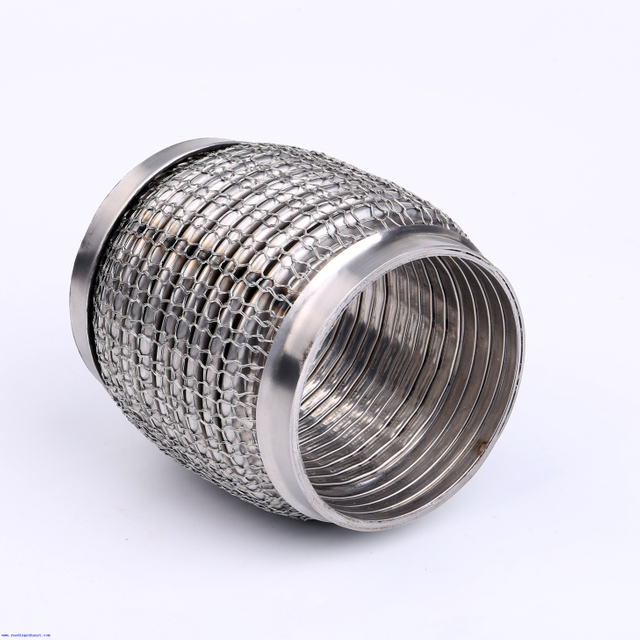
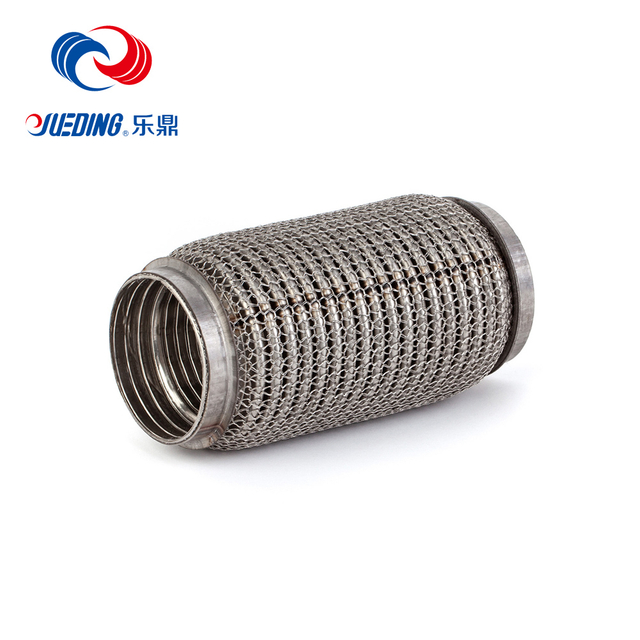
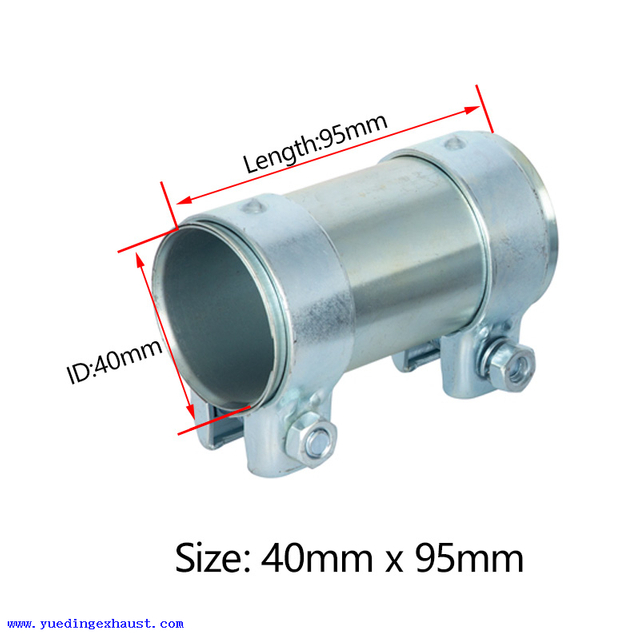
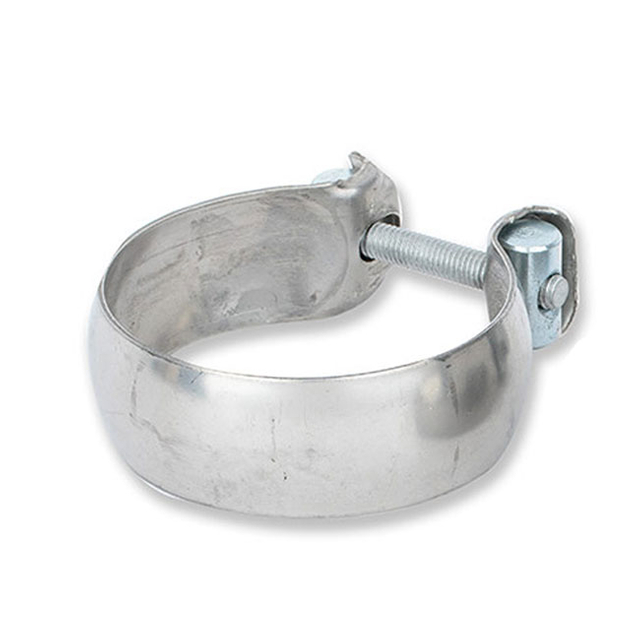
YUEDING manufactures stainless steel exhaust flexible connectors, clamps, metal bellows, and selected automotive exhaust components under ISO and IATF quality systems. With in-house production, inspection, and packaging capabilities, we support bulk orders, standard-size inventory, and customized branding for global B2B customers.
Reliable Delivery
Stable production planning, standard-size inventory, and batch shipping support help make delivery more predictable.

Factory Direct
Production, inspection, and packaging are managed in-house, making communication, quality control, and customization more efficient.

Integrated Supply
We supply flex pipes, clamps, metal bellows, and selected exhaust components to support related purchasing needs from one manufacturer.

