
What Is Metal Bellows Failure?
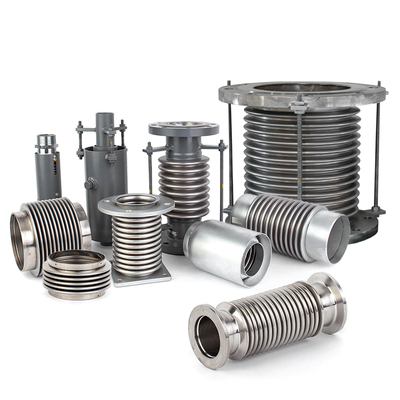
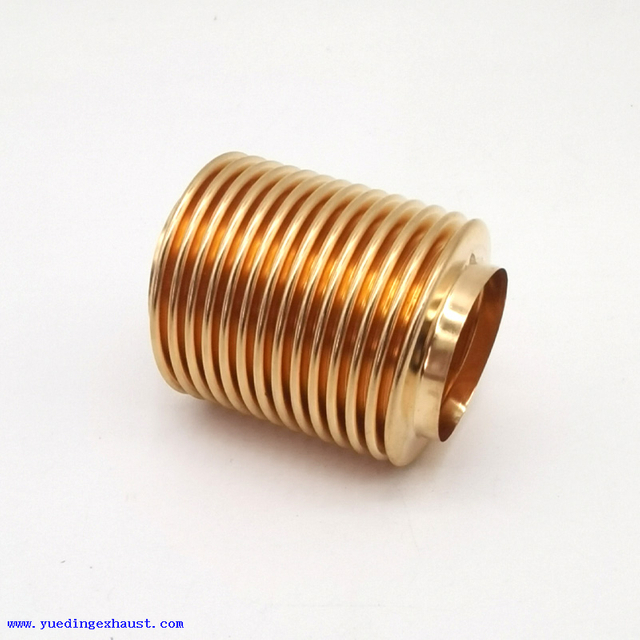
Metal bellows provide flexibility and movement compensation in piping systems, exhaust systems, expansion joints, and other equipment. During operation, the convolutions may repeatedly respond to temperature changes, pressure, vibration, and axial, lateral, or angular movement. Cracking, leakage, permanent deformation, corrosion, or damage around the connections can gradually develop as service time increases or operating conditions move beyond the original design range. These are common signs of metal bellows failure.
Once a problem appears, the important question is not simply whether the bellows has failed. You also need to understand what may have caused the failure, whether the original specification can still be used, and which parameters should be checked before ordering a replacement.
What Does Metal Bellows Failure Look Like?
Metal bellows do not always fail through a sudden complete break. Visible changes often appear first and can provide useful clues about where to begin checking the system.
Common signs include:
Fine cracks around the convolution peaks or valleys that may gradually develop into leakage;
Uneven convolution spacing, with some sections remaining compressed or extended;
Permanent deformation or noticeable movement toward one side;
Cracking or leakage around welded connections and end sections;
Visible corrosion, pitting, or localized material damage;
Similar damage appearing again in the same location shortly after replacement.
Appearance alone, however, normally cannot identify a single root cause. Material, layer construction, convolution profile, installed length, actual movement, pressure, temperature, and vibration can all affect how the bellows performs.
Cracking and leakage are often the final symptoms rather than the original problem. When the same specification is used across multiple units or purchased repeatedly, identifying the conditions behind the failure becomes more important. Otherwise, replacement parts with the same external dimensions may develop similar problems again.
Why Do Metal Bellows Fail?
Repeated Movement and Fatigue
Bellows absorb piping movement through repeated deformation of the convolutions. Over many operating cycles, this movement can gradually produce fatigue. Higher movement, vibration, or cycle frequency can place greater repeated strain on areas such as convolution peaks and valleys, increasing the possibility of fatigue cracking.
Axial, lateral, and angular movements also deform bellows differently. Replacement selection therefore should not rely only on outside diameter and overall length. Knowing which type of movement the original bellows is mainly expected to absorb can be equally important.
Projects using the same bellows across multiple pieces of equipment deserve particular attention here. Incorrect movement assumptions can result in a replacement that fits dimensionally but still develops fatigue damage in a similar area during service.
Excessive Compression or Extension
Metal bellows have a defined working movement range and should not be treated as components that can be compressed or extended without limit.
Our normal design review avoids keeping bellows close to their theoretical maximum displacement for continuous operation. For some conventional structures, approximately 20%–25% of the effective length may be used internally as a more conservative compression reference. This is a design reference rather than a universal limit. Actual allowable movement still depends on diameter, convolution profile, number of layers, wall thickness, pressure, and operating conditions.
Long-term over-compression or over-extension increases deformation in localized sections and may contribute to premature bellows failure.
For replacement programs or repeat purchasing, confirming the actual installed length and working travel before the first production run is usually more reliable than repeatedly copying the current length of a failed part. An incorrect dimension established in the first order can otherwise continue into later batches.
Misalignment and Vibration
Pipe misalignment, off-center installation, or continuous side loading can force some convolutions to carry more deformation than others.
Continuous vibration is also common in automotive exhaust systems, commercial vehicles, machinery, and industrial piping. Bellows can accommodate a certain amount of vibration and movement, but their capability still depends on the selected structure and operating conditions. Movement beyond that working range can gradually contribute to fatigue damage.
Repeated failure in the same installation position is therefore worth checking beyond the bellows itself. Replacing the component without reviewing pipe alignment, equipment vibration, and actual movement may leave the original failure condition unchanged.
Corrosion and Material Selection
Material selection also affects how metal bellows perform in different environments.
Common options include SS304, SS316L, and SS321, while special high-temperature or corrosive applications may require materials such as Inconel 625 or Monel. Material choice is not simply a matter of selecting a “higher grade.” Operating temperature, medium, and corrosion conditions need to be considered together.
Visible corrosion on the failed component is a reason to review more than its dimensions. Continuing with the original material without checking the service environment may reproduce the same corrosion problem.
That becomes especially important for batch replacement. Even when structure and dimensions are duplicated accurately, an unsuitable material can lead multiple replacement parts to experience similar corrosion within a comparable service period.
Can a Failed Bellows Be Copied Directly?
Whether a failed bellows can be copied depends largely on how the original component performed before failure.
Bellows that have operated reliably for a long period and failed only after reaching a normal service cycle can often be replaced using the verified drawing and existing specification.
Repeated failure within a relatively short period deserves a different approach.
Failed bellows may already have experienced:
Permanent compression;
Extension;
Lateral displacement;
Changed convolution spacing;
Deformation around welded ends.
Measuring the current overall length of such a part does not necessarily reveal its original free length.
Internal construction may also differ even when two bellows appear identical in outside diameter and overall length. Single-layer, double-layer, and multilayer structures can use different wall thicknesses and convolution profiles, all of which affect stiffness, movement capability, and fatigue performance.
Severely deformed parts should therefore not be treated as the only production reference. When the same specification will be purchased repeatedly, confirming free length, layer construction, wall thickness, convolution profile, and end connections during the first review provides a more stable specification for future orders than continually copying an already distorted sample.
What If You Only Have a Failed Bellows Sample?
Missing drawings do not necessarily prevent a replacement specification from being confirmed.
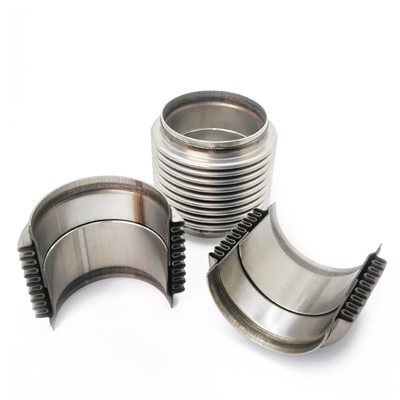
When only a failed sample is available, product photos, key dimensions, and any existing equipment or purchasing records can be used together. We first check whether the sample shows permanent compression, extension, or lateral deformation, then review dimensions such as inside and outside diameter, bellows length, convolution count, end connections, and layer construction.
Current overall length becomes less reliable once a sample has been seriously distorted. Installed space, distance between connection points, historical drawings, or dimensions from unaffected areas can then provide additional reference.
Projects with defined pressure, displacement, or cycle-life requirements need more than geometric replication. Operating conditions should also be included in the specification review.
These checks are not intended to make replacement unnecessarily complicated. Their purpose is to avoid establishing a new production specification from dimensions that have already changed during failure, particularly when the same part will continue to be ordered in future batches.
What Information Should Be Checked Before Replacement?
More complete information makes it easier to determine whether the existing specification can continue to be used and can also reduce repeated structural changes after sampling.
Dimensions and Structure
Useful dimensions include free overall length, bellows length, inside and outside diameter, convolution count, end design, and connection dimensions.
Severely distorted samples should be cross-checked against original drawings, installed dimensions, or unaffected areas rather than using the current overall length alone.
Operating Conditions
Working temperature, pressure, medium, and the main axial, lateral, or angular movement all influence structural and material selection.
Once these basic operating conditions have been confirmed for a repeat-purchase project, they can also serve as a consistent reference for later production runs instead of restarting specification review from a damaged sample every time.
Vibration and Installation
Continuous vibration, visible misalignment, or permanent deformation should be documented with more than a close-up image of the crack.
Close-up photos help show where the failure occurred, while wider installation photos provide useful context around connection points, pipe direction, available space, and the overall installed condition.
Original Drawing or Sample
Original drawings normally provide the clearest specification reference. Where no drawing exists, samples, dimensions, installation space, and operating conditions can be reviewed together.
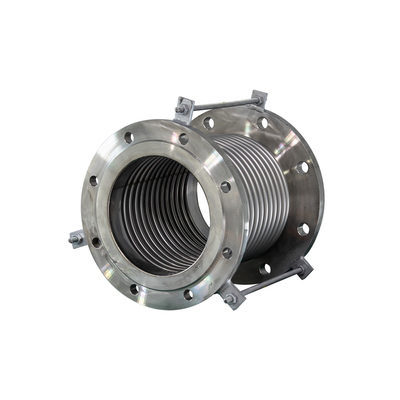
Industrial expansion joint projects with defined pressure, movement, and cycle requirements may require additional engineering verification. Our technical team uses EJMA calculation tools where appropriate to assist with reviewing stiffness, movement capability, and cycle-life data rather than judging flexibility simply by adding convolutions or reducing wall thickness.
Projects with defined pressure or sealing requirements should also establish inspection requirements before production. Air-tightness testing, hydrostatic testing, test pressure, and acceptance criteria are better agreed before batch manufacturing than after production has been completed.
Why Can a Replacement Bellows Fail Again?
Failure of a replacement bellows does not automatically mean the replacement component itself is the only source of the problem.
Original failure conditions can remain in the system. Installing another component with exactly the same dimensions may therefore reproduce the same result.
Repeated failures are a reason to recheck:
Whether actual movement exceeds the original specification;
Whether installed length is correct;
Whether the piping is misaligned;
Whether vibration has increased;
Whether operating temperature or pressure has changed;
Whether the original material still suits the medium and environment.
When similar failures appear across several identical pieces of equipment, shared installation, movement, or operating conditions deserve particular attention before each component is simply replaced again.
Repeated cracking in the same position is another reason to review actual service conditions before deciding to continue with the original bellows specification.
How Can You Reduce the Risk of Premature Bellows Failure?
Reducing the risk of premature failure requires the selection, installation, and operating conditions to work together.
Selection should go beyond diameter and overall length. Layer construction, wall thickness, convolution profile, material, and allowable movement all influence the working behavior of the bellows. Complete specification review at the beginning of a batch project also makes it easier to maintain the same structural basis for repeat orders.
Installation should avoid using the bellows itself to correct excessive pipe misalignment. Forcing the component into place through additional compression, extension, or lateral movement can introduce deformation before normal operation even begins.
Routine inspection can focus on changes in convolution spacing, corrosion, localized deformation, and early leakage. Detecting these conditions before complete failure can provide more time to review the system and prepare a replacement.
Operating changes also matter. Significant increases in temperature, pressure, vibration, or movement may justify reviewing a bellows specification that had previously operated reliably rather than assuming the same design will remain suitable indefinitely.
What Should You Do After Bellows Failure?
Metal bellows failure can generally be approached in three different ways depending on what happened before the failure.
Long-term stable operation followed by normal end-of-service failure:
Review the original drawing and verified specification. An established structure can usually remain the starting point for replacement.
Repeated failure within a short period:
Avoid immediately reproducing the same component. Actual movement, installed length, vibration, temperature, pressure, and material suitability should be reviewed together.
Severely deformed sample or missing drawing:
Use the existing sample together with installed dimensions, connection information, wider installation photos, and operating conditions rather than relying on the failed part's current dimensions alone.
Simple dimensional matching may be enough for some one-time replacement requirements. When the same specification will be used continuously, replaced in batches, or reordered over time, establishing the correct structure and operating basis at the first stage helps maintain consistency in later production and reduces the risk of carrying the same specification problem into the next batch.If you need help confirming a replacement specification, Yueding can review your drawing, failed sample, dimensions, and known operating conditions. With more than 30 years of metal bellows manufacturing experience, we support global buyers with replacement matching, drawing-based production, and repeat supply based on confirmed specifications.




About Yueding
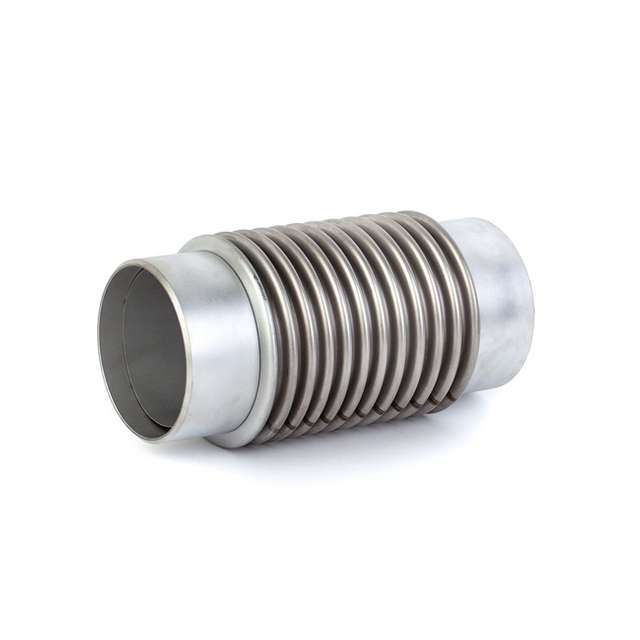
YUEDING manufactures stainless steel exhaust flexible connectors, clamps, metal bellows, and selected automotive exhaust components under ISO and IATF quality systems. With in-house production, inspection, and packaging capabilities, we support bulk orders, standard-size inventory, and customized branding for global B2B customers.
Reliable Delivery
Stable production planning, standard-size inventory, and batch shipping support help make delivery more predictable.

Factory Direct
Production, inspection, and packaging are managed in-house, making communication, quality control, and customization more efficient.

Integrated Supply
We supply flex pipes, clamps, metal bellows, and selected exhaust components to support related purchasing needs from one manufacturer.

