
Hose Clamp Size Chart: How To Measure Hose OD And Match Clamp Ranges
A hose marked with a nominal size can still require a different clamp once it is pushed onto a fitting. Installing the hose over a fitting can change its outside diameter at the clamp seat, and two clamps with similar markings might belong to entirely different product series. Ordering based on the hose label alone leaves out crucial sizing details. A practical hose clamp size chart connects your installed hose outer diameter to specific clamping ranges, band widths, and part numbers. Review our selected size ranges below, then follow the measurement and comparison steps to figure out which candidate models fit your application best.
Quick Answer: Measure your hose outer diameter (OD) at the exact spot where the clamp will be installed after everything is fully assembled. Find a compatible clamp with a clamping range that covers that diameter. Next, verify the band width, housing clearance, materials, and installation guidelines. You cannot make a reliable selection using size numbers or nominal hose inner diameter (ID) alone.
Hose Clamp Size Chart by Series
The table below provides selected size ranges from the Yueding product catalog for preliminary comparison. This is a quick reference guide rather than a complete stock inventory. You must keep the series designation attached to each range—changing the band width or clamp design can alter the exact product you receive.
Series | Range or Model Identifier | Min Diameter (mm) | Max Diameter (mm) | Approx. Range (Inches) | Band Width (mm) |
|---|---|---|---|---|---|
American, YDMS8.0 | 10–16 mm Range | 10 | 16 | 0.39–0.63 | 8.0 |
American, YDMS8.0 | 13–19 mm Range | 13 | 19 | 0.51–0.75 | 8.0 |
American, YDMS8.0 | 12–22 mm Range | 12 | 22 | 0.47–0.87 | 8.0 |
American, YDMS8.0 | 35–51 mm Range | 35 | 51 | 1.38–2.01 | 8.0 |
American, YDMS8.0 | 38–57 mm Range | 38 | 57 | 1.50–2.24 | 8.0 |
American, YDMS12.7 | 10–16 mm Range | 10 | 16 | 0.39–0.63 | 12.7 |
German | YDDS/09B0812 | 8 | 12 | 0.31–0.47 | 9.0 |
German | YDDS/09B1016 | 10 | 16 | 0.39–0.63 | 9.0 |
German | YDDS/09B1222 | 12 | 22 | 0.47–0.87 | 9.0 |
Note: Inch values are converted from the shown millimeter limits at 25.4 mm per inch and rounded to two decimal places. They serve as conversion aids, not extra nominal sizes. Always use the millimeter ranges and complete product specifications when matching sizes.
For American type hose clamps, 8.0 mm and 12.7 mm bands are distinct options. Even if their diameter limits match, their band widths differ. For German type hose clamps, keep the full model codes and corresponding range columns attached when comparing specs. Do not combine differently marked range columns into a single assumed rating.

Three Sizing Concepts to Keep Separate
Nominal Hose Size: The stated size of the hose, which usually refers to its inner diameter (ID). It is not a direct measurement of the outside wall of an installed hose.
Fitting Outer Diameter: The outside measurement of the fitting before the hose is pushed onto it.
Installed Hose OD: The measurement taken on the outside of the hose right at the clamping spot after complete assembly. This is the exact value used for initial range checks during hose clamp sizing.
Adding twice the wall thickness to the nominal ID gives a rough estimate, but it won't reliably account for stretch over the fitting, reinforcement layers, or local shape variations. For repeat orders, record actual post-assembly measurements instead of relying on math estimates.
Other clamp styles require their own specific size definitions. Ear clamps may specify a defined clamping range and installation requirements, while spring clamps list dimensions tied to their relaxed or expanded states. Rubber-lined retaining clamps are meant for supporting components and should not be chosen from this hose sealing chart.
How to Measure Hose OD for Hose Clamp Sizing
Accurate selection starts at the intended installation point. Measuring over a retaining bead or along an unsupported length of hose can give you a very different reading than where the clamp actually sits.
Prepare the connection: Turn off the equipment, let it cool down, and follow proper pressure relief and lockout procedures before handling the joint.
Install the hose correctly: Push the hose onto the intended fitting to its full, specified depth. Never measure a partially installed connection as if it were ready to clamp.
Identify the clamping zone: Follow fitting and hose instructions to locate the exact clamping line. Hold your measuring tool at this spot.
Measure gently with calipers: Touch the caliper jaws lightly against the outer surface of the hose without compressing the hose wall. Keep the jaws perpendicular to the hose centerline.
Repeat and record: If the hose looks slightly oval, take readings from multiple angles. Write down your numbers, units, and measurement position before checking any size chart.
If your readings vary noticeably across different angles, inspect the hose installation and condition. Never smooth over assembly issues by averaging readings into a convenient catalog size. If the hose or joint appears damaged or distorted, assess its condition before selecting a clamp.
Estimating OD from Circumference
If you don't have calipers handy, wrap a flexible, non-stretch tape measure or a strip of paper around the hose at the exact clamping position. Keep it level, mark where it overlaps, and measure the flat length without compressing the hose wall.
Outer Diameter ≈ Circumference ÷ 3.1416
Example: For illustration, a circumference of 165 mm gives an estimated outside diameter of 52.5 mm. (This is a calculation example, not a real-world assembly measurement).
Use this estimate to narrow down your search on a hose clamp size chart, but get a precise caliper measurement if your result lands near the edge of a range limit. Never round measurements down just to make a smaller clamp fit.
SAE Hose Clamp Size Chart: What the Size Numbers Mean
An SAE size number is a reference code used to look up a specific product range; it is not a direct millimeter or inch measurement. A size code copied from an old clamp is only helpful if you also know the exact product series it belongs to.
A reliable sae hose clamp size chart pairs size numbers, product series, and minimum/maximum diameters side-by-side. Charts that display only numbers leave too many unanswered questions for replacement orders.
Known Information | What It Helps Identify | What Still Needs Checking |
|---|---|---|
SAE size number & exact series | Matching entry in that series | Operating range, band width, material, and application conditions |
SAE size number only | Starting point for lookup | Supplier and series before confirming diameter range |
Manufacturer model code | A specific catalog product | Whether that code also links to a standard SAE size |
Diameter range only | Initial size coverage | Design type and installation fit |
Keep Standard and Miniature Series Separate
Do not apply size numbers from a standard worm-drive chart directly to a miniature series without checking. Band widths, housing dimensions, and working ranges may differ between series. A narrow band alone does not prove a product belongs to a standardized miniature line.
Similarly, size numbers used for T-bolt clamps should not be assigned to ear clamps or spring band clamps. Their structural features and sizing rules must be evaluated separately. If an exact cross-reference is unavailable, record the known series and physical measurements instead of guessing.
For purchasing records, keep clear photos of stamped markings alongside full part numbers. Photos preserve characters that might otherwise be misread, but you still need an installed measurement if the original clamp was wrong or if the hose was replaced.
How to Choose Between Two Overlapping Clamp Ranges
Two candidate clamps might both cover your measured diameter, but they aren't necessarily interchangeable on the job. Your choice depends on how each clamp fits the physical assembly, not on which catalog entry looks closest on paper.
Example Comparison Using Two Catalog Entries
Assume your installed hose outer diameter measures 50 mm. In the YDMS8.0 American series, both the 35–51 mm and 38–57 mm options cover this value, and both feature an 8 mm band width. Here is how they compare:
Check Point | 35–51 mm Option | 38–57 mm Option |
|---|---|---|
Covers 50 mm OD? | Yes | Yes |
Band Width | 8 mm | 8 mm |
Margin to Max Limit | 1 mm | 7 mm |
Final Decision | Check fit & supplier advice | Check fit & supplier advice |
The extra room between your measurement and the upper limit is simply dimensional clearance—it is not proof of a higher pressure rating, better heat tolerance, or superior sealing. The comparison alone does not establish which option suits the application; installation requirements and supplier guidance still need to be checked.
Check Physical Constraints Not Shown on Size Charts
Installation Width: The entire band must sit within the specified clamping area, with the hose supported by the fitting beneath it.
Housing & Tool Clearance: Make sure the screw, bolt, and tightening tools have enough clearance to work without hitting nearby components.
Assembly Path: Confirm how the clamp reaches its final position. Sliding over a wide fitting end requires different clearance than tightening down to the final diameter.
Hose Compatibility: Match the band style and tightening method to the hose manufacturer's guidelines.
Operating Conditions: Consider working temperature, fluid compatibility, vibration, and material requirements separately from diameter sizing.
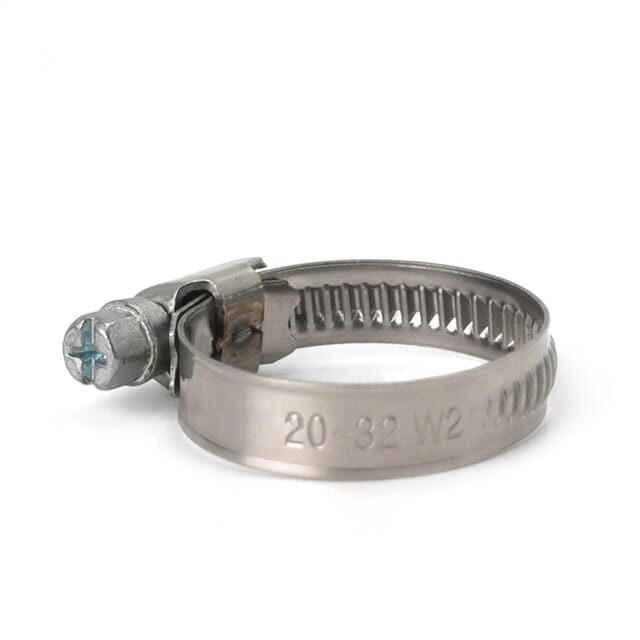
Record complete part numbers rather than relying on a single visible digit as a universal size.
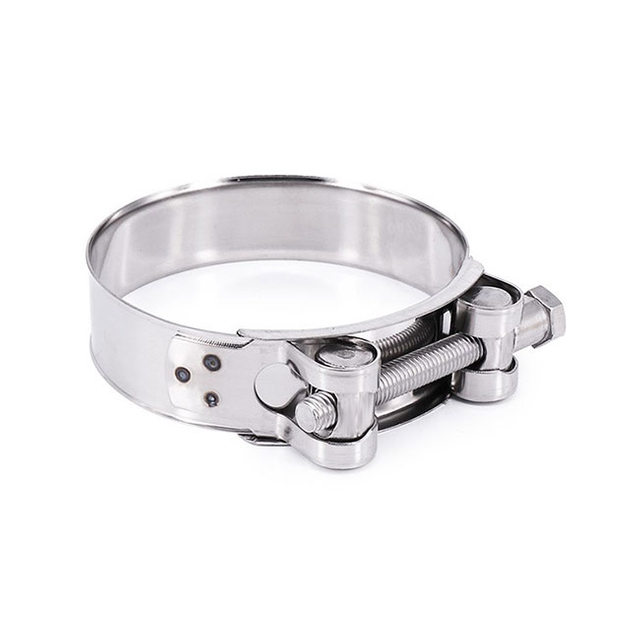
Different clamp designs change the selection process. Worm-drive clamps and spring-loaded T-bolt clamps should not be evaluated by diameter coverage alone. If you aren't sure about the style, our Hose Clamp Types Comparison guide can help you identify major worm-gear styles before you cross-reference their size ranges.
When requesting a quote, supply your measured outer diameter, series or photo, required band width, material specs, quantity, and working conditions. If two ranges still seem viable, share your available installation width and space limits. This helps us provide tailored advice rather than assuming a mid-range rule works for every joint.
Common Selection Mistakes & FAQs
The most expensive sizing errors happen when correct-looking numbers are applied to the wrong size range or product series. Always verify what the numbers mean before changing clamp sizes.
Common Mistake | Better Approach |
|---|---|
Ordering by nominal hose inner diameter (ID) | Measure installed hose outer diameter (OD) at the clamping spot |
Reusing old numbers without identifying the series | Match full part numbers with the actual diameter range |
Selecting a wider band without checking space | Verify the band fits completely inside the designated clamping area |
Cranking down tighter to fix a bad fit | Re-check fitting dimensions and follow proper installation procedures |

When replacing clamps, identify the structural style in addition to the diameter range.
For British type hose clamps, include all relevant series information when ordering, just as you would for American or German types. Similar looks do not replace the need to double-check size ranges and installation fit.
Final Checks Before Choosing a Hose Clamp
Before choosing a clamp, measure the hose outside diameter with the hose fully installed on its fitting. Use that measurement to find a suitable clamping range, then check the band width, available space, material, and installation requirements.
If two sizes cover the same diameter, follow the manufacturer’s selection guidance rather than assuming the larger clamp will seal better. For repeat orders from Yueding, keep the confirmed product code and specifications together so the same clamp can be identified accurately.
Frequently Asked Questions
Can I choose a replacement clamp using the number on the old one?
The marking can help identify the clamp, but check its series and diameter range before ordering. Measure the installed hose again if the hose or fitting has changed, or if the original clamp did not fit correctly.
Does one hose clamp size chart cover every clamp type?
No. Use the sizing information for the specific clamp type and series. Worm-drive clamps, ear clamps, and spring clamps use different designs, so their size markings should not be treated as interchangeable.
How do I choose a clamp for a silicone hose?
Measure the installed hose OD, then check which clamp designs the hose manufacturer permits. Pay attention to the band’s contact surface, width, and recommended tightening method. A clamp that covers the measured diameter may still be unsuitable for the hose.
How tight should a hose clamp be?
Use the installation torque specified for the exact clamp series, band width, and material. Do not apply a torque value from a different clamp. If no value is provided, confirm the requirement with the supplier before tightening.
Should I use millimetres or inches when ordering?
Use the units shown in the product specification and clearly state the measured hose OD. If you include both units, identify the converted value and avoid rounding a measurement to make it fit a clamp range.






About Yueding
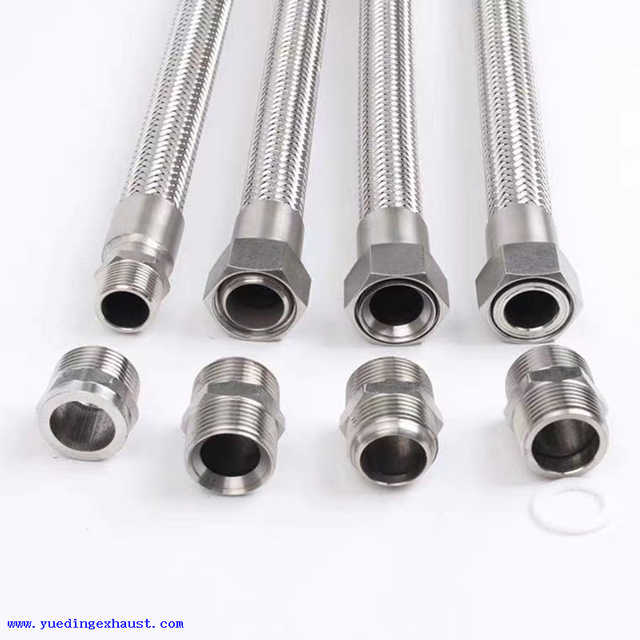
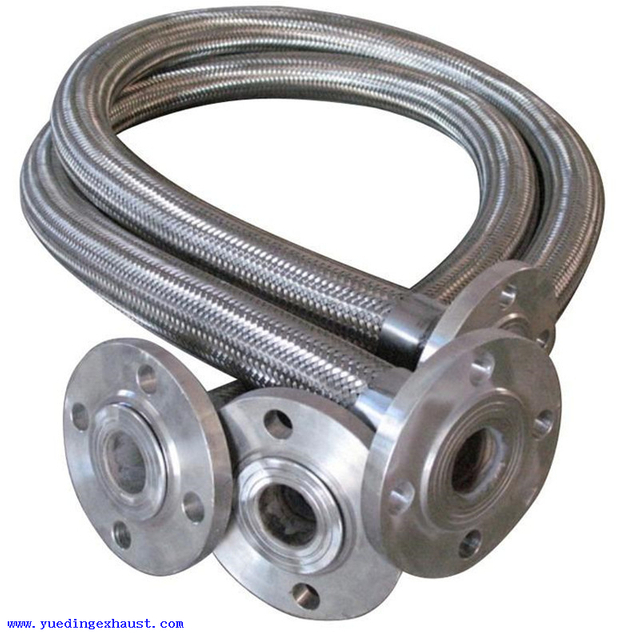
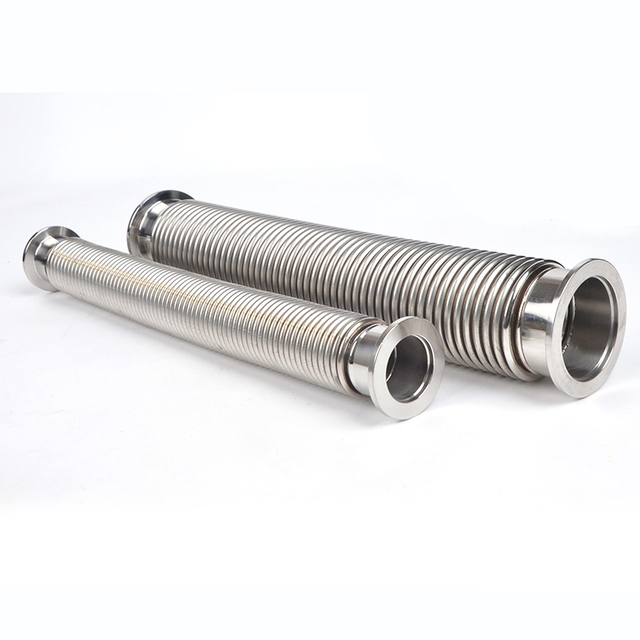
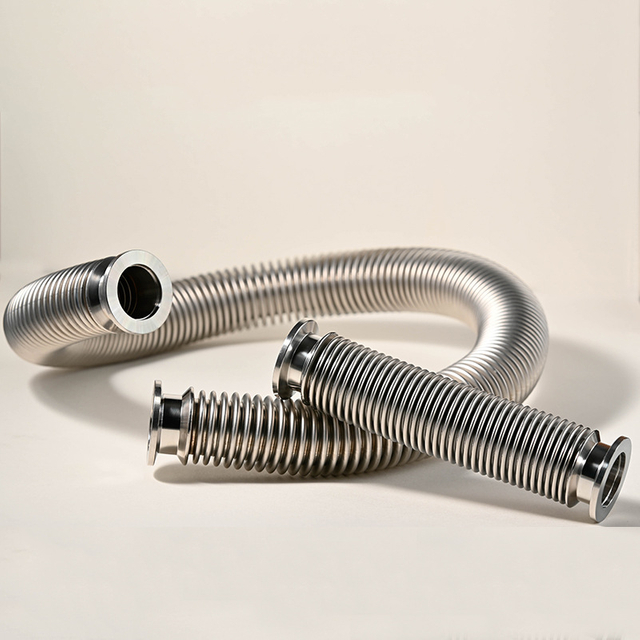
YUEDING manufactures stainless steel exhaust flexible connectors, clamps, metal bellows, and selected automotive exhaust components under ISO and IATF quality systems. With in-house production, inspection, and packaging capabilities, we support bulk orders, standard-size inventory, and customized branding for global B2B customers.
Reliable Delivery
Stable production planning, standard-size inventory, and batch shipping support help make delivery more predictable.

Factory Direct
Production, inspection, and packaging are managed in-house, making communication, quality control, and customization more efficient.

Integrated Supply
We supply flex pipes, clamps, metal bellows, and selected exhaust components to support related purchasing needs from one manufacturer.

