
Can You Use Exhaust Clamps Instead of Welding?
When repairing or modifying an exhaust system, should you choose mechanical fastening or a permanent welded connection? Welding remains common, but modern Exhaust Clamps provide a practical alternative for many repairs, replacement projects, and removable exhaust assemblies. The better method depends on the joint structure, installation environment, pipe condition, and future maintenance needs.
Key Takeaways
● Practical Alternative: Exhaust Clamps can replace welding in many automotive repairs and modular exhaust upgrades when the clamp matches the pipe joint.
● Different Connection Methods: Clamps secure components through mechanical compression, while welding creates a permanent metallurgical bond between the metal parts.
● Easier Installation: Clamps generally require fewer tools and less specialist training than welding, making them suitable for workshops and some DIY repairs.
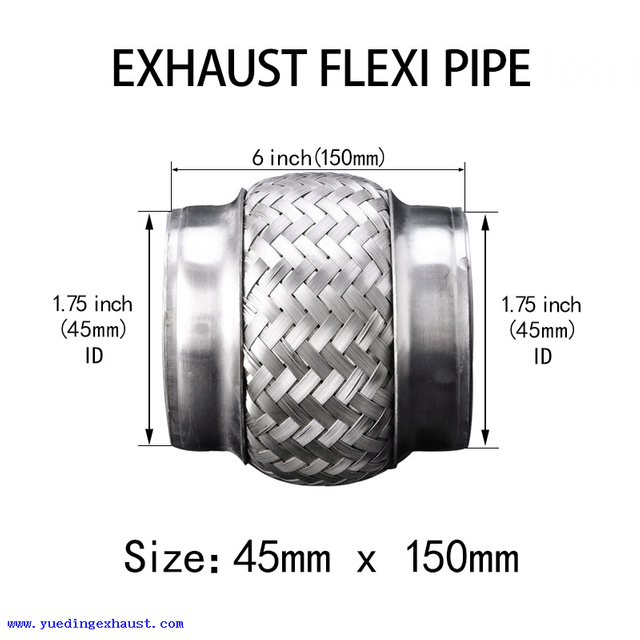
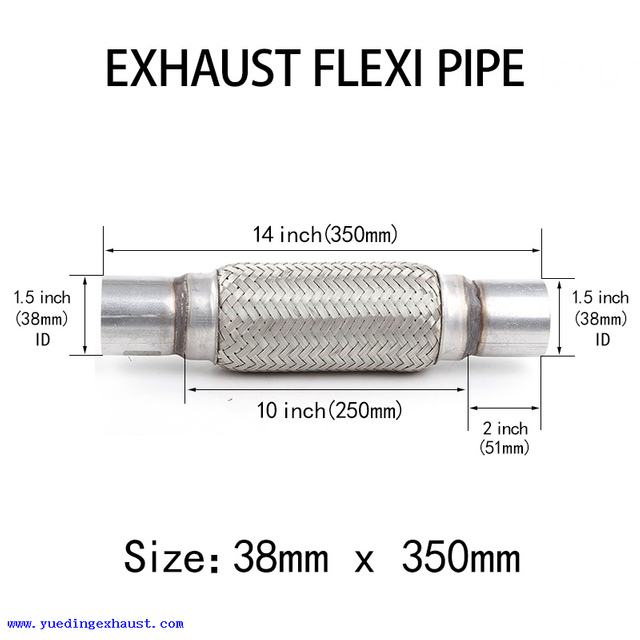
● Maintenance Advantage: A clamped system allows pipes, mufflers, flex sections, and other components to be removed or replaced without cutting the complete assembly.
● Selection Matters: Pipe outside diameter, joint type, material, installation space, and flange profile should be confirmed before choosing a clamp.
● Application Limits: Welding may remain preferable where the pipe is cracked, structurally weakened, badly corroded, or unsuitable for mechanical fastening.

Can You Use Exhaust Clamps Instead of Welding?
Yes, Exhaust Clamps can be used instead of welding in many exhaust repairs and replacement applications. However, the decision depends on the repair location, pipe condition, connection method, and operating environment.
Exhaust Clamps create mechanical holding force around the joint. They connect exhaust components without permanently fusing the metals. Welding, by comparison, joins the metal surfaces into one fixed structure. A welded joint is less convenient to remove, while a clamped connection supports future adjustment, inspection, and component replacement.
● When Clamping Is Suitable: Clamps are commonly used when replacing mufflers, flex pipes, straight tubing sections, tailpipes, and other removable components. They are especially useful when the system may need to be disassembled again.
● When Welding May Be Preferable: Welding may be more appropriate when repairing a cracked pipe, restoring a damaged fabricated section, or creating a permanent custom assembly. A clamp cannot restore metal that has become too thin or structurally weak from corrosion.
The sealing result also depends on fitment. A clamp cannot compensate for severely damaged pipe ends, large diameter differences, or the wrong joint structure. Correctly matched pipes should sit squarely, provide sufficient contact area, and remain properly supported by the exhaust hangers.
Exhaust sealant may be used for some slip-fit joints when recommended for the repair, but it should not be treated as a substitute for correct sizing or proper surface preparation.
Essential Types of Exhaust Clamps for Non-Welded Repairs
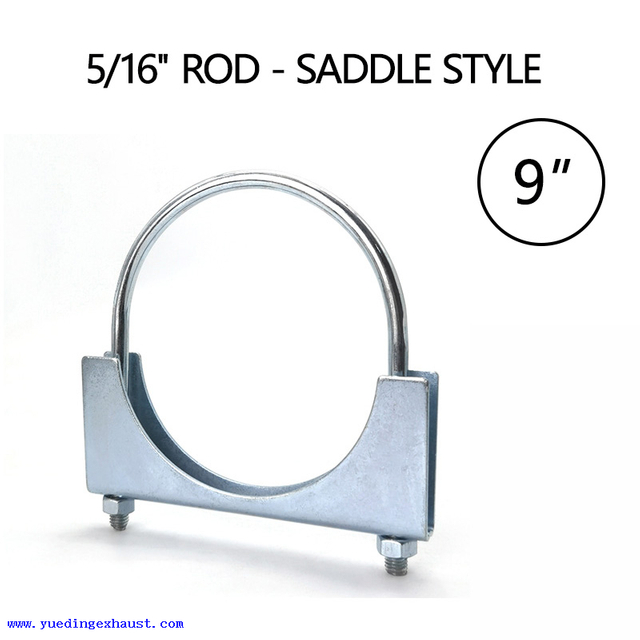
Selecting the correct clamp is one of the most important parts of a non-welded exhaust repair. Yueding supplies U-bolt clamps, band clamps, lap joint clamps, butt joint clamps, V-band clamps, DPF clamps, sleeve clamps, and other fastening parts for automotive, commercial vehicle, heavy machinery, and industrial exhaust applications. These use a threaded U-bolt and saddle to compress an overlapping pipe connection. They are commonly selected for general repairs and cost-sensitive replacement applications, although excessive tightening can distort the tubing.
● Band Clamps: A wider band distributes pressure more evenly around the connection. Band clamps are suitable where a cleaner appearance, reduced pipe deformation, or easier removal is preferred.
● Lap Joint Clamps: These are designed for slip-fit connections where one pipe fits inside another. The stepped clamp shape accommodates the difference between the larger and smaller pipe diameters.
● Butt Joint Clamps: These connect two pipe ends with the same outside diameter. The sleeve covers both ends without requiring one pipe to slide into the other.
● V-Band Clamps: These are used with matching flanges in turbo systems, downpipes, performance exhausts, diesel systems, and other assemblies that may require repeated removal.
● Heavy-Duty and DPF Clamps: Commercial vehicles, buses, construction machinery, and diesel aftertreatment systems may require application-specific clamps designed around their flange, load, and installation requirements.
How to Select the Correct Clamp
Start with the connection structure rather than choosing only by price or appearance.
● Choose a lap joint clamp when one pipe slides inside another.
● Choose a butt joint clamp when two pipes of the same outside diameter meet end to end.
● Choose a V-band clamp only when the clamp profile matches the corresponding flanges. Similar-looking V-band clamps are not always interchangeable because the flange angle, groove, and clamp profile may differ.
● Use a purpose-specific heavy-duty clamp for DPF, truck, bus, machinery, or industrial exhaust connections rather than substituting a light-duty automotive clamp.
Always measure the pipe outside diameter at the actual connection point. Nominal pipe descriptions, inside diameters, and vehicle model information alone may not provide enough detail for accurate selection.
Clamp Type | Best For | Main Advantage | Main Limitation |
U-Bolt | General overlapping repairs | Simple and economical | May deform the pipe |
Band Clamp | Removable aftermarket systems | Even pressure and low profile | Requires accurate sizing |
Lap Joint | Slip-fit pipe connections | Matches overlapping diameters | Not suitable for butt joints |
Butt Joint | Same-size pipe ends | No pipe overlap required | Requires straight alignment |
V-Band | Flanged or frequently removed systems | Compact and easy to release | Must match the flange profile |
Comparative Analysis: Durability and Longevity
Welding is often selected when a permanent connection is the main objective. A properly prepared welded joint can withstand repeated vibration and heat cycles, but its durability still depends on the pipe condition, material compatibility, welding quality, and surrounding support.
Modern Exhaust Clamps can also provide dependable service when they are correctly selected and installed. Their long-term performance is influenced by clamp material, pipe alignment, tightening method, road exposure, vibration, and thermal expansion.
Corrosion is an important consideration. Road salt, moisture, condensation, and dissimilar metals can all affect the joint. Stainless steel clamps are commonly considered for corrosion-prone environments, while aluminized steel and other material options may suit different cost and application requirements. Yueding’s available clamp specifications include stainless steel grades and aluminized steel options for different pipe connections.
● Pipe Condition: A clamp performs best on sound, properly aligned pipe. It should not be used to conceal perforation, severe rust, or crushed tubing.
● Vibration Control: Exhaust hangers and flex sections must continue supporting the system. A clamp should secure the joint rather than carry the weight of an unsupported exhaust assembly.
Installation Complexity and Tool Requirements
One major advantage of Exhaust Clamps is their relatively straightforward installation. Many clamp types can be installed with common hand tools, provided the vehicle is safely supported and the pipe connection is accessible.
Welding requires suitable equipment, protective gear, surface preparation, ventilation, and technical experience. Electrical welding on a vehicle may also require additional precautions to protect nearby components and electronic systems.
Clamps remove the need for an open flame or welding arc under the vehicle, but this does not make the repair risk-free. The exhaust must be cool, the vehicle must be securely raised, and the installer should avoid working beneath a vehicle supported only by a jack.
Before installing a clamp:
● Remove loose rust, soot, and dirt from the connection area.
● Confirm that the pipe ends are round and correctly aligned.
● Check that sufficient overlap is available for a slip-fit joint.
● Position the clamp where it will not contact the body, suspension, wiring, or road surface.
● Tighten the fasteners gradually and evenly according to the clamp or vehicle instructions.
Overtightening can deform thin-wall tubing, damage threads, distort a flange, or make future removal difficult. The objective is a stable, sealed connection without crushing the components.
Cost-Benefit Breakdown for Vehicle Owners
Exhaust Clamps usually involve fewer installation requirements than welding. Vehicle owners may avoid specialist welding labor, while workshops can complete removable repairs without cutting apart serviceable sections of the exhaust.
The long-term value depends on the repair. A clamp can reduce future work when a muffler, flex section, or pipe may need to be replaced again. The fastener can be removed and the individual component changed without cutting through a welded joint.
However, the lowest-priced clamp is not automatically the most economical choice. An incorrectly sized clamp may leak, damage the tubing, or require repeat installation. Material, band width, bolt design, joint structure, and corrosion exposure should be considered together.
For distributors, repair networks, and OEM buyers, repeat-order consistency is also important. Yueding supports regular sizes, mixed specifications, and product review based on drawings or samples. Details such as material, pipe diameter, band width, bolt structure, surface finish, inspection, and packaging can be confirmed before production.
Welded joints generally provide a smoother appearance because there is no external fastening hardware. This may be preferred for show vehicles, custom fabrication, or installations where the joint must be visually seamless.
Clamped joints remain visible, but the appearance varies by clamp type. Band and V-band clamps usually create a cleaner, lower-profile connection than traditional U-bolt clamps.
Ground clearance should also influence selection. A U-bolt and saddle may extend below the tubing, which can be unsuitable for lowered vehicles or tightly packaged exhaust systems. A low-profile band clamp or welded connection may provide more clearance.
The internal pipe arrangement is equally important. Poorly aligned overlapping pipes can disturb exhaust flow or create a ledge inside the connection. Correct pipe preparation and alignment normally have more influence than the external clamp alone.
A rattle after installation may indicate loose hardware, contact with another vehicle component, poor pipe support, or incorrect clamp positioning. Tightening the clamp further is not always the correct solution; the complete assembly should be inspected first.
Legal and Safety Compliance Standards
Any exhaust connection must prevent gases from escaping into areas where they could enter the passenger compartment. A leaking joint may also affect noise levels, emissions-system operation, oxygen-sensor readings, or inspection results.
Local regulations vary. Some inspections focus on whether the exhaust is securely mounted, free from leaks, and compliant with applicable noise and emissions requirements rather than requiring one specific connection method. Repairs involving catalytic converters, particulate filters, oxygen sensors, or other regulated components may have additional restrictions.
A clamp should not be treated as an acceptable repair for severely corroded pipe, damaged emissions equipment, or an unsupported exhaust system. After installation, inspect the joint during a cold start, look for soot marks, listen for escaping gas, and recheck the connection after the system has completed several heating and cooling cycles.
Conclusion
Choosing between Exhaust Clamps and welding requires balancing serviceability, pipe condition, connection structure, installation access, and expected operating conditions. Clamps provide a practical, removable solution for many muffler, pipe, flex-section, and aftermarket exhaust connections. Welding remains valuable for permanent fabrication and repairs where the metal itself must be restored.
The result depends less on choosing clamps or welding in isolation and more on using the correct method for the joint. Yueding supplies exhaust clamps and related pipe connection components in different structures, materials, sizes, and fastening configurations, with support for standard replacement products, mixed specifications, and drawing- or sample-based orders.
FAQ
Q: Can an exhaust clamp be installed over a badly rusted pipe?
A: A clamp may work on surface rust after the area is cleaned, but it should not be installed over perforated, flaking, or structurally weakened tubing. The damaged pipe section should be replaced first.
Q: Can the same clamp be reused after removing an exhaust part?
A: Some clamps may be reusable if the band, threads, bolt, and locking components remain undamaged. Distorted U-bolt clamps, corroded hardware, and certain locking fasteners are normally better replaced.
Q: What information should a buyer provide when ordering exhaust clamps in bulk?
A: Provide the pipe outside diameter, joint type, overlap length where applicable, material requirement, band width, bolt structure, operating environment, quantity, surface finish, and packaging needs. Drawings or physical samples can reduce fitment errors for non-standard products.
Q: Can a butt joint clamp be used on an overlapping pipe connection?
A: No. A butt joint clamp is intended for two same-size pipe ends meeting directly. An overlapping or slip-fit connection normally requires a lap joint clamp or another clamp designed for stepped diameters.
Q: Why does a newly installed clamp still leak?
A: Possible causes include the wrong clamp type, inaccurate pipe diameter, insufficient overlap, an out-of-round pipe, damaged sealing surfaces, uneven tightening, or poor pipe alignment. Adding sealant will not correct a major fitment problem.
Q: Will using an exhaust clamp affect the vehicle warranty or inspection?
A: That depends on the vehicle, the repaired component, and local rules. Repairs near emissions-control parts should follow the vehicle manufacturer’s instructions and applicable inspection requirements.






About Yueding
YUEDING manufactures stainless steel exhaust flexible connectors, clamps, metal bellows, and selected automotive exhaust components under ISO and IATF quality systems. With in-house production, inspection, and packaging capabilities, we support bulk orders, standard-size inventory, and customized branding for global B2B customers.
Reliable Delivery
Stable production planning, standard-size inventory, and batch shipping support help make delivery more predictable.

Factory Direct
Production, inspection, and packaging are managed in-house, making communication, quality control, and customization more efficient.

Integrated Supply
We supply flex pipes, clamps, metal bellows, and selected exhaust components to support related purchasing needs from one manufacturer.

