
Do Exhaust Clamps Leak?
Are you hearing a hissing or ticking sound from under your car? Exhaust clamps can leak, but the clamp itself is not always the problem. An incorrect size, unsuitable clamp structure, damaged pipe surface, poor alignment, or improper tightening can all leave a path for exhaust gas. Understanding the joint first helps you select and install an exhaust clamp that provides a dependable, serviceable seal.
Key Takeaways
● Leaks Have Several Causes: Thermal cycling, corrosion, damaged pipe ends, incorrect sizing, and uneven installation can all contribute to leakage.
● Select by Joint Type: Use a lap joint clamp for overlapping pipes, a butt joint clamp for same-diameter pipe ends, and a V-band clamp where matching flanges and frequent disassembly are required.
● Check More Than Diameter: Pipe outside diameter, joint structure, installation space, material, band width, and bolt design should all be confirmed.
● Install Carefully: Clean and align the joint, tighten gradually, and follow the relevant manufacturer’s guidance.
● Inspect the Whole Connection: Repeated leakage may come from damaged pipework or poor exhaust support.

Why Exhaust Clamps Leak: Identifying the Root Causes
Even a well-made clamp can leak when the exhaust joint is not prepared or matched correctly. Exhaust components expand when hot and contract as they cool. Heat cycles, engine vibration, and road movement can reduce joint stability, especially when the pipe is poorly supported.
Incorrect sizing is another common cause. A clamp should match the actual outside diameter and connection structure, not an estimated nominal size. A clamp that is too large may bottom out before applying enough pressure, while one that is too small may not seat correctly around the joint.
Rust scale, burrs, old sealant, dents, and oval pipe ends can also prevent full contact. Black soot around the connection usually indicates that exhaust gas has found a narrow escape path.
Installation errors add further risk. Over-tightening may deform the tubing, while under-tightening can allow the pipes to shift. The clamp should also be centered over the sealing area rather than positioned mainly on one side of the joint.
Note: Before blaming the clamp, check nearby hangers, flex sections, flanges, and pipe supports. Excessive movement elsewhere in the system can repeatedly disturb the connection.
Comparing Sealing Performance Across Different Exhaust Clamps
Different exhaust clamps are designed for different connection methods. Choosing by price alone can result in a clamp that tightens but does not properly seal the joint.
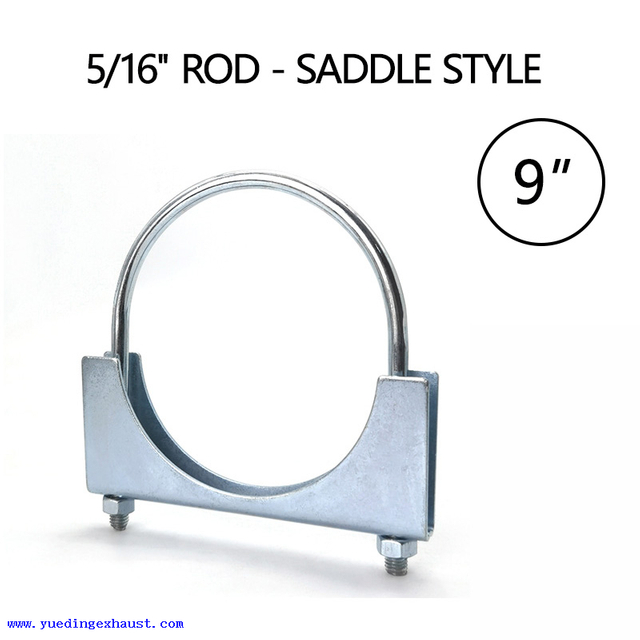
U-bolt clamps are widely used for basic repairs and fastening. They are economical and simple, but the concentrated clamping points may mark or deform thin tubing. They are more suitable where future disassembly and pipe appearance are not major concerns.
Lap joint band clamps are shaped for slip-fit connections where one pipe overlaps another. Butt joint band clamps are intended for two pipe ends with the same diameter. Their wider bands spread pressure over a larger area and can make later removal easier than heavily crimped connections.
V-band clamps work with compatible flanges rather than clamping directly around plain overlapping pipes. They are commonly selected for turbo connections, downpipes, performance systems, diesel applications, and assemblies requiring repeated access. Standard, heavy-duty, T-bolt, and quick-release structures may be selected according to vibration, clearance, and maintenance needs.
Clamp Type | Suitable Joint or Use | Sealing Potential | Serviceability |
U-Bolt | Basic slip-fit repair | Moderate when correctly matched | Limited if the pipe deforms |
Lap Joint Band | Overlapping pipes | Good with the correct step profile | Good |
Butt Joint Band | Same-diameter pipe ends | Good on aligned, sound tubing | Good |
V-Band | Matching flanged connections | High when flanges are aligned | Very good |
For selection, identify the joint type, measure the pipe or flange accurately, and check installation space, band width, bolt access, corrosion exposure, and service frequency.
Symptoms of a Leaking Exhaust Clamp Connection
A leaking joint often produces a ticking, puffing, or hissing sound that changes with engine speed. However, similar sounds can come from a cracked pipe, flex section, manifold, or gasket, so the clamp area should be inspected rather than diagnosed by sound alone.
Black or grey soot around the joint is a stronger visual sign. A loose connection may also cause rattling, visible movement, or contact between the exhaust and nearby chassis parts.
A leak near an oxygen sensor can affect sensor readings and may contribute to drivability issues or a warning light. Leaks closer to the cabin should be addressed promptly because exhaust gases must not be allowed to enter the passenger area.
Professional Installation Techniques for a Better Seal
Surface preparation begins before the clamp is tightened. Remove loose rust, carbon, old sealant, and sharp burrs from the mating surfaces. Severely pitted or thinned pipe may need repair or replacement because a clamp cannot restore missing metal.
Dry-fit the components and confirm that the pipes or flanges align without excessive force. The clamp should sit evenly over the intended sealing area, with enough clearance for the bolt, reaction block, and surrounding parts.
Tighten the hardware gradually with suitable hand tools. Use a torque wrench when a specification is provided. Excessive force can damage threads, distort the band, or crush the pipe.
High-temperature exhaust assembly paste may help on some slip-fit joints, but it should only be used where appropriate. It cannot compensate for the wrong clamp, a badly distorted pipe, or incompatible V-band flanges.
After several heat cycles, inspect for soot, movement, or loose hardware. Do not add torque beyond the relevant guidance.
Troubleshooting: How to Fix a Leaking Clamp Without Replacing the Pipe
Start by identifying the actual leak location. Soot may spread away from the opening, so inspect the full circumference of the joint and nearby components.
If the pipe remains sound, loosen the clamp, realign the connection, clean the surfaces, and reinstall it in the correct position. A band clamp that has shifted away from the overlap or butt joint may seal again once centered correctly.
For slightly damaged pipe ends, a properly sized sleeve or coupler may create a more stable repair surface. This can provide a serviceable repair, but it should not hide severe corrosion or structural weakness.
Replace rusted, stretched, stripped, or distorted clamp hardware rather than forcing it tighter. Use replacement fasteners that match the clamp design and material requirements. Repair tape may serve as a temporary measure in some situations, but it should not be treated as the main sealing method for a weakened joint.
Durability and Material Selection: Stainless vs. Coated Steel
Material should be selected according to corrosion exposure, exhaust temperature, service life, budget, and the material of the surrounding system.
Coated or aluminized steel clamps can be suitable for cost-sensitive repairs and normal conditions, but damaged coatings may allow corrosion to develop over time. Stainless steel generally provides better resistance to moisture and road contaminants.
Different stainless grades serve different needs. Grade 304 is commonly selected for corrosion resistance, while Grade 409 is often used where cost and heat performance must be balanced. Other grades may suit higher-temperature applications.
For distributors and OEM buyers, material grade should not be the only purchasing criterion. Pipe diameter range, band thickness, forming accuracy, bridge structure, weld quality, bolt configuration, surface finish, inspection requirements, and batch consistency should also be confirmed before production.
When to Abandon the Clamp: Clamping vs. Welding
Clamps are useful for replacement work, modular systems, maintenance access, and connections that may need to be removed later. They are appropriate when the pipe ends are structurally sound and the selected clamp matches the joint.
Welding may be more suitable when the pipe is too thin, cracked, severely corroded, or poorly shaped for a mechanical connection. It may also be chosen where a permanent fabricated assembly is required and future disassembly is not important.
Neither method corrects poor system alignment. Before clamping or welding, make sure hangers, flex sections, and connected components are not placing excessive stress on the joint.
Conclusion
Exhaust clamps can leak, but leakage is usually linked to incorrect selection, damaged surfaces, misalignment, unsuitable tightening, or movement elsewhere in the exhaust system. The most reliable approach is to match the clamp to the actual joint: lap joint for nested pipes, butt joint for same-diameter ends, and V-band for compatible flanged connections.
Yueding supplies U-bolt, band, V-band, DPF, and heavy-duty exhaust clamps for automotive and industrial applications. Standard, mixed, and drawing- or sample-based specifications can be reviewed according to pipe diameter, material, space, and order needs. Correct matching and installation help reduce leakage risk while keeping the connection practical to service.
FAQs
Can an exhaust clamp be reused after it has been removed?
Some band and V-band clamps may be reused if the band, threads, and mating surfaces remain undamaged. Deformed clamps or stretched hardware should be replaced.
What information should a bulk buyer provide when ordering exhaust clamps?
Provide the pipe outside diameter, joint type, material, band width, bolt details, surface finish, quantity, packaging needs, and any drawings or samples.
Why does a new clamp still leak on an old exhaust pipe?
The pipe may be oval, pitted, cracked, thinned, or covered with scale. A new clamp cannot always compensate for an unstable sealing surface, so the pipe end may require reshaping, sleeving, or replacement.
Should the clamp material match the exhaust pipe material?
Exact matching is not always required, but material compatibility, corrosion exposure, temperature, and expected service life should be considered. For commercial orders, confirm the full clamp and fastener material specification rather than assuming every part uses the same grade.






About Yueding
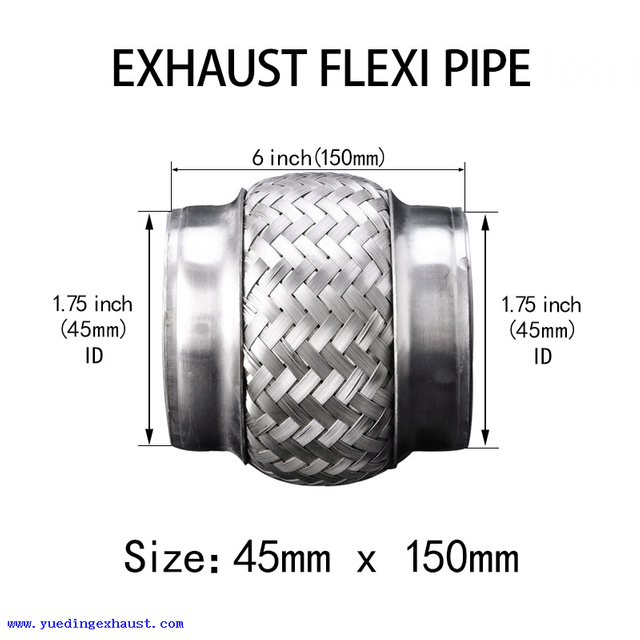
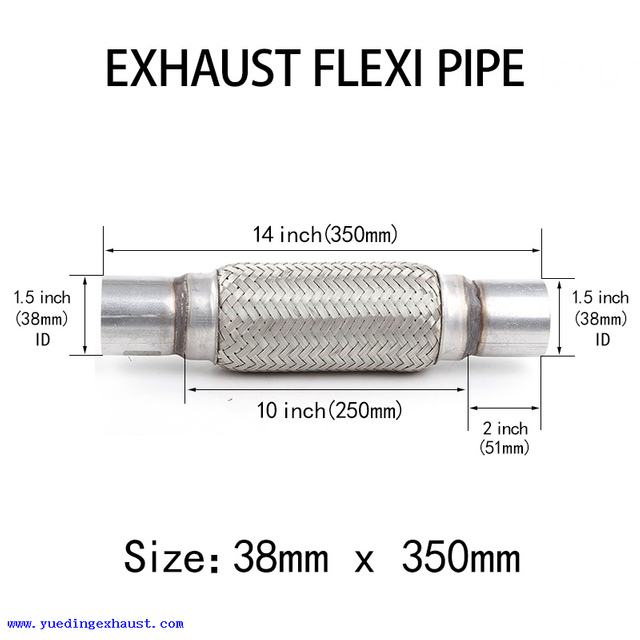
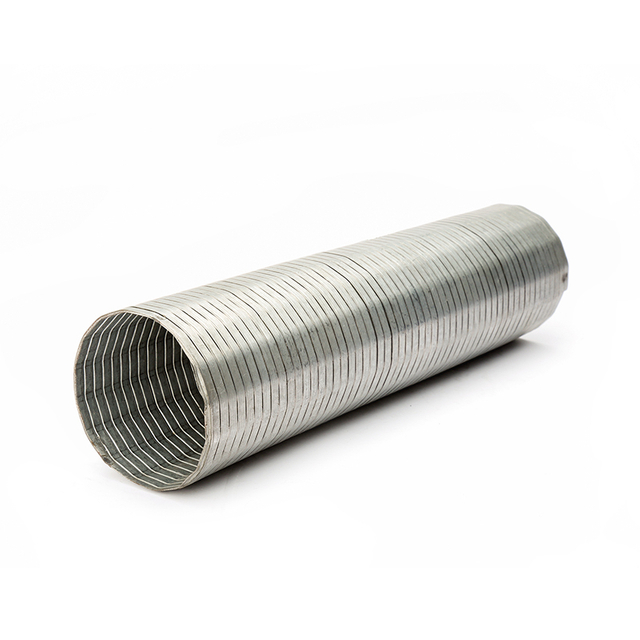
YUEDING manufactures stainless steel exhaust flexible connectors, clamps, metal bellows, and selected automotive exhaust components under ISO and IATF quality systems. With in-house production, inspection, and packaging capabilities, we support bulk orders, standard-size inventory, and customized branding for global B2B customers.
Reliable Delivery
Stable production planning, standard-size inventory, and batch shipping support help make delivery more predictable.

Factory Direct
Production, inspection, and packaging are managed in-house, making communication, quality control, and customization more efficient.

Integrated Supply
We supply flex pipes, clamps, metal bellows, and selected exhaust components to support related purchasing needs from one manufacturer.

