
How Tight Should Exhaust Clamps Be?
Key Takeaways
● Follow the Product Specification: Use the torque instructions supplied by the clamp, exhaust system, or vehicle manufacturer whenever available.
● Tighten Gradually: Bring the clamp down in stages and alternate between the nuts or fasteners to maintain even pressure.
● Avoid Pipe Deformation: Stop if the pipe wall, clamp band, saddle, or flange begins to distort.
● Match the Clamp to the Joint: Butt joints, overlapping pipes, flanged connections, and heavy-duty exhaust systems require different clamp structures.
● Check After Heat Cycling: Inspect a newly installed clamp after the exhaust system has heated and cooled, particularly if the joint has settled.
● Confirm More Than Diameter: Pipe outside diameter, joint type, material, installation space, and maintenance requirements all influence clamp selection.

Determining the Ideal Torque: How Tight Should Exhaust Clamps Be?
The manufacturer’s service information should be the first reference when tightening an exhaust clamp. Torque requirements vary because different clamp structures apply pressure in different ways.
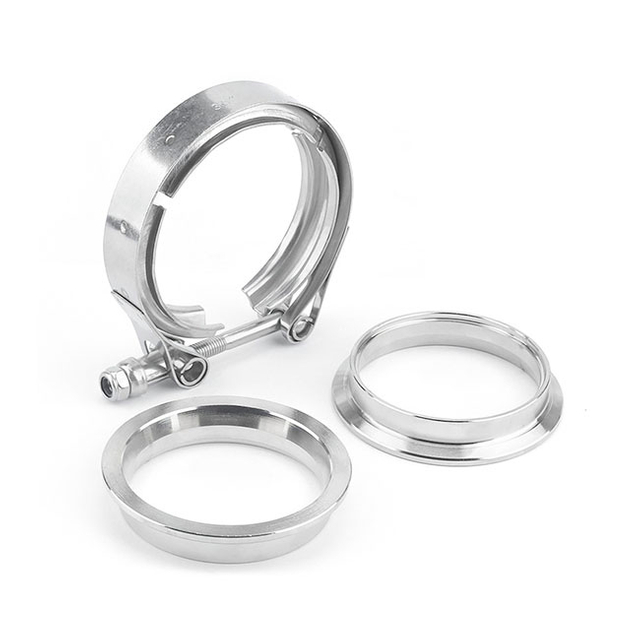
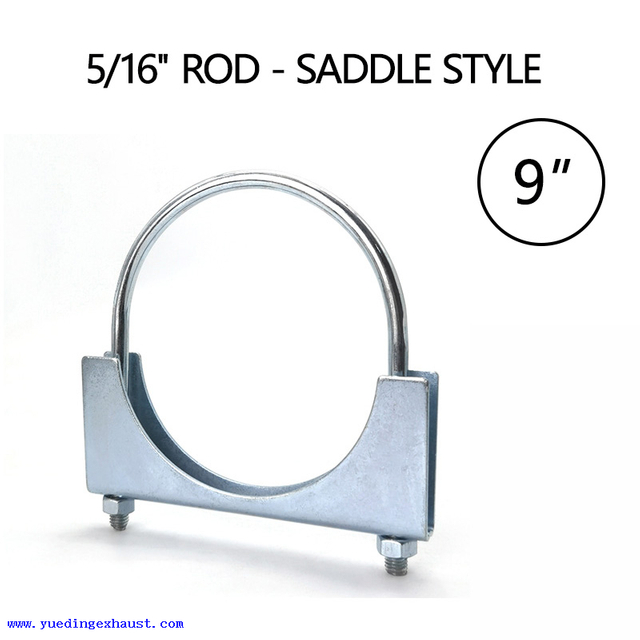
A U-bolt clamp concentrates force through the saddle and can mark or compress the pipe if tightened excessively. A band clamp spreads pressure over a wider area, while a V-band clamp depends on the correct seating of two matching flanges. Applying the same torque to each design can therefore produce very different results.
When no torque specification is available, tighten the fasteners gradually and evenly. The connection should no longer rotate, slide, or rattle, and the clamp should sit squarely around the joint. Visible pipe crushing, flange distortion, stretched bolts, or a clamp pulled noticeably to one side usually indicates excessive tightening.
Clamp Type | Tightening Focus | Typical Connection |
U-Bolt Clamp | Even nut adjustment without crushing the pipe | Standard repair and muffler joints |
Butt Joint Band Clamp | Equal pressure across both pipe ends | Same-diameter pipes meeting end to end |
Lap Joint Band Clamp | Correct seating over the stepped joint | One pipe sliding into another |
V-Band Clamp | Full flange alignment before final tightening | Flanged and removable connections |
Heavy-Duty Clamp | Correct gasket, flange, and bolt matching | DPF, truck, and industrial exhaust systems |
Tip: Confirm whether the torque value is stated in lb-ft, lb-in, or Nm before tightening.
Note: Thread lubricant or anti-seize changes friction and may alter the resulting clamping force. Use it only when permitted by the clamp or equipment supplier.
Factors Influencing Exhaust Clamp Tightness
Clamp structure is one of the main factors. U-bolt clamps apply concentrated force, whereas band clamps distribute pressure across a larger surface. V-band and DPF clamps rely more heavily on matching flanges, gaskets, and profiles.
Pipe material and wall thickness also matter. Thin-wall tubing can deform before a heavy clamp reaches its expected tightening value. Stainless steel pipe may react differently from aluminized steel, especially where corrosion, heat, or repeated removal is involved.
Joint fit should be checked before additional force is applied. A clamp cannot fully correct a pipe that is heavily distorted, incorrectly sized, poorly aligned, or separated by an excessive gap. Increasing torque in these situations may damage the parts without solving the leak.
Selection should therefore begin with the connection:
● Use a butt joint clamp when two pipes of the same outside diameter meet end to end.
● Use a lap joint clamp when one pipe slides over another.
● Use a V-band clamp only with compatible V-band flanges.
● Consider DPF or heavy-duty clamps for truck, diesel, construction machinery, or larger exhaust connections.
Thread condition is another variable. Rust, damaged threads, or reused hardware can create misleading resistance. Cleaning or replacing questionable fasteners is generally safer than compensating with additional tightening force.
The Risks of Over-Tightening Exhaust Clamps
Over-tightening can create dents or permanent compression around the pipe. This is particularly common with U-bolt clamps because the load is concentrated in a smaller area. A badly deformed connection may be difficult to separate during future muffler, flex pipe, or tailpipe replacement.
The clamp hardware can also be damaged. Excessive tightening may strip threads, stretch bolts, distort a band, crack a welded section, or pull the clamp out of alignment. On V-band connections, too much force can distort the flange or prevent the mating faces from seating evenly.
More torque does not necessarily create a better seal. Once the clamp or pipe begins to deform, pressure may become uneven around the joint and create another leakage path. The correct objective is balanced clamping force rather than maximum tightness.
Identifying a Loose or Under-Tightened Clamp
A loose exhaust joint may produce ticking, puffing, rattling, or vibration, particularly during a cold start. The sound may change as the exhaust system heats and expands, but this does not confirm that the connection is secure.
Black soot near the joint can indicate escaping exhaust gas. Also check whether the connected pipes can rotate or move by hand when the system is completely cold. A clamp sitting at an angle or a band that has not fully contacted the pipe may also require inspection.
Leaks located near an oxygen sensor may affect sensor readings or trigger an engine warning. However, tightening should not be the automatic response. First confirm that the clamp type, pipe diameter, joint structure, and alignment are correct.
A soapy-water check may help locate a small leak, but it should only be performed on a cold exhaust system and in a well-ventilated area.
Selecting the Right Exhaust Clamp for the Joint
Clamp selection affects how much tightening force is needed and how that force is transferred to the pipe.
U-bolt clamps are commonly used for straightforward repair and replacement work. Their simple structure suits cost-sensitive applications, although they may leave marks on the pipe and are less suitable where frequent removal is expected.
Band clamps provide a wider clamping area and can help reduce concentrated pipe deformation. A butt joint band clamp connects two same-diameter pipe ends, while a lap joint clamp follows the stepped shape of an overlapping connection. These two types should not be treated as interchangeable.
V-band clamps are intended for matching flanges rather than plain pipe joints. Selection should consider the flange outside diameter, profile, groove shape, and clamp inner contour—not only the nominal pipe diameter.
DPF and heavy-duty clamps may need to be confirmed together with gaskets, flanges, bolt structures, or OE-style exhaust components. These details are especially important in commercial vehicles, diesel systems, construction machinery, and industrial exhaust applications.
For bulk or customized purchasing, buyers should provide:
● Actual pipe outside diameter or both diameters of an overlapping joint
● Joint structure and installation position
● Clamp width, material, surface finish, and bolt design
● Flange or gasket details where applicable
● Installation-space limitations
● Sample, drawing, target quantity, labeling, and packaging requirementsYueding supplies standard and customized exhaust clamps, including U-bolt, band, lap joint, butt joint, V-band, DPF, sleeve, and related pipe clamps. Specifications can be reviewed using pipe dimensions, application information, drawings, samples, materials, and packaging requirements.
Best Practices for Installation and Re-Torquing
Clean rust, scale, dirt, and old sealant from the mating surfaces before installation. Confirm that the pipes are correctly inserted or aligned before placing the clamp over the joint.
For clamps with two nuts, alternate between them in small steps rather than fully tightening one side first. The saddle, band, bridge, or flange should remain centered throughout the process.
On V-band assemblies, seat both flange faces evenly before tightening the clamp. The clamp should not be used to pull widely separated or misaligned flanges together.
After installation, run the system through a normal heat cycle and allow it to cool completely. Reinspect the joint for movement, soot, unusual noise, loose hardware, or visible deformation. Retighten only when necessary and according to the relevant specification.
Previously used hardware should be inspected rather than automatically reused. Replace the clamp if the band is distorted, the threads are damaged, the bolt has stretched, the latch is cracked, or corrosion prevents smooth tightening.
Conclusion
Exhaust clamps should be tightened according to their design and application rather than a single universal torque value. The connection must be secure and evenly loaded without crushing the pipe or deforming the clamp.
Correct clamp selection is equally important. Joint type, pipe diameter, material, flange profile, installation space, and future maintenance should all be confirmed before tightening begins. Yueding supports standard-size supply, mixed specifications, and drawing- or sample-based exhaust clamp confirmation for repair, replacement, bulk purchasing, and customized exhaust connection projects.
FAQs
Can I use an impact wrench to tighten an exhaust clamp?
An impact wrench can apply force too quickly and make it difficult to identify pipe or clamp deformation. It may be used cautiously for initial positioning, but final tightening is better completed with controlled hand tools or a torque wrench.
Should exhaust paste be applied to every clamped joint?
No. Exhaust paste may be suitable for some slip-fit or repair joints, but it should not be used to compensate for incorrect pipe sizing or a mismatched clamp. V-band flange faces and gasket-based connections may require a different installation method.
Why does a newly installed clamp become loose after several drives?
The pipes, clamp, gasket, or joint may settle during early heat cycles. Misalignment, insufficient overlap, damaged threads, or vibration can also contribute. Inspect the system after it has cooled rather than repeatedly adding torque while it is hot.
Can clamps with the same nominal size fit pipes from different suppliers?
Not always. Actual outside diameter, wall thickness, manufacturing tolerance, joint structure, and flange profile may differ. For bulk purchasing, confirming a sample or drawing before production reduces fitment problems.
What information should a distributor provide when ordering clamps in bulk?
Provide the actual pipe dimensions, joint type, clamp structure, material, surface finish, bolt or latch design, application, order quantity, and packaging requirements. For V-band, DPF, or custom clamps, flange, gasket, drawing, or sample information may also be required.
When should a clamp be replaced instead of tightened again?
Replacement is advisable when the clamp is visibly distorted, heavily corroded, cracked, missing hardware, or has damaged threads. A recurring leak despite correct tightening may indicate a mismatched clamp, deformed pipe, damaged gasket, or unsuitable joint structure.








About Yueding
YUEDING manufactures stainless steel exhaust flexible connectors, clamps, metal bellows, and selected automotive exhaust components under ISO and IATF quality systems. With in-house production, inspection, and packaging capabilities, we support bulk orders, standard-size inventory, and customized branding for global B2B customers.
Reliable Delivery
Stable production planning, standard-size inventory, and batch shipping support help make delivery more predictable.

Factory Direct
Production, inspection, and packaging are managed in-house, making communication, quality control, and customization more efficient.

Integrated Supply
We supply flex pipes, clamps, metal bellows, and selected exhaust components to support related purchasing needs from one manufacturer.

